


Applied Computing in the Age of AI: Preparing for the Next Wave of Intelligent Systems
10 Nov 2025 | Right Firms

Artificial intelligence is rapidly reshaping industries across the board, and software is high on that list. AI is changing how software is designed, deployed, and maintained, but those transformations don’t happen in a vacuum. Behind every major breakthrough in AI, there’s a solid foundation in applied computing. As demand for AI and intelligent technology grows, software engineers and IT professionals aren’t going to vanish — but they will have to master the underlying principles that allow these systems to perform securely and ethically.
So what can you do to prepare your skillset for the coming wave of intelligent systems?
Understanding Applied Computing in the AI Era
First, let’s talk about applied computing and what it means in the age of AI. Applied computing bridges the gap between theoretical computer science and practical application. Rather than being an abstract theory of computing, applied computing focuses on solving real-world problems through computational design and modeling.
What does that mean in the context of AI? It means applied computing is what forms the framework that makes those advanced technologies usable, scalable, and intelligent. All AI systems rely on core principles of applied computing, such as:
- Algorithm design (creating efficient ways for machines to process data)
- Data architecture (organizing and structuring massive datasets)
- Human-machine interaction (making sure the AI aligns with ethical guidelines and user needs)
- Systems integration (putting hardware, software, and data systems together seamlessly)
In short, applied computing isn’t just about writing code — it’s interdisciplinary, requiring advanced engineering of intelligent computing ecosystems.
Will AI Make Coding Obsolete?
A common fear across any number of fields is whether or not AI will make one’s job obsolete — and in the short term, those fears have been shown to be somewhat justified. There’s a misconception that AI tools such as GitHub Copilot or ChatGPT will entirely replace programmers, or that “vibe coding” will supplant skilled coders. While these tools can accelerate productivity through automation, AI is not going to make coding obsolete — although it may redefine what coding means.
As of this writing, AI can generate snippets of code, but it can’t replicate the conceptual work of a human skilled in applied computing. An applied coding professional can design robust algorithms, integrate multiple systems to ensure interoperability, validate AI-generated output for accuracy, and identify any ethical flaws, security vulnerabilities, or data biases in automated systems. These are all things no intelligent system can do at present, and may never be able to.
This means that while AI might handle some parts of the software creation process, humans remain essential when it comes to designing the architecture, conducting oversight, and making decisions based on context and evidence.
Preparing for the Coming Wave
This new way of approaching software and coding means developing some new skillsets as the boundary between AI, software engineering, and systems design begins to blur. Continuous learning will become a practical necessity.
So what kind of skills should software engineers be ready to develop?
Engineers should be prepared to master algorithm optimization, so they can refine algorithms for maximum scalability and sustainability. This means mastering the fundamentals of machine learning and mathematical modeling. They should also know about distributed computing, as most modern AI systems make extensive use of distributed architectures such as cloud environments.
It’s also important to know about real-time data processing, as IoT devices rely heavily on a constant stream of data. Finally, it’s crucial to understand the ethical principles behind responsible applied computing, whether it’s weeding out bias, ensuring data security, or maintaining an ethical AI framework.
Upskilling for the Future
There are several ways one could prepare for these upcoming changes, including:
- Working on research projects with open-source AI or cloud computing initiatives to gain some real-world experience;
- Pursuing credentials in cloud platforms (AWS, Azure), Python-based data analysis, or machine learning;
- Enrolling in a formal program such as an applied computer science degree, which blends computing theory with AI, data analytics, and system design. Pursuing a degree online means you can continue your career as you study and implement new skills as you learn them.
The Human Side of AI and the Future of Applied Computing
As AI continues to evolve, it’s important to remember one thing: that the technology is only successful so long as it effectively serves human goals. AI is no good in a vacuum. Applied computing professionals will play an important role in making sure intelligent systems are transparent, ethical, and inclusive.
At the same time, however, AI is going to become less and less of a separate field as time goes on, and become more of an integrated layer of every digital system. Whether it’s predictive healthcare analytics or adaptive cybersecurity frameworks, AI will continue to play a role — and applied computing along with it.

Right Firms
10 Nov 2025


Latest Posts



Submit Your Inquiry
Related Posts
May 2025
Modernizing Legacy Systems with AI Enhancements Instead of Full Rebuilds: A Practical Middle Path
Why Legacy Still Lingers in Modern Enterprises Legacy systems are often seen as digital fossils—old, immovable, and overdue for extinction. But for enterprise leaders, ripping out mission-critical systems built over decades isn’t just impractical, it’s risky. These platforms still run core banking, public welfare, manufacturing operations, and insurance processing for millions. However, their fragility and complexity grow every year. Here’s the catch: Full system rebuilds are prohibitively expensive and rarely stay on schedule. A recent study found that 72% of rebuild efforts overshoot budgets by 40% or more. So, what’s the alternative? Welcome to the "middle path"—a hybrid modernization model where AI-powered enhancements upgrade legacy systems incrementally, cutting costs and minimizing disruption while still preparing enterprises for a digital future. Many organizations are discovering success through Application Modernization Strategies that balance risk, cost, and innovation. Understanding the Modernization Spectrum Modernization isn’t binary. It’s a spectrum, ranging from: Rehosting (lift-and-shift to cloud) Replatforming (changing runtime environments) Refactoring (tweaking code without altering core logic) Rebuilding (starting from scratch) Most companies are stuck in the middle, unsure whether to maintain outdated systems or embrace risky overhauls. For example, major financial institutions still run on 40-year-old mainframes, not because they want to, but because rebuilding from scratch could take years and cost tens of millions. Here’s where AI-enhanced modernization shines. It introduces a gradual, intelligence-led strategy that leverages AI to interpret legacy code, enable smart transitions, and optimize performance over time, all while preserving system stability and business continuity. In this regard, Legacy System Modernization becomes a vital approach to safeguard institutional knowledge while evolving technology stacks. The Business Case: Why AI-Augmented Modernization Makes Sense Let’s talk about numbers. Maintaining a legacy mainframe costs $3–5 million per year. A full cloud migration? $12–18 million upfront. AI-powered incremental modernization? Up to 60–80% savings. And that’s not just theory. In 2025, a federal IT study showed that AI-assisted documentation reduced legacy knowledge transfer from 9 months to just 6 weeks. Using this method, production incidents fell by 68%, all while ensuring 100% backward compatibility. This isn't hype. It's a shift in modernization economics. Core Techniques of AI-Driven Legacy Modernization 1. AI-Assisted Code Analysis & Translation Today's AI-powered code analysis tools are capable of interpreting and translating legacy programming languages like COBOL, RPG, or Delphi into modern languages such as Java or C# with remarkably high precision, often achieving accuracy rates above 89%. This is leagues ahead of older rule-based systems, which struggled with ambiguous logic and required heavy manual intervention. Example: NTT DATA's Intelligent Code Converter Converted 500,000 lines of RPG to Java in just 72 hours, with nearly 90% functional parity on the first pass. 2. Context-Aware Business Rule Extraction Today’s transformer-based models can understand code the way humans do—by recognizing patterns, dependencies, and intent. With access to 14 million code repositories, AI can now: AI models extract core business logic from legacy code with 87% precision, significantly reducing manual effort. Map 1 million lines of COBOL in under 48 hours Surface 92% of embedded business rules automatically 3. Technical Debt Remediation with Reinforcement Learning Instead of rewriting tangled code from scratch, AI can refactor it into modular components, reducing cyclomatic complexity by up to 60%. Example: SSA’s AI-assisted transformation The U.S. Social Security Administration reported saving $2.3 million annually by leveraging AI to restructure key legacy modules into maintainable units, eliminating the need for a complete rewrite. 4. Incremental Modernization via AI Orchestration Phase 1: Discovery & Comprehension System documentation creation: 8x acceleration through AI-generated outputs Dependency mapping: 92% accurate Business rule extraction: 98% fidelity Example: Thoughtworks' reconstitution engine Reduced discovery time from 9 months to 11 weeks for a major European bank. Phase 2: Hybrid Execution Middleware bridges legacy and cloud seamlessly AI-managed API gateways handle up to 83% of integration logic ML-powered regression testing accelerates validation Example: Akkodis phased migration Migrated 142 modules in 18 months with 100% uptime for an automotive dealer network. Phase 3: Continuous Optimization AI monitors system performance in real time Predictive maintenance flags issues before failures Self-healing capabilities reduce MTTR by 79% Example: South Carolina Health Department Achieved 99.999% system availability during cloud migration using AI-powered validation frameworks. Best Practices to Implement the Middle Path Strategic Prioritization Using the AI Impact Matrix CriteriaWeightBusiness Criticality40%Technical Debt Severity30%Complexity to Modernize20%ROI Potential10% Use Case: Tier 1 Bank Applied the matrix and identified 68 high-impact components, delivering $14M in annual savings. Risk Mitigation: Don't Modernize Blindly AI-powered impact analysis forecasts dependency issues with 89% accuracy Hybrid test environments allow parallel runs and simulated regressions Continuous knowledge capture keeps system documentation current during transformation Lesson: Think evolution, not explosion. The Softura Advantage: Cognitive Modernization in Action At Softura, we don’t just follow the middle path, we paved it. Our Cognitive Modernization Platform (CMP) delivers AI-driven modernization at enterprise scale, anchored on three strategic pillars: 1. Legacy Comprehension Engine Processes 2M lines/hour across 48 languages Generates interactive maps with 95%+ accuracy Cuts discovery phase costs by 65% 2. Adaptive Transformation Framework Converts legacy logic into cloud-native code with 87% automation Ensures 100% compliance via embedded governance rules Deploys 73% faster than traditional rebuilds 3. Intelligent Operations Hub Predicts system anomalies with 92% precision Automates 83% of post-migration tasks Reduces Mean Time to Repair (MTTR) by 79% Client Success Story: Global Insurance Leader Modernized 18 legacy systems in 24 months, achieving: $28M cost savings 99.97% uptime 142% ROI in 18 months The Future of Application Modernization Is Hybrid, AI-Driven, and Human-Led Legacy modernization used to mean “rip and replace.” But modern enterprises know better. The future lies in adaptive evolution, where AI assists human teams in gradually transforming the old into something sustainable, scalable, and intelligent. By 2027, Gartner estimates that 65% of enterprise modernization initiatives will use AI-assisted approaches, compared to just 22% in 2024. Why? 3–5x faster time-to-value Up to 80% cost savings Lower risk than full rebuilds The next frontier is self-modifying systems, where AI autonomously improves code through reinforcement learning. Early pilots show 40% autonomous optimization. Final Thought: Break the Dilemma, Not the System Legacy systems aren’t the enemy. Inflexibility is. You don’t have to choose between expensive rebuilds or expensive stagnation. The AI-powered middle path lets you: Preserve what works Modernize what doesn’t Scale intelligently and affordably At Softura, we help organizations like yours unlock transformation—not by starting over, but by moving forward with what you already have. Let’s take the smarter path. Together. Interested in AI-Driven Modernization? Explore how forward-thinking enterprises are using AI-powered frameworks to modernize legacy systems without disruption. Want access to our AI Impact Matrix template or learn more about phased modernization techniques? Reach out to our editorial team to start the conversation.
Apr 2025
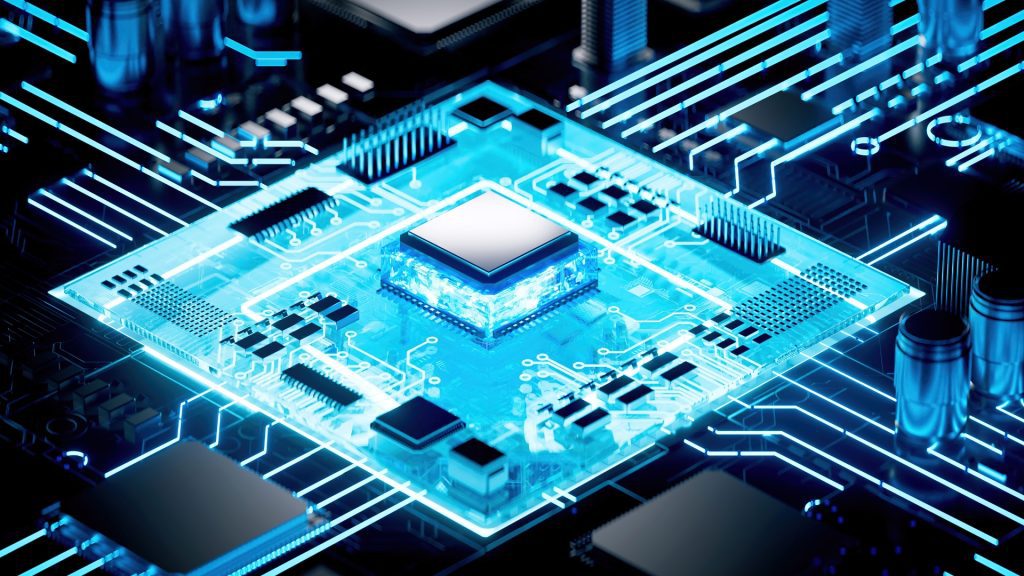
Lightmatter Releases New Photonics Technology For AI Chips
Intro: The AI Change Satisfies Its Next Frontier Picture a globe where AI models train in hours instead of weeks, information centers eat a fraction of today's energy, and GPUs never sit still. This isn't sci-fi--it's the guarantee of Lightmatter's groundbreaking photonics technology for AI chips. With AI growth, businesses are competing to develop larger, smarter models; traditional electrical interconnects are hitting a wall. Go into Lightmatter, a $4.4 billion startup that simply revealed the Passage M1000 photonic superchip and Flow L200 optical chiplet, innovations poised to redefine AI infrastructure. In this blog site, we'll unpack how Lightmatter's silicon photonics solves important traffic jams in AI information center interconnects, slashes GPU idle time, and paves the way for lasting AI growth. Whether you're an engineer, a business leader, or an AI fanatic, here's what you require to recognize. The Issue: Why AI Chips Require a Photonic Overhaul AI's eruptive growth is straining existing facilities. Training trillion-parameter models needs countless GPUs working in tandem, however, conventional copper-based electric connections can not be maintained. These systems face three crucial issues: Transmission Capacity Traffic jams: Electrical interconnects like NVIDIA's NVLink max out at ~ 900 Gbps per link, developing delays in data-heavy jobs. Power Inefficiency: Data facilities already eat 2% of international electrical energy, with AI forecasted to claim 10-- 20% by 2030. GPU Idle Time: Slow data transfer forces GPUs to wait, wasting costly calculate resources. Lightmatter's answer? Change electrons with photons. Lightmatter's Photonics Innovation: A Deep Dive 1. Passage M1000-- The Speed King of Optical Interconnects Referred to as the "world's fastest AI adjoin," the Passage M1000 is a wonder of silicon photonics engineering. Here's why it's advanced: 114 Tbps Total Amount Bandwidth: That's 100x faster than today's top electrical links. Picture a 16-lane freeway changing a single dirt road. 256 Optical Fibers with WDM: Making use of wavelength department multiplexing (WDM), each fiber carries 448 Gbps, comparable to sending out 8 colors of light down a solitary strand without interference. 3D Photonic Interposer Design: Unlike edge-only electric links, this 4,000 mm ² chip enables I/O ports anywhere on its surface area, eliminating shoreline restrictions. Real-World Effect: For AI growth companies, this means training collections can scale seamlessly. Picture connecting 10,000 GPUs without latency-- a dream for hyperscalers like AWS or Google. 2. Flow L200 Chiplet-- The Flexible Partner Slated for 2026, the Flow L200 optical chiplet deals: 32-- 64 Tbps Bidirectional Bandwidth: Compatible with AMD, Intel, or custom AI chips through UCIe user interfaces. GlobalFoundries' Fotonix ™ Platform: Developed utilizing tried and tested silicon photonics tech, ensuring production preparedness. Why It Matters: This chiplet allows businesses retrofit existing equipment with photonics, staying clear of costly overhauls. 3. Energy Effectiveness: Light Defeats Electrical Energy Photonic interconnects utilise 75% less power than electric ones. For a 100 MW information center, that's $20M conserved each year. Lightmatter's technology could solitarily curb AI's carbon footprint. Why AI Growth Companies Should Care GPU Idle Time Reduction: Say Goodbye To Waiting Around GPUs are the workhorses of AI; however, they're usually stuck puddling their transistors. Lightmatter's photonics slashes information transfer delays, guaranteeing GPUs remain busy. Early tests show a 40% decrease in still time, equating to faster model training and reduced cloud costs. Hypothetical Situation: A mid-sized AI company training a model for 30 days could reduce that to 18 days, saving $500k in calculation charges. Future-Proofing AI Data Facility Interconnects As models grow, so does the demand for scalable interconnects. Lightmatter's tech supports collections of 100,000+ GPUs--—important for next-gen AI. One-upmanship with Silicon Photonics Embracing early can place firms as pioneers. As LinkedIn blog posts from Lightmatter's group emphasize, collaborations with GlobalFoundries and Amkor make certain supply chain reliability. Challenges: The Roadblocks to Photonic Supremacy While promising, Lightmatter's technology isn't without obstacles: Manufacturing Intricacy: Lining up 256 fibers per chip resembles threading a needle-- in a hurricane. Low yields could surge expenses. NVIDIA's Counterpunch: Their Spectrum-X optical switches supply 400 Tb/s for rack-to-rack links, leveraging existing facilities. Thermal Problems: Delivering 1.5 kW of power requires liquid air conditioning, which could offset power savings. Secret Takeaway: Pilot Lightmatter's 2025 dev packages, but maintain NVIDIA's services as a backup. Strategic Insights for Services and Engineers For Designers: Accept Silicon Photonics Experiment Early: Lightmatter's SDKs (coming late 2025) allow you to evaluate photonics in crossbreed systems. Concentrate on thermal design: collaborate with cooling professionals to deal with the 1.5 kW power tons. For Decision-Makers: Determine the ROI Hyperscalers: Prioritize long-term gains. Lightmatter's scalability aligns with trillion-parameter versions. Startups: Wait for costs to drop post-2026. NVIDIA's Spectrum-X might supply short-term savings. Market Outlook Per Reuters, Lightmatter is looking at a 2027 IPO, signifying confidence. The silicon photonics market is predicted to grow at 25% CAGR by 2034- do not be left behind. SEO-Optimized Search Queries & Semantic Keywords Target Market: AI engineers, data center managers, CTOs, and tech financiers. Leading Google Queries to Target: "Lightmatter photonics technology vs NVIDIA" "How photonic chips decrease GPU runtime" "AI information facility interconnects solutions 2025." "GlobalFoundries Fotonix platform for AI chips" Semantic Keywords to Weave In: Photonic computing for sustainable AI Silicon photonics in AI infrastructure Energy-efficient GPU clusters Co-packaged optics (CPO) for information facilities Lightmatter Passage M1000 specs Conclusion: The Dawn of Photonic AI Lightmatter isn't just marketing chips--—it's marketing a vision. A vision where AI trains quicker, data centers eat less power, and GPU idle time becomes a relic. Yes, difficulties like manufacturing complexity impede, yet as Economic Times keeps in mind, this could be "the most significant jump considering that the transistor." For businesses, the selection is clear: study photonics currently for a competitive edge, or wait and risk playing catch-up. In either case, the future of AI is brilliant--actually.

Mar 2025
ChatGPT’s Image Generator Ignites a Studio Ghibli Art Revolution
Introduction: When AI Meets Anime Magic The internet is ablaze with whimsical landscapes, beloved memes, and iconic movie scenes reimagined in the dreamy aesthetic of Studio Ghibli—all thanks to OpenAI’s groundbreaking ChatGPT image generator. Launched as part of the GPT-4o upgrade, this tool has unleashed a tidal wave of creativity, turning everyday users into digital artists overnight. From Bollywood classics to Elon Musk memes transformed into Ghibli-style vignettes, the tool’s ability to blend AI precision with artistic flair has captured global attention. But what makes this feature so revolutionary, and why is Studio Ghibli at the heart of this frenzy? Let’s explore. What’s New in ChatGPT’s Image Generator? OpenAI’s latest upgrade, “Images in ChatGPT”, isn’t just another AI art tool—it’s a paradigm shift. Built natively into GPT-4o, the model is omnimodal, meaning it seamlessly processes text, images, audio, and video.Here’s what sets it apart: Style Transformation Mastery: Upload any image, and ChatGPT can reinterpret it in styles ranging from Studio Ghibli’s ethereal charm to South Park’s satire. Photorealistic Precision: Stunning details like realistic lighting, textures, and facial expressions push the boundaries of AI-generated art. Text Integration: Unlike predecessors, it accurately renders text within images—ideal for logos, posters, and infographics. No Watermarks: Outputs are clean, without DALL-E’s signature watermark, raising both excitement and ethical questions. The Studio Ghibli Connection: Why This Style Dominates Social Media Studio Ghibli’s films—Spirited Away, My Neighbor Totoro, and Princess Mononoke—are celebrated for their lush, hand-drawn aesthetics and heartfelt storytelling. The studio’s idyllic worlds, where everyday moments feel magical, resonate deeply with audiences. ChatGPT’s Ghibli-esque outputs tap into this nostalgia. Users are transforming personal photos, memes, and historical moments into scenes that could belong in a Miyazaki film. For example: A viral post reimagined Bollywood classics with Ghibli’s soft hues and whimsical character designs. Elon Musk’s rally jump became a fantastical leap over a Ghibli-inspired countryside. Even mundane objects, like coffee cups, gain charm when rendered with the studio’s signature “twinkle.” Why Ghibli? The style’s emphasis on nature, emotion, and simplicity aligns perfectly with AI’s strength in pattern replication. Yet, this trend also highlights a paradox: Studio Ghibli co-founder Hayao Miyazaki once called AI art “an insult to life itself,” critiquing its lack of human soul. Beyond Ghibli: ChatGPT’s Versatility in Art and Design While Ghibli dominates headlines, the tool’s versatility shines across creative domains: 1 .Pop Culture Mashups: Transform photos into Minecraft blocks, South Park characters, or vintage Polaroids. 2. Design Powerhouse: Generate logos, product mockups, and ad campaigns with precise color codes (using hex values) and transparent backgrounds. 3. Surrealism Unleashed: Combine absurd prompts (e.g., “a cat astronaut brewing coffee on Mars”) with styles like rubber hose animation or watercolor. How to Create Your Own Ghibli-Style Masterpiece Ready to join the trend? Follow these steps: 1 . Access the Tool: Available to ChatGPT Plus, Pro, Team, and API users (free tier rollout delayed due to demand). 2. Upload & Describe: Provide a clear image and prompt like, “Transform this into a Studio Ghibli scene with magical forests and soft lighting.” 3. Refine Details: Use follow-up prompts to adjust expressions, backgrounds, or add whimsical elements (e.g., “Give her a Totoro companion”). Experiment: Try blending styles (“Ghibli meets cyberpunk”) for unique hybrids. Ethical Considerations: Creativity vs. Controversy The tool’s launch hasn’t been without debate: 1 .Originality Concerns: Can AI truly replicate human artistry, or does it dilute creative integrity? 2. Miyazaki’s Stance: The Ghibli co-founder’s 2016 critique of AI as “disgusting” contrasts sharply with its current viral use.3. OpenAI’s Safeguards: The company blocks harmful content (e.g., deepfakes), but ethical dilemmas around copyright and attribution persist. Availability and Future of AI-Generated Art Despite its rocky rollout—Sam Altman cited unprecedented demand delaying free access—the tool signals AI’s growing role in democratizing creativity. Upcoming API integration for Enterprise and Education sectors promises broader applications, from marketing to interactive storytelling. Conclusion: A New Chapter for Digital Artistry ChatGPT’s image generator isn’t just a tool; it’s a cultural phenomenon. By bridging AI’s analytical power with human imagination, it invites everyone to re-envision their world through Studio Ghibli’s lens—or any style they choose. Yet, as we marvel at its potential, Miyazaki’s cautionary words remind us to cherish the human spirit behind art. Whether you’re a designer, meme lover, or Ghibli fanatic, this tool offers a canvas limited only by your creativity.