



Today’s car isn’t just metal on wheels with an engine anymore. It’s a computer that happens to drive. Premium models can have more lines of code than a fifth-generation fighter jet. And it’s the software that determines whether your car will be safe, convenient, and competitive in the market at all.
Electrification, autonomous driving, connected services – all of this requires massive investments in software development. Traditional automakers suddenly realized they can’t handle it on their own anymore. They need specialists who understand AI, cybersecurity, cloud technologies, and over-the-air updates.
In this article, we’ll tell you about the companies that write the code for millions of cars on the road. And we’ll analyze why large manufacturers are turning to external partners en masse.
What’s Happening in the Automotive Market Right Now
Tesla proved one simple thing: a car can be improved after purchase. Through the internet. At night, while you’re sleeping. Your electric car wakes up with new features, better autopilot, or increased range. Magic? No, just competent vehicle software development.
Now everyone wants the same. Mercedes presents MBUX with a voice assistant that understands natural language. BMW is investing billions in the Neue Klasse platform, where software will become the foundation of everything. Volkswagen is creating its own VW.OS operating system. General Motors is developing Ultifi – a software platform for all its brands.
The Chinese have gone even further. NIO, XPeng, Li Auto – their cars look more like smartphones on wheels. Huge screens, voice control, smart home integration. And most importantly – constant updates that add new capabilities.
Autonomy is a separate story. Waymo is already transporting passengers without drivers in San Francisco and Phoenix. Cruise is testing its robotaxis. Traditional manufacturers aren’t sitting idle either: Ford is working with Argo AI, GM is investing in Cruise, and Honda has joined forces with General Motors for joint development.
Electrification has changed the rules of the game. An electric vehicle is mechanically simpler but more complex in terms of software. You need to manage the battery, optimize regeneration, calculate routes taking into account charging stations. Energy management systems are becoming critically important.
Industry Challenges: Why Automakers Are Looking for Partners
Traditional automotive companies were built to manufacture mechanics. Their DNA is engines, suspensions, transmissions. Software was always on the periphery, something secondary. Now it’s becoming the heart of the car, and Detroit, Stuttgart, and Wolfsburg suddenly discovered they’re catastrophically short of the necessary specialists.
The first challenge is talent shortage. A young programmer chooses between Google, Apple, or an automotive concern in a provincial town. The choice is obvious. Salaries at tech companies are higher, projects more interesting, working conditions better. Automotive has long been not the sexiest segment for developers.
The second challenge is speed. The auto industry is used to development cycles of 5-7 years. In the software world, a product can become outdated in months. When Volkswagen tried to create its own software for the ID.3, the project was delayed for years. Cars stood in parking lots, waiting for code refinement.
The third challenge is complexity. A modern car contains dozens of electronic control units, millions of lines of code, countless communication protocols. All of this must work cohesively, safely, and reliably. A bug in the code can cost lives.
The fourth challenge is security. Cyberattacks on cars are already a reality. Hackers have demonstrated how to remotely hijack control of a Jeep Cherokee. Every internet connection is a potential vulnerability. We need cybersecurity experts that traditional auto companies simply don’t have.
The fifth challenge is the business model. Software development for automotive industry isn’t a one-time development. It’s constant support, updates, vulnerability fixes. You need infrastructure for over-the-air updates, servers, data analytics. Automakers understand: they need partners who already have this expertise.
That’s why we’re seeing a massive wave of partnerships. BMW is working with Microsoft Azure, Volkswagen with Amazon Web Services, GM with Google Cloud. Major concerns have realized: it’s better to find a reliable partner than to spend years trying to catch up with Tesla on their own.
Market Leaders: Who Develops Software for Cars
DXC Technology
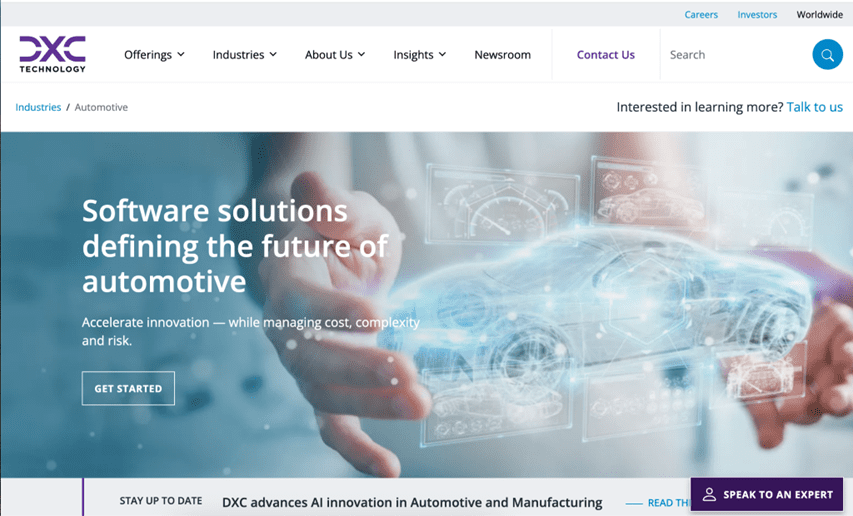
You know how big corporations sometimes struggle when everything around them goes digital? DXC Technology helps them figure it out. They work across different industries, but their automotive practice is worth paying attention to. What they do goes beyond just writing code – they help companies rebuild their entire IT infrastructure for the modern world.
Think about this: millions of cars sending data every second. Where does it all go? How do you make sense of it? DXC handles these kinds of problems. They move old systems to the cloud, set up analytics platforms, and build connected services. The interesting part is how they deal with legacy systems – those ancient mainframes that can’t just be turned off because the entire business runs on them.
Website: https://dxc.com/industries/automotive
Luxoft
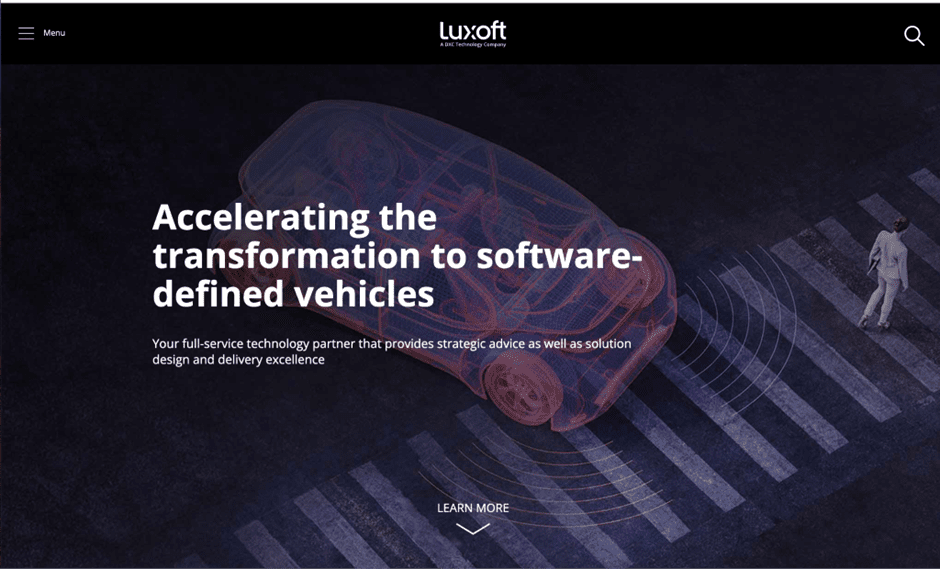
These guys really know automotive software development. They’ve been doing it for years and have offices everywhere. Luxoft works on the stuff you actually interact with in your car – the infotainment systems, digital displays, driver assistance features.
They’ve built software for BMW, Mercedes-Benz, Audi. The companies you’d expect to have high standards. Luxoft handles ADAS development, creates those interfaces you touch and swipe, and integrates voice assistants that (hopefully) understand what you’re saying. Their people understand embedded systems and functional safety, which matters when you’re dealing with code that controls a two-ton machine moving at highway speeds.
EPAM Systems
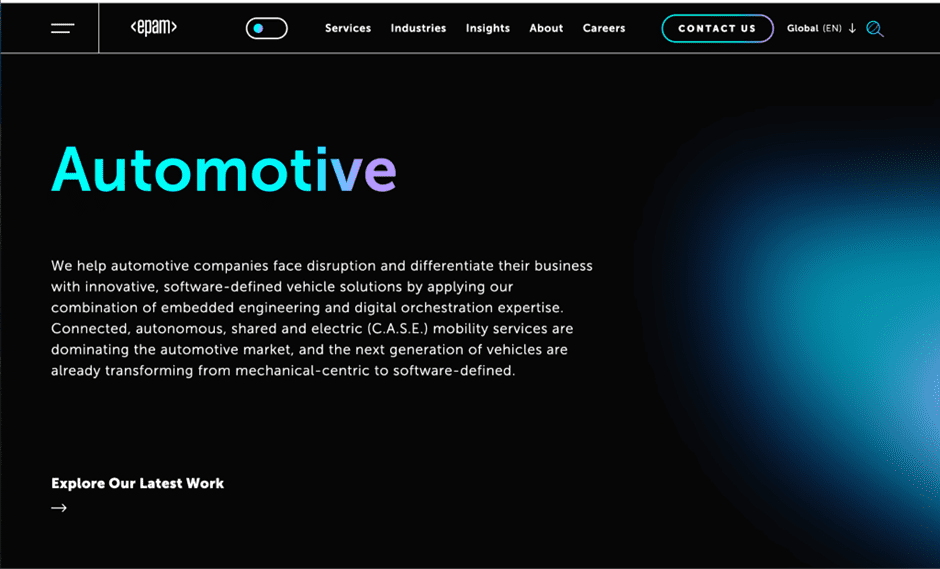
EPAM is massive. Headquarters in the US, development teams scattered across the globe. They got into automotive and brought their full-stack approach with them – consulting, architecture, implementation, support, the whole package.
They have a dedicated automotive unit now. People there work on connected cars, telematics, autonomous driving systems. EPAM invests heavily in AI and machine learning, which makes sense because that’s where automotive is heading. Their advantage is being able to scale teams quickly when a project demands it.
Elektrobit
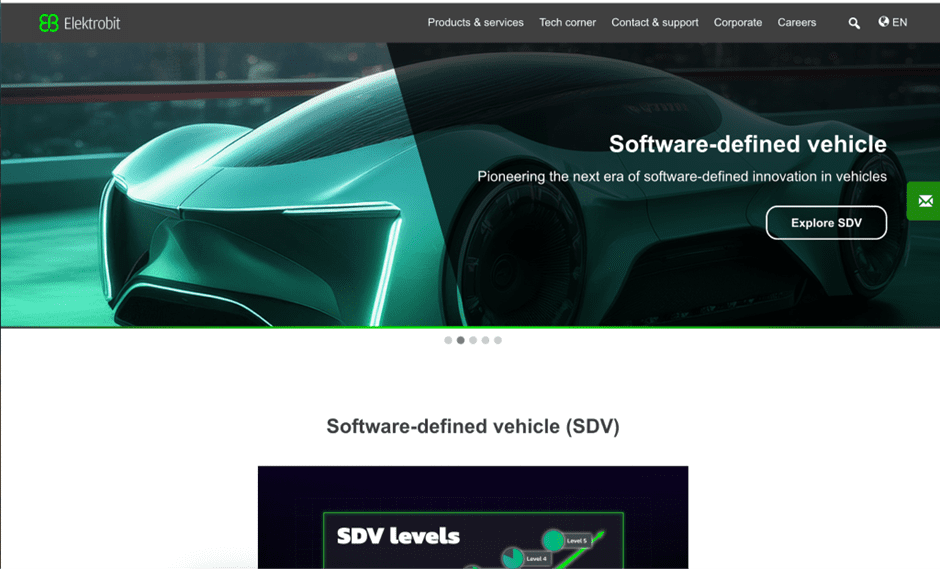
A Finnish company now owned by Continental. Elektrobit specializes in embedded software and automotive electronics. They’re one of the leaders in developing operating systems for cars.
Their EB corbos product is a software platform for software-defined vehicles. Elektrobit develops solutions for infotainment, autopilots, wireless updates. They work on adapting Android Automotive for different manufacturers. The company has deep expertise in AUTOSAR – the standard used in automotive electronics.
Harman International

Part of Samsung Electronics, Harman specializes in audio systems and connected technologies. But now they’re much more than just a manufacturer of car acoustics.
Harman develops complete digital cockpits, cybersecurity systems for cars, over-the-air update platforms. Their Ignite solution combines infotainment, telematics, and cloud services. Harman works with almost all major automakers, supplying them with software and electronics.
Thoughtworks
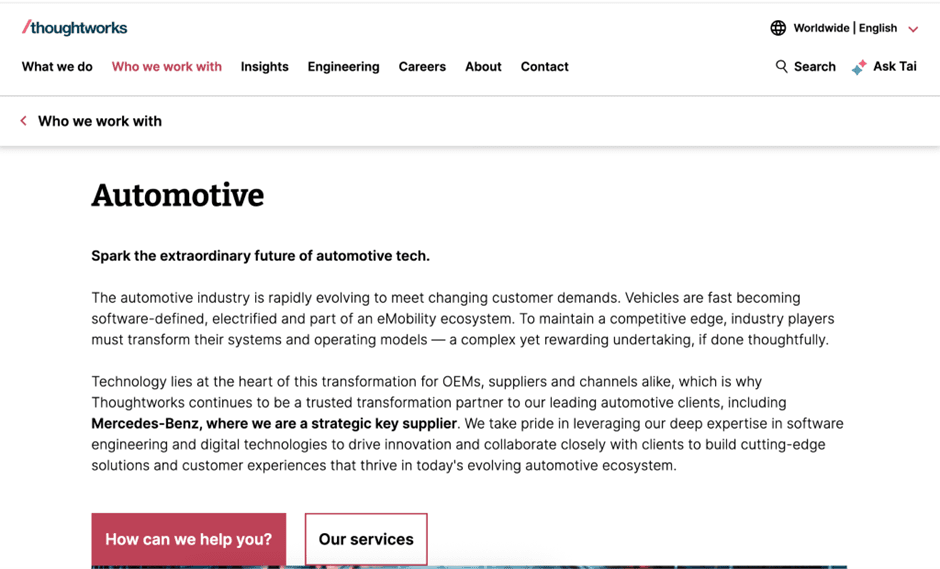
A consulting company that helps businesses with technological transformations. In automotive, they focus on building the right architecture and implementing modern development practices.
Thoughtworks helps automakers transition from waterfall development to agile, implements DevOps practices, and builds continuous delivery pipelines. They consult on microservices architecture, cloud solutions, and API strategy. Often it’s Thoughtworks that helps major concerns understand how to organize software development for automotive industry according to modern standards.
Wipro
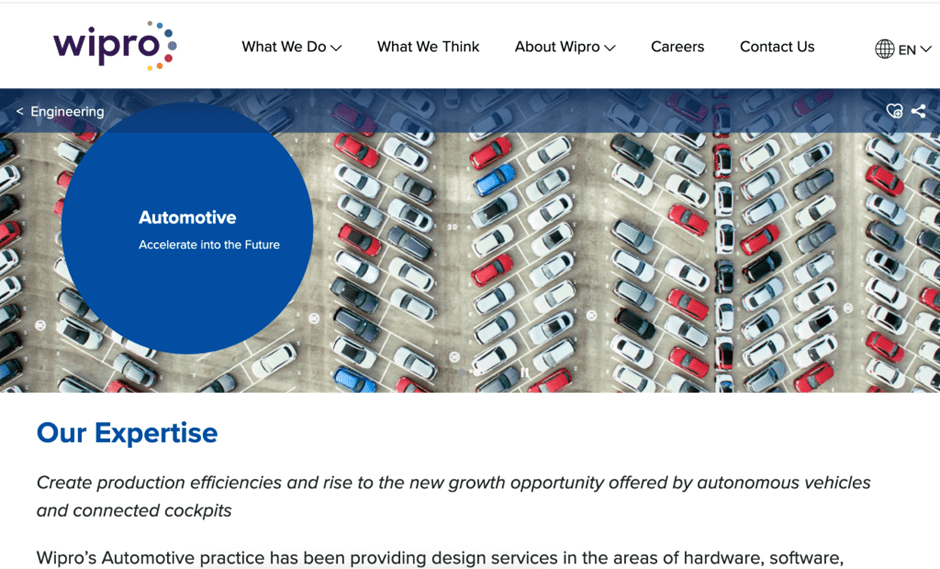
An Indian tech giant with a global presence. Wipro has a separate division dedicated to the automotive industry, where thousands of engineers work.
They develop solutions for connected cars, work on autonomous driving platforms, and create digital services for automakers. Wipro invests in research centers where they test new technologies. Their advantage is the ability to quickly scale development teams for large projects.
The Future: Where the Industry Is Heading
Automotive software development is becoming a separate industry within the automotive sector.
Artificial intelligence is changing the game. Voice assistants are getting smarter, autopilot systems more accurate, recommendations more personalized. Machine learning allows a car to learn from the experience of millions of vehicles simultaneously.
Cloud technologies are becoming the foundation for everything. Data from cars is processed in the cloud, updates come from there, AI models are trained on powerful servers. Local computing in the car combines with cloud computing for optimal balance of speed and functionality.
Cybersecurity is becoming critical. Every new connected service is a potential vulnerability. Automakers are investing billions in protection against hackers. Specialized teams are emerging that look for vulnerabilities before malicious actors find them.
Open source is playing an increasingly large role. Android Automotive is already used by Volvo, Polestar, Renault. Autoware is an open source platform for autonomous driving. Automakers understand: there’s no need to reinvent the wheel when there are ready-made solutions that can be adapted to their needs.
Standardization is accelerating. AUTOSAR, COVESA, Car Connectivity Consortium – the industry is uniting around common standards. This reduces costs and accelerates development.
Conclusions
The automotive industry is going through a fundamental transformation. Software has become the main differentiator between brands. The time when competition was only about engine power and interior quality is over. Now the choice of a car is determined by the app ecosystem, autopilot quality, and convenience of digital services.
Traditional automakers can’t handle it alone anymore. They need partners – companies with experience in vehicle software development, understanding of modern technologies, and the ability to adapt quickly. That’s why we’re seeing a boom in partnerships between auto giants and IT companies.
The software-defined vehicle is no longer a concept of the future but the present. Companies that have understood this and found the right partners will have a competitive advantage. Others risk repeating Nokia’s fate in the smartphone world – becoming a story about missing a technological revolution.

Right Firms
30 Jan 2026


Latest Posts





Submit Your Inquiry
Related Posts

Apr 2026
How to Find a Good Web Development Company in 2026
Selecting the right developer for website development is not the task of choosing a vendor. Today, the website becomes part of the business strategy. Hundreds of Web Development Companies promise to create amazing pages. But only a few are able to meet business expectations. It takes time and knowledge to choose the best development services that ensure website efficiency in the long run. Otherwise, the investment will bring losses or no visible profit at all. Why Is a Good Web Development Company Important in 2026? When choosing website development companies, it is vital to find the solution that meets modern requirements and guarantees high performance. The priorities of a reliable web development company are completely different from those of other vendors. Features of an ideal web development agency: 1. Strategic approach to project: In addition to technological skills, a reliable company knows everything about the market. 2. Advanced technologies: Knowledge of modern programming languages, frameworks, and CMS platforms. 3. Focus on users: The web development company develops responsive solutions and provides a great UX. 4. Performance optimization: The ability to develop websites of any type with good SEO and loading times. All these characteristics are necessary to distinguish between good and bad web development services. Evaluating Portfolio of the Agency When selecting website development services, many entrepreneurs begin with portfolio analysis. They pay attention to the visual design. But such an approach to portfolio evaluation does not guarantee high-quality development. That is why you need to understand what makes a portfolio good. What to look for in a good portfolio of a web development company: 1. Diverse projects: The presence of successful projects in various niches demonstrates versatility. 2. Excellent UX design: Easy-to-use sites with great navigation and mobile-friendly designs. 3. High performance: Good websites should have excellent loading and interaction times. 4. Results of development: Traffic and conversion rate increase after working with a good developer. A good portfolio includes projects with positive outcomes. Knowing What Tech Stack Is Used by Website Developers For most businesses, website development and programming terms may be unknown. However, some knowledge allows entrepreneurs to choose the best web development services. Main criteria for evaluating tech stack of a company: 1. Scalability: Modern tech stacks guarantee the efficient work of websites of any complexity. 2. Security: It is important to understand whether website security is provided by the framework. 3. Flexibility: An advanced web development company provides integration with third-party software. 4. CMS or custom development: Choosing an appropriate approach depends on the specific needs of the customer. If website developers use a proper tech stack, then they will not use overly complicated words when explaining their decisions. Pricing Models of Website Developers: What Is the Difference? Website development agencies offer different prices depending on their experience, location, and preferences. Moreover, cheap prices do not necessarily guarantee a good solution. Popular website development pricing models: 1. Fixed cost services: Suitable for projects where all details are known in advance. 2. Hourly model: Provides greater flexibility compared to the others. 3. Team-oriented pricing: Best choice for long-term projects. 4. Value-based pricing model: Determining costs based on the outcome for the business. Apart from the initial cost, other fees related to the website maintenance should also be considered. How Communication and Project Management Help Avoid Common Website Development Mistakes Poor website performance usually happens because of wrong expectations or misunderstanding. In order to prevent possible complications, a web development company must provide adequate project management and constant communication with customers. Main features of communication with website developers: 1. Detailed deadlines and project planning: Information about all project details is shared regularly. 2. Point of contact for customers: Project manager serves as the intermediary in communication. 3. Using project management tools: Web developers should provide progress reports. Good project management guarantees successful website performance. Why Post-Launch Support is Important Website development is only half the battle. Further actions should be taken to ensure website efficiency in the future. Main post-launch activities: Fixing bugs and ensuring high performance of the siteApplying updates to provide website securityUpdating and adding featuresAdditional technical support Unfortunately, many entrepreneurs neglect this phase of development. But it is essential for long-term project efficiency. Web Development Checklist for Business Owners To make sure that you select the best website development services, follow this website development checklist: 1. Company's experience in your nicheThe company understands all peculiarities of the niche and customer needs. 2. Checking portfolio and previous projectsIt is important to evaluate all projects to see the level of web developers' expertise. 3. Evaluation of tech stack of web development companyCheck if a web developer uses modern frameworks and approaches to development. 4. Website's ability to function correctly on smartphonesThe main priority of the company is to provide the best UX. 5. SEO optimization and good website performanceCheck if websites developed by a company are good for search engines. 6. Price breakdown without hidden feesThere should be no additional fees in website development pricing models. 7. Communication during the development processGood website developers must guarantee frequent contacts. 8. Ongoing support for developed websitesAfter development, companies should provide support for some time. 9. Client reviews of website developersReviews will help you learn about the company better. 10. The ability of website to grow along with your business Final Words About Selecting Web Development Services A good web developer does not only have the right set of skills and technologies. To choose the best company, you should also check its capabilities, client reviews, and other crucial details.

Apr 2026
Blockchain Development Explained: Use Cases, Benefits, and Business Applications
Modern businesses reconsider approaches to data storage, confirmation, and transactions. Centralized solutions tend to bring many inconveniences associated with dependency on an intermediary, inefficiency, and security risks. Thus, blockchain development has become a preferred choice for those who seek to explore reliable Blockchain Development Companies for future projects. Key Features of Blockchain Technology and How They Differ From Centralized Systems To put it simply, blockchain technology offers a solution that can store data distributedly. This means that transactions are registered on several network participants' devices, which helps improve transparency and significantly reduce manipulation risks. Advantages of blockchain solutions and applications include: Increased data safety due to encryption. Improved trust due to decentralization. Enhanced security due to immutability. Greater transparency due to distributed confirmation. These advantages help make blockchain development popular among businesses and investors. How Smart Contracts and Decentralized Applications Function The blockchain development also refers to the ability to create smart contracts and decentralized applications that can automate tasks and provide additional benefits. 1. What Are Smart Contracts? Smart contracts refer to self-executable contracts that automatically trigger certain actions if the preset conditions are satisfied. Their key benefits are: Simplified workflow due to lack of intermediaries. Decreased transaction fees. Improved efficiency due to increased speed. Reduced complexity due to automation. Today, such contracts are used in legal procedures, financial transactions, and insurance. 2. What Are Decentralized Applications? Decentralized apps (dApps) offer services using the blockchain network instead of the centralized server. The most common examples of decentralized applications and platforms include: Financial services Digital identity systems Gaming systems NFT marketplaces These applications are expected to reshape our future. Examples of Real-World Business Applications of Blockchain Technology Here are the examples of real-world business applications based on blockchain technologies that are already used in different spheres today. 1. FinanceSpeed up transactions.Cut fees.Offer greater traceability.Develop decentralized finance systems. 2. HealthcareEnsure safe data management.Facilitate controlled data sharing.Verify drug supply.Ensure greater clinical transparency. 3. Supply chain managementImprove end-to-end product tracking.Ensure authenticity and provenance.Prevent counterfeiting.Increase logistics efficiency. 4. GamingAllow users to own digital assets.Implement play-to-earn mechanics.Establish tokenized gaming economies.Use game items across platforms. As you can see, all these use cases have something in common – all the problems solved by the applications and solutions were real. There was no attempt to apply the technology where it is unnecessary. Advantages of Using Blockchain Solutions in Modern Businesses The following benefits can serve as reasons for businesses to invest in blockchain development. 1. Transparency: All transactions can be easily traced by authorized parties. 2. Security: Decentralized system architecture increases safety. 3. Cost reductions: No intermediaries decrease expenses. 4. Data integrity: Immutable data provides reliable results. 5. Improved efficiency: Transactions and processes can be automated. It becomes obvious that blockchain development offers businesses a wide range of possibilities and opportunities. When to Implement Blockchain Development? Of course, blockchain development cannot suit any business situation. Therefore, a company must identify when the technology would provide more advantages than centralized alternatives. You may consider the blockchain development if: There is a need for shared access to data. There is a requirement to ensure traceability. There is a lack of trust between the parties. There are intermediary-related delays or increased expenses. There is a need for enhanced data security. On the other hand, there are situations when implementing this technology is not required. If you have an efficient centralized solution If the task does not involve money or sensitive data If a transaction takes only seconds to complete In these cases, choosing blockchain development can be pointless. Selecting the Right Blockchain Development Companies RightFirms platform offers a list of verified and experienced blockchain development companies and firms. You will not need to spend time searching to find a reliable blockchain developer or expert to address your concerns. Conclusion Blockchain is now gradually integrated into the digital landscape and becomes one of the most promising technological trends. However, its value lies not in the hype and buzzwords but in its ability to resolve practical challenges and bring substantial benefits.

Apr 2026
What Are the Benefits of Web Hosting for Businesses?
Competing online requires more than just a website. It requires a dependable foundation that keeps the website operating smoothly at all times. Web hosting forms the foundation of any online presence, yet many business owners ignore its importance when shaping their digital strategy. Whether you run a small local shop or manage a growing e-commerce brand, the specific type of hosting you choose has a direct impact on your site speed, security, customer trust, and ultimately your overall revenue potential. This guide explains quality hosting's practical benefits and why it deserves strategic investment for future success. How Professional Web Hosting Transforms Daily Business Operations Faster Load Times and Their Direct Impact on Sales Site speed is not a vanity metric. Research consistently shows that even a one-second delay in page loading can reduce conversions by up to seven percent. When your business relies on a professional hosting provider with solid server infrastructure, pages load quickly and reliably. Customers browsing your product catalog or filling out a contact form experience fewer interruptions, which translates into higher completion rates. A dedicated or managed hosting plan typically offers better processing power and memory allocation than budget shared plans, giving your site the resources it needs during peak traffic hours. Before you set up hosting, however, you need a strong web address. Businesses that invest early in memorable domain names position themselves for better brand recall and more direct traffic from returning visitors. Uptime Guarantees That Protect Your Revenue Stream When a website experiences downtime, it directly costs the business money because every minute of unavailability represents lost sales, missed opportunities, and potential damage to the brand's reputation. Brief downtime can erase major revenue for online retailers. Professional hosting providers typically guarantee 99.9% uptime or higher, which is made possible because their infrastructure relies on redundant systems and automatic failover mechanisms that keep services running even when individual components fail. This reliability ensures your customers can access your site anytime, whether shopping at midnight or seeking support at dawn. Reliable uptime also helps establish trust with your visitors over time. Customers who face frequent outages will switch to a competitor with a reliable site. Five Concrete Advantages Your Company Gains From Quality Hosting Because not all hosting plans are created equal in terms of the features, performance, and reliability they offer, carefully choosing the right one for your particular needs brings measurable, tangible benefits that can make a significant difference for your business. Here are five specific advantages that quality hosting, when carefully selected from the many options available on the market today, reliably provides to businesses of all sizes, whether they are small startups or large established enterprises: 1. Improved search engine rankings. Fast, secure, mobile-friendly hosting boosts your position in search results. 2. Stronger data protection. Reputable hosts provide backups, malware scanning, and firewalls to safeguard customer data. 3. Scalability on demand. Cloud and VPS plans let you add resources during traffic spikes without platform migration. 4. Professional email integration. Quality hosting often includes custom domain email, boosting brand credibility. 5. Round-the-clock technical support. 24/7 expert assistance prevents minor issues from becoming extended outages. If you are planning a new website or redesigning an existing one, working with experienced developers makes the process considerably smoother. Our directory of top-rated web development firms is a practical starting point for finding a team that understands both design and server-side performance. Why Security Alone Justifies the Investment Cyberattacks against small and mid-sized businesses have risen sharply throughout 2025 and into 2026. When you opt for shared hosting on a bargain provider, you often end up sharing server space with hundreds of unknown websites, any one of which could introduce serious security vulnerabilities into your environment. A reliable hosting plan separates your data, installs security patches regularly, and watches traffic for suspicious behavior. The cost difference between a basic hosting plan and a secure one, which typically amounts to only a modest monthly increase, is negligible when compared to the severe financial losses and lasting reputational damage that a data breach, once it occurs, can inflict upon a business. Matching Your Domain Name Strategy to Your Hosting Plan Your domain and your hosting work together as a unified system. A premium domain name loses its power if the site behind it loads slowly or crashes under moderate traffic. Similarly, high-performance hosting is wasted if visitors cannot remember or find your web address. Smart businesses align both elements during the planning phase. They choose a domain that reflects their brand, then select a hosting plan with enough bandwidth and storage to support their content strategy. This alignment also matters for email deliverability and DNS management, ensuring that all technical components point in the same direction. A detailed analysis of hosting advantages confirms that businesses pairing strong domain strategy with reliable hosting report higher customer retention rates and improved organic search visibility. Hidden Costs of Choosing the Wrong Hosting Provider Choosing a web hosting provider based purely on the lowest available price often backfires in ways that end up costing significantly more in the long run. Budget hosts may promote very low monthly rates yet enforce tight resource limits, charge extra for SSL certificates, or cap your databases. Migration becomes costly and time-consuming once your site outgrows these imposed limitations. Some budget providers oversell server space by cramming hundreds of accounts onto one machine, hurting performance for all users. Lost productivity also carries hidden costs that are easy to overlook. Slow admin panels, limited support hours, and outdated control panels, which collectively frustrate day-to-day management tasks, eat into the valuable time that your team could otherwise dedicate to revenue-generating activities, ultimately reducing the productivity gains you expected when choosing a more affordable hosting plan. Before committing, carefully review the terms, read independent reviews, and inquire about bandwidth caps, backup policies, and upgrade options. Building a Resilient Online Infrastructure for Future Growth A forward-looking hosting strategy accounts for where your business will be in two or three years, not just where it stands today. If you plan to expand into new markets, add an online store, or launch a content hub, your hosting environment must scale accordingly. Cloud-based solutions offer particular flexibility, allowing you to adjust computing resources in real time without hardware changes. Businesses operating in competitive regional markets often benefit from specialized development partners who understand local search behavior and compliance requirements. Our curated list of leading web development companies in California highlights firms that combine technical hosting expertise with regional market knowledge. You should also consider redundancy in addition to scalability. A single server located in one data center constitutes a single point of failure for your site. Modern hosting configurations distribute your site across multiple geographic locations around the world, which means that if one node experiences any problems or goes offline, another node automatically takes over immediately to maintain availability. This setup improves uptime and speeds up content delivery for visitors across different regions. Turning Hosting Into a Competitive Advantage Web hosting is far more than a simple line item on your IT budget, as it serves a foundational role that directly influences every aspect of your online presence. It is the engine that drives and sustains every single customer interaction on your website, from the very first page load that shapes a visitor's initial impression, through each subsequent click and form submission, all the way to the final checkout confirmation that completes the purchase. Businesses that treat hosting as a strategic priority gain faster sites, stronger security, better search visibility, and the flexibility to grow without technical bottlenecks. The essential step is to assess your current needs, plan for growth, and select a provider that matches your long-term goals. A strong digital foundation makes all other efforts succeed. Frequently Asked Questions Where can I find the right domain name for my business hosting setup? Choosing the right domain is crucial before setting up hosting, as it serves as your digital address that customers will remember and trust. A strategic domain name makes it easier for visitors to find you directly and builds credibility for your brand. IONOS offers comprehensive domain names that pair perfectly with professional hosting solutions to create a strong foundation for your online presence. How do I migrate my existing business website to better hosting without losing data? Start by creating complete backups of your website files, databases, and email accounts before initiating any transfer. Use staging environments to test functionality, and plan the migration during low-traffic periods to minimize disruption. Most professional hosting providers offer free migration services and technical support to ensure a smooth transition without data loss. What are the most common web hosting mistakes that hurt business performance? Many businesses choose the cheapest hosting option without considering scalability, leading to crashes during traffic spikes. Other frequent errors include skipping regular backups, ignoring security updates, and failing to optimize for mobile performance. These oversights can result in lost customers and damaged reputation when your site becomes unreliable. How much should I budget for business web hosting per month? Business hosting costs typically range from $10-50 monthly for shared plans, $50-200 for VPS hosting, and $100-500+ for dedicated servers. The investment depends on your traffic volume, security requirements, and resource needs. Factor in additional costs like SSL certificates, backups, and premium support when calculating your total hosting budget. Which hosting features should I prioritize for e-commerce business growth? Focus on hosting plans that offer dedicated IP addresses, advanced security features like malware scanning, and automatic scaling capabilities for traffic surges. E-commerce sites also benefit from integrated payment gateway support, staging environments for testing updates, and geographically distributed content delivery networks to serve global customers efficiently.