


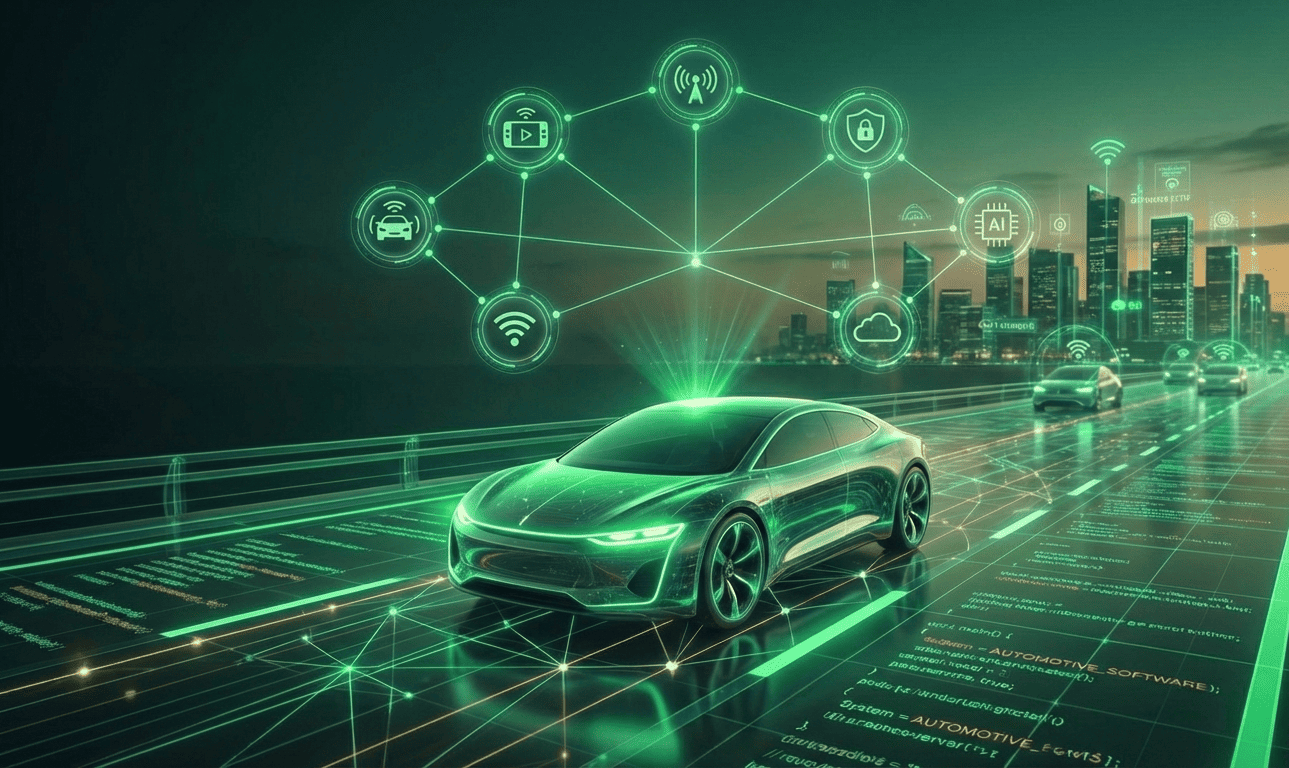
Today’s car isn’t just metal on wheels with an engine anymore. It’s a computer that happens to drive. Premium models can have more lines of code than a fifth-generation fighter jet. And it’s the software that determines whether your car will be safe, convenient, and competitive in the market at all.
Electrification, autonomous driving, connected services – all of this requires massive investments in software development. Traditional automakers suddenly realized they can’t handle it on their own anymore. They need specialists who understand AI, cybersecurity, cloud technologies, and over-the-air updates.
In this article, we’ll tell you about the companies that write the code for millions of cars on the road. And we’ll analyze why large manufacturers are turning to external partners en masse.
What’s Happening in the Automotive Market Right Now
Tesla proved one simple thing: a car can be improved after purchase. Through the internet. At night, while you’re sleeping. Your electric car wakes up with new features, better autopilot, or increased range. Magic? No, just competent vehicle software development.
Now everyone wants the same. Mercedes presents MBUX with a voice assistant that understands natural language. BMW is investing billions in the Neue Klasse platform, where software will become the foundation of everything. Volkswagen is creating its own VW.OS operating system. General Motors is developing Ultifi – a software platform for all its brands.
The Chinese have gone even further. NIO, XPeng, Li Auto – their cars look more like smartphones on wheels. Huge screens, voice control, smart home integration. And most importantly – constant updates that add new capabilities.
Autonomy is a separate story. Waymo is already transporting passengers without drivers in San Francisco and Phoenix. Cruise is testing its robotaxis. Traditional manufacturers aren’t sitting idle either: Ford is working with Argo AI, GM is investing in Cruise, and Honda has joined forces with General Motors for joint development.
Electrification has changed the rules of the game. An electric vehicle is mechanically simpler but more complex in terms of software. You need to manage the battery, optimize regeneration, calculate routes taking into account charging stations. Energy management systems are becoming critically important.
Industry Challenges: Why Automakers Are Looking for Partners
Traditional automotive companies were built to manufacture mechanics. Their DNA is engines, suspensions, transmissions. Software was always on the periphery, something secondary. Now it’s becoming the heart of the car, and Detroit, Stuttgart, and Wolfsburg suddenly discovered they’re catastrophically short of the necessary specialists.
The first challenge is talent shortage. A young programmer chooses between Google, Apple, or an automotive concern in a provincial town. The choice is obvious. Salaries at tech companies are higher, projects more interesting, working conditions better. Automotive has long been not the sexiest segment for developers.
The second challenge is speed. The auto industry is used to development cycles of 5-7 years. In the software world, a product can become outdated in months. When Volkswagen tried to create its own software for the ID.3, the project was delayed for years. Cars stood in parking lots, waiting for code refinement.
The third challenge is complexity. A modern car contains dozens of electronic control units, millions of lines of code, countless communication protocols. All of this must work cohesively, safely, and reliably. A bug in the code can cost lives.
The fourth challenge is security. Cyberattacks on cars are already a reality. Hackers have demonstrated how to remotely hijack control of a Jeep Cherokee. Every internet connection is a potential vulnerability. We need cybersecurity experts that traditional auto companies simply don’t have.
The fifth challenge is the business model. Software development for automotive industry isn’t a one-time development. It’s constant support, updates, vulnerability fixes. You need infrastructure for over-the-air updates, servers, data analytics. Automakers understand: they need partners who already have this expertise.
That’s why we’re seeing a massive wave of partnerships. BMW is working with Microsoft Azure, Volkswagen with Amazon Web Services, GM with Google Cloud. Major concerns have realized: it’s better to find a reliable partner than to spend years trying to catch up with Tesla on their own.
Market Leaders: Who Develops Software for Cars
DXC Technology
You know how big corporations sometimes struggle when everything around them goes digital? DXC Technology helps them figure it out. They work across different industries, but their automotive practice is worth paying attention to. What they do goes beyond just writing code – they help companies rebuild their entire IT infrastructure for the modern world.
Think about this: millions of cars sending data every second. Where does it all go? How do you make sense of it? DXC handles these kinds of problems. They move old systems to the cloud, set up analytics platforms, and build connected services. The interesting part is how they deal with legacy systems – those ancient mainframes that can’t just be turned off because the entire business runs on them.
Website: https://dxc.com/industries/automotive
Luxoft
These guys really know automotive software development. They’ve been doing it for years and have offices everywhere. Luxoft works on the stuff you actually interact with in your car – the infotainment systems, digital displays, driver assistance features.
They’ve built software for BMW, Mercedes-Benz, Audi. The companies you’d expect to have high standards. Luxoft handles ADAS development, creates those interfaces you touch and swipe, and integrates voice assistants that (hopefully) understand what you’re saying. Their people understand embedded systems and functional safety, which matters when you’re dealing with code that controls a two-ton machine moving at highway speeds.
EPAM Systems
EPAM is massive. Headquarters in the US, development teams scattered across the globe. They got into automotive and brought their full-stack approach with them – consulting, architecture, implementation, support, the whole package.
They have a dedicated automotive unit now. People there work on connected cars, telematics, autonomous driving systems. EPAM invests heavily in AI and machine learning, which makes sense because that’s where automotive is heading. Their advantage is being able to scale teams quickly when a project demands it.
Elektrobit
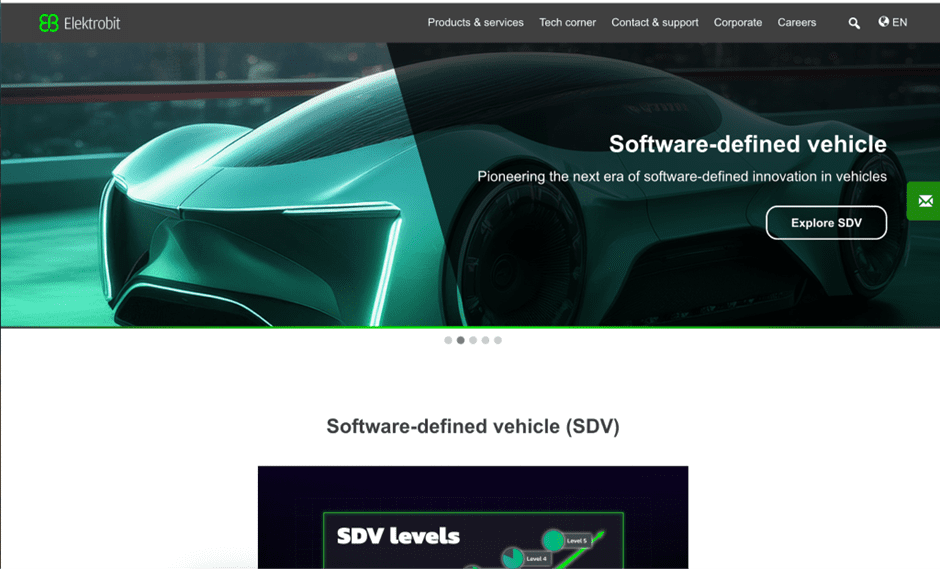
A Finnish company now owned by Continental. Elektrobit specializes in embedded software and automotive electronics. They’re one of the leaders in developing operating systems for cars.
Their EB corbos product is a software platform for software-defined vehicles. Elektrobit develops solutions for infotainment, autopilots, wireless updates. They work on adapting Android Automotive for different manufacturers. The company has deep expertise in AUTOSAR – the standard used in automotive electronics.
Harman International
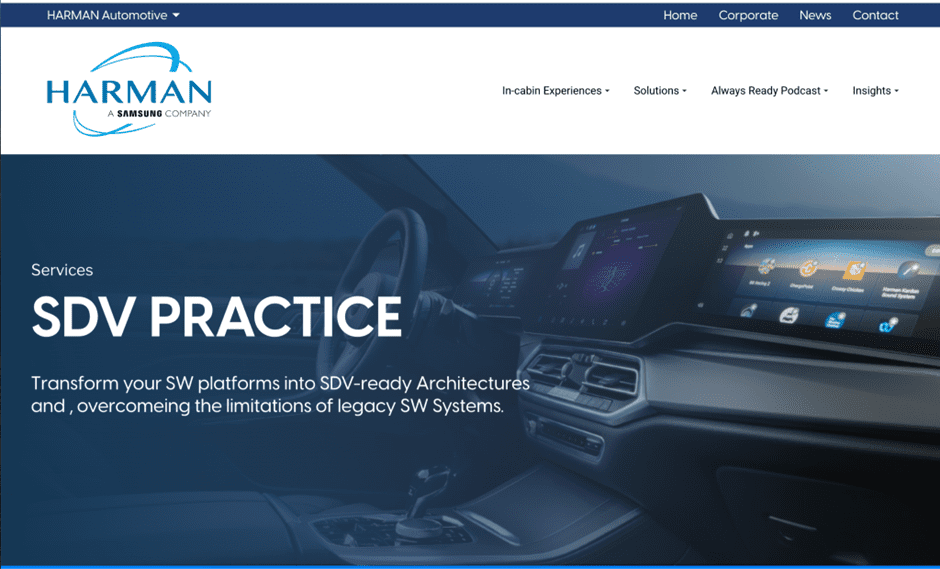
Part of Samsung Electronics, Harman specializes in audio systems and connected technologies. But now they’re much more than just a manufacturer of car acoustics.
Harman develops complete digital cockpits, cybersecurity systems for cars, over-the-air update platforms. Their Ignite solution combines infotainment, telematics, and cloud services. Harman works with almost all major automakers, supplying them with software and electronics.
Thoughtworks
A consulting company that helps businesses with technological transformations. In automotive, they focus on building the right architecture and implementing modern development practices.
Thoughtworks helps automakers transition from waterfall development to agile, implements DevOps practices, and builds continuous delivery pipelines. They consult on microservices architecture, cloud solutions, and API strategy. Often it’s Thoughtworks that helps major concerns understand how to organize software development for automotive industry according to modern standards.
Wipro
An Indian tech giant with a global presence. Wipro has a separate division dedicated to the automotive industry, where thousands of engineers work.
They develop solutions for connected cars, work on autonomous driving platforms, and create digital services for automakers. Wipro invests in research centers where they test new technologies. Their advantage is the ability to quickly scale development teams for large projects.
The Future: Where the Industry Is Heading
Automotive software development is becoming a separate industry within the automotive sector.
Artificial intelligence is changing the game. Voice assistants are getting smarter, autopilot systems more accurate, recommendations more personalized. Machine learning allows a car to learn from the experience of millions of vehicles simultaneously.
Cloud technologies are becoming the foundation for everything. Data from cars is processed in the cloud, updates come from there, AI models are trained on powerful servers. Local computing in the car combines with cloud computing for optimal balance of speed and functionality.
Cybersecurity is becoming critical. Every new connected service is a potential vulnerability. Automakers are investing billions in protection against hackers. Specialized teams are emerging that look for vulnerabilities before malicious actors find them.
Open source is playing an increasingly large role. Android Automotive is already used by Volvo, Polestar, Renault. Autoware is an open source platform for autonomous driving. Automakers understand: there’s no need to reinvent the wheel when there are ready-made solutions that can be adapted to their needs.
Standardization is accelerating. AUTOSAR, COVESA, Car Connectivity Consortium – the industry is uniting around common standards. This reduces costs and accelerates development.
Conclusions
The automotive industry is going through a fundamental transformation. Software has become the main differentiator between brands. The time when competition was only about engine power and interior quality is over. Now the choice of a car is determined by the app ecosystem, autopilot quality, and convenience of digital services.
Traditional automakers can’t handle it alone anymore. They need partners – companies with experience in vehicle software development, understanding of modern technologies, and the ability to adapt quickly. That’s why we’re seeing a boom in partnerships between auto giants and IT companies.
The software-defined vehicle is no longer a concept of the future but the present. Companies that have understood this and found the right partners will have a competitive advantage. Others risk repeating Nokia’s fate in the smartphone world – becoming a story about missing a technological revolution.

Right Firms
30 Jan 2026


Latest Posts





Submit Your Inquiry
Related Posts

Mar 2026
How IoT Development Is Changing Smart Cities and Businesses
A few years ago, the concept of objects being connected to the Internet of Things (IoT) would have sounded quite futuristic. Today, however, the phenomenon has become a part of everyday life. For example, traffic lights are connected and communicate with the main system, delivery trucks are sending live location updates, and farmers are using devices to monitor the state of the soil. IoT Development is the driving force behind this revolution. IoT Development is the process of developing devices, machines, and infrastructures that can communicate with each other using data. They are no longer isolated entities; they are connected and can respond accordingly. As the size of the city and the need for efficient running of businesses increase, Internet of Things development has become the mainstay of how things are run in the present day. 1. Smart Cities Are Being Transformed into Data-Driven Cities The first and most obvious change that has resulted from IoT Development is the creation of Smart Cities around the world. These cities are using IoT Development to monitor traffic, street lighting, energy consumption, and security. Devices are placed all over the city, and they communicate with the main system by sending updates in real time. These updates are then used by the authorities of the city to make better decisions. For example, the traffic system can be programmed in a way that the traffic signals can be optimized during peak hours. Smart parking systems can be implemented in the city, and the system will be able to tell people where the available parking spaces are. Street lighting can be made dim during the night if no activity is detected by the system. These changes are not always obvious in the lives of the people, but they are quite significant in the way the city is run behind the scenes. 2. The Healthcare Sector Is Making Use of IoT Development Healthcare is another sector in which IoT software development has started to change the way services are being provided. For instance, wearable health devices can monitor heart rate, sleep, and activity levels. Connected hospital equipment enables doctors to monitor patients' health in real time. They can even be notified if there is a change in their health beyond a certain threshold. Remote monitoring of patients has also become useful in managing chronic diseases. Instead of patients having to visit hospitals frequently, remote monitoring of patients' health can be conducted, with healthcare experts analyzing the data remotely. This is not only beneficial for patients but also enables early intervention in case of any untoward incident. 3. Logistics and Supply Chains Are Becoming More Transparent For businesses in logistics, nothing is as important as knowing the exact status of goods in transit. They want to know where their goods are, how they are being transported, and whether it is safe for goods to be transported in that manner. By using IoT solutions for businesses, organizations can attach devices to goods in transit. This enables real-time communication of location, temperature, humidity, and other parameters. For industries in which goods need to be transported at certain temperatures, this is of utmost importance. For instance, if there is a change in temperature during transportation, alerts can be sent in real time. Over time, this enables organizations to optimize routes, prevent delays, and improve reliability of services. 4. Agriculture Is Becoming More Precise Through Sensors Agriculture is one of those industries that is considered traditional, yet it is being revolutionized by IoT solutions. Farmers use various smart devices to monitor soil moisture, weather, and crop health. They can even use devices to optimize water usage. This kind of Internet of Things development enables farmers to use resources in a better manner. Water is used when it is needed. The amount of fertilizer is adjusted in a precise manner. For those regions that suffer from water scarcity or weather upsets, these findings can be a boon in terms of crop yield. 5. Manufacturing is Moving Towards Predictive Maintenance Factories are another area in which Internet of Things development is making its presence felt. In traditional manufacturing environments, it was common for repairs to be done only when a piece of equipment had already broken down. This was not only costly but also led to unexpected stoppages in production. With Internet of Things software development, it is now possible for sensors to monitor vibration, temperature, and other parameters of machinery in a factory. If these parameters change, it is possible to alert someone in time, so that a breakdown is avoided. This is known as predictive maintenance, in which unexpected stoppages in production are avoided, thereby prolonging the life of equipment. 6. Businesses Are Using Internet of Things Development to Improve Their Operations While large-scale infrastructure development is one area in which Internet of Things development is making its presence felt, many businesses are also using Internet of Things solutions for businesses to improve their operational efficiency. Retail businesses use Internet of Things development to track inventory in a precise manner. Buildings use Internet of Things development to track energy usage in precise detail. Transportation businesses use Internet of Things development to track their fleet in real time. Common to all these examples is the availability of data in real time. The moment there is data available, businesses can take better decisions. 7. Data Available from Internet of Things Devices Enables Better Decisions The true value of Internet of Things development is not in the devices themselves, but in the data that is available. Through IoT Development, businesses can access a large volume of information. When properly analyzed, the information can help the business identify various patterns that were not visible before. For instance, a factory can identify inefficiencies in the production cycles. A logistics company can identify delays in certain routes. A city can identify changes in the flow of traffic due to various events. These help the business to plan better. 8. Security and Reliability Are Critical in IoT Systems More devices mean that security is a critical factor. Each device that is connected to the network presents a security risk to the entire network. Therefore, a well-designed IoT system must be secure enough to protect the network from any security threats. Professional IoT software development is not only about developing the network but also ensuring that the network is secure. Therefore, it is critical to implement security measures to protect the network from security threats. 9. Choosing the Right IoT Development Partner Matters Developing a successful IoT system is a complex task that requires the expertise of various people. It involves integrating various devices that can generate information. It also involves developing the necessary software that can help the business analyze the information. Therefore, when developing an IoT system, it is critical to consider the expertise of the development partners. For instance, Rightfirms can help businesses identify the most suitable IoT Development companies. A Technology That Is Quietly Reshaping Everyday Life The Internet of Things is a technology that does not make much noise. It operates quietly in the background. Traffic flows better. Machines break down less frequently. Deliveries become more easily traceable. Farmers use water and soil conditions more efficiently. Each of these changes is small in itself, but when added together, they change how cities function, how businesses compete. As more industries begin to explore Internet of Things development, the Internet of Things around us will continue to grow. The organisations that invest in the right skills today will be better positioned to adapt to the future.

Dec 2025
The Hidden Cost of Poor Outsourcing: Rework, Time Zones, Cultural Gaps and How to Avoid Them
Outsourcing has become almost a default strategy for businesses that need to build software quickly without hiring large internal teams. From early-stage startups to global enterprises, companies often turn to web development companies, app development companies or even specialised generative AI companies to move projects forward. But outsourcing is not cheap when it goes wrong. In fact, the hidden costs of poor outsourcing can quietly drain more money, time and morale than anyone expects. Many businesses only realise these issues after the partnership has already collapsed, and by then, the damage is hard to undo. Let’s unpack the silent problems that show up when outsourcing is handled poorly, and how you can avoid making the same mistakes. Outsourcing Rework: The Most Expensive Problem Nobody Plans For Rework is probably the biggest hidden cost in outsourced projects. On paper, outsourcing seems efficient. You delegate. You wait. You expect a build that matches your requirements. But when the delivery comes back wrong, or incomplete, or simply not aligned with your expectations, everything slows down. You repeat feedback cycles. You rewrite the scope. You go through more testing. Rework is money slipping out the door a little at a time. It usually happens for a few reasons: Vague requirement documents Rushed discovery phases Poor communication between teams Wrong assumptions about features Misunderstood priorities And because outsourced teams often work from a distance, the small misunderstandings accumulate quietly until they become large enough to disrupt the whole project. Rework also affects morale. Your internal team feels stuck repeating instructions. The outsourced team becomes frustrated. Timelines stretch. Budgets inflate. Time Zone Misalignment: Not Just a Scheduling Issue Working across time zones sounds manageable. Many companies assume they can solve it with a few overlapping hours or flexible meetings. But time zone gaps do more than slow down communication. They interrupt momentum. A question that would take thirty seconds to answer in an office can take an entire day when your team is asleep while the outsourced team is working. Multiply that by dozens of small questions, clarifications or reviews, and progress slows significantly. When communication lags, feedback loops become long and blurry. Bugs linger longer. Decisions take extra cycles. This delay has a real cost. It stretches project timelines, increases the probability of misalignment and creates a sense that the project is always playing catch-up. Time zones are not the enemy, but they require more planning than companies expect. Cultural Gaps: The Subtle Issues That Shape Big Outcomes Cultural differences are less about language and more about interpretation. A simple instruction like “keep it simple” or “make it modern” can mean very different things to different teams. Project expectations vary across regions. Work habits vary. Assumptions about hierarchy, feedback, quality and even what counts as “finished” may not match yours. Here are a few common gaps businesses experience: Different levels of comfort with asking questions Varied approaches to deadlines Contrasting attitudes toward ownership and responsibility Different interpretations of design styles and user behaviour When cultural expectations do not align, teams hesitate to speak up. They avoid sharing concerns early. They assume rather than clarify. And all of this leads right back to rework, delays and frustration. Cultural alignment cannot be solved with a single meeting. It develops over time, through clarity, context and repeated communication. Communication Breakdown: When Everyone Thinks They Understand Many outsourced projects fail not because of skill issues, but because both sides think they are aligned when they are not. You might believe you have explained everything clearly. The agency may believe they have understood. But minor interpretation differences build up quietly. Some common communication traps include: Over-reliance on short chats Avoiding detailed documentation Too many assumptions Not confirming mutual understanding Lack of a single point of truth for requirements When communication fails in a remote setup, it fails faster and spreads wider. Without strong communication systems, even the best web development companies or app development companies struggle to deliver the outcome you want. Skill Mismatch: A Tough Problem to Catch Early Another hidden cost in outsourcing is discovering too late that the team you hired lacks the depth you expected. On the surface, the agency might appear experienced. Their portfolio looks polished. Their sales team sounds confident. But the real test shows up once development begins. Maybe the senior developer you were promised is not actually on the project. Maybe the team has limited experience with complex integrations. Maybe their “AI expertise” is more theoretical than practical. Skill mismatch leads to technical debt. And technical debt leads to expensive fixes. This is especially common when businesses hire generative AI companies, because the field is young and filled with firms experimenting with new tools without real product experience. Always verify beyond the sales pitch. The Emotional Cost No One Talks About Beyond the financial waste, poor outsourcing drains emotional energy. You start doubting your decisions. You worry about deadlines slipping. You spend more time managing the agency than managing the product. These emotional costs compound across the team. Stress increases. Meetings become tense. Motivation drops. Creativity disappears under layers of rework and confusion. A good outsourcing partner reduces stress. A poor one multiplies it. How to Avoid These Outsourcing Pitfalls Outsourcing can work beautifully when done right. Here are practical ways to protect your project and keep it on track. 1. Choose the right partner, not just the first affordable one It is tempting to pick the cheapest or fastest option. Resist that urge.Look for evidence of real experience, not just nice words. 2. Overcommunicate early The clearer your foundation, the fewer surprises you will face later.Use visuals, prototypes, call recordings and written explanations. 3. Ask for real samples of similar work Not just a portfolio. Ask for context. Ask for process details.Good agencies can explain their work clearly. 4. Create overlapping working hours Even one or two shared hours each day can dramatically improve communication. 5. Document everything A shared requirements document becomes the single source of truth.It reduces “I thought you meant this” moments. 6. Build the relationship slowly Start with a small project or short discovery phase.Trust is built through real collaboration, not assumptions. 7. Use vetted platforms Platforms like RightFirms help you identify web development companies, app development companies and generative AI companies that have proven experience, real reviews and transparent processes. Better shortlists lead to better outcomes. Final Thoughts Poor outsourcing is expensive. Not just in dollars, but in missed opportunities, lost time and mental strain. Rework, time zone delays and cultural misalignment all creep into your project unless you choose the right partner and set clear expectations early. The good news is that these problems are avoidable. With proper due diligence, clear communication and the support of a trusted platform like RightFirms, you can find a partner who enhances your product instead of complicating it. The right agency becomes an extension of your team.The wrong one becomes an obstacle you spend months trying to fix. Choose carefully. It makes all the difference.
Mar 2025
UX Trends in 2025: Creating Engaging Mobile Experiences
Have you ever wondered why you're addicted to some apps but swiping through others like you're in an uninstall marathon? The trick is in their UX design. Are you too busy balancing what makes a mobile app great in 2025? With numerous apps vying for attention, building an enjoyable and smooth user experience (UX) is not only a nice-to-have but a must. Knowing the current UX trends can give you a competitive advantage if you are a developer, business owner, or tech enthusiast. Here, we will explore the hottest UX trends influencing mobile app experiences in 2025. From minimalistic interfaces to AI-based personalisation, learn how to design apps that get noticed and become addictive. Let's investigate these exciting trends and explore how to use them to develop memorable mobile experiences. Most preferred design trends by Top UI/UX Developers 1. Minimalist Design Minimalist and Intuitive Design: Are you annoyed with messy, confusing app designs? In 2025, users will prefer simplicity in design. Minimalist design is not about making things bland—it's about simplicity. Simple layouts, more oversized touch-friendly buttons, and easy-to-understand transitions provide a stress-free experience. With the increasing popularity of dark mode, accessibility will become even more crucial. 2. AI Integrated Design Consider an AI-driven personalisation app that understands you so well that it feels like the user is custom-made, especially for them. AI-based personalisation changes user experiences with content presented in response to user behaviour. From gesture and voice-based navigation to AI-fueled chatbots, apps are becoming more intelligent and intuitive by the minute. Predictive search that anticipates your requirements even before you begin typing is no longer something from science fiction—it's arrived. 3. Microinteractions Design Microinteractions and Animated UI: Have you ever seen the little ripple effect when you press a button or the nice 'ding' of a sent message? These micro-interactions make users feel accomplished and engaged. Animated transitions, loading animations, and haptic feedback transform mundane interactions into lasting impressions. 4. Voice User Interface Design Voice User Interface (VUI) Voice technology isn't just about Alexa and Siri anymore. In 2025, voice user interfaces are transforming mobile experiences. Navigation hands-free, increased accessibility for people with disabilities, and natural language search make apps more accessible. 5. Augmented Reality (AR) and Virtual Reality (VR) Design All e-commerce-based marketplaces by Top UI/UX Designer Companies prefer this type of design. Augmented Reality (AR) and Virtual Reality (VR) AR and VR are no longer just for games. Vision a day trying clothes online before purchasing or visiting a virtual museum without leaving your living room. In 2025, AR and VR are making applications more interactive, immersive, and engaging. 6. Adaptive UI Design Adaptive UI for Wearable and Foldable Devices Foldable phones and wearable devices are no longer fantasies—they're ubiquitous. Mobile apps now require adaptive UIs that adapt to multiple screen sizes, orientations, and devices, such as smartwatches and AR glasses, providing an uninterrupted experience. 7. Gesture-Based Navigation Design Gesture-Based Navigation Ditch small navigation buttons. Gesture-based navigation makes it more fun to interact with apps. Swipe, tap, double-tap—it's all about fast, intuitive action. Customisable gestures allow users to customise their app experience, making it more interactive. 8. Inclusive and Accessible Design Inclusive and Accessible Design Accessibility is not just a trend—it's an obligation. Apps are more accessible now with voice instructions, high-contrast colour schemes, and screen readers. Compatibility. It's not only the right thing to do—it's a means to reach more people. 9. Data-Driven UX Design Data-Driven UX Design Data analytics are now more critical than ever in UX design decisions. Heatmaps, A/B testing, and real-time analytics enable developers to know what works and what doesn't. This data-driven process results in more efficient, user-friendly designs.Blockchain for Increased Security As privacy issues reached an all-time high, blockchain technology renders apps more secure. Decentralised identity management, tamper-proof contracts, and secure transactions are becoming necessities for user trust. Conclusion Remaining ahead of UX trends in 2025 involves being open to change, being innovative, and putting the user first. As a developer or a business owner, incorporating these trends into your app can turn it from just another download into a daily necessity. So, are you ready to develop the next great app experience? Connect with Rightfirms