



Jan 2026
7 Best Leading Companies in Automotive Software Development
Today's car isn't just metal on wheels with an engine anymore. It's a computer that happens to drive. Premium models can have more lines of code than a fifth-generation fighter jet. And it's the software that determines whether your car will be safe, convenient, and competitive in the market at all. Electrification, autonomous driving, connected services – all of this requires massive investments in software development. Traditional automakers suddenly realized they can't handle it on their own anymore. They need specialists who understand AI, cybersecurity, cloud technologies, and over-the-air updates. In this article, we'll tell you about the companies that write the code for millions of cars on the road. And we'll analyze why large manufacturers are turning to external partners en masse. What's Happening in the Automotive Market Right Now Tesla proved one simple thing: a car can be improved after purchase. Through the internet. At night, while you're sleeping. Your electric car wakes up with new features, better autopilot, or increased range. Magic? No, just competent vehicle software development. Now everyone wants the same. Mercedes presents MBUX with a voice assistant that understands natural language. BMW is investing billions in the Neue Klasse platform, where software will become the foundation of everything. Volkswagen is creating its own VW.OS operating system. General Motors is developing Ultifi – a software platform for all its brands. The Chinese have gone even further. NIO, XPeng, Li Auto – their cars look more like smartphones on wheels. Huge screens, voice control, smart home integration. And most importantly – constant updates that add new capabilities. Autonomy is a separate story. Waymo is already transporting passengers without drivers in San Francisco and Phoenix. Cruise is testing its robotaxis. Traditional manufacturers aren't sitting idle either: Ford is working with Argo AI, GM is investing in Cruise, and Honda has joined forces with General Motors for joint development. Electrification has changed the rules of the game. An electric vehicle is mechanically simpler but more complex in terms of software. You need to manage the battery, optimize regeneration, calculate routes taking into account charging stations. Energy management systems are becoming critically important. Industry Challenges: Why Automakers Are Looking for Partners Traditional automotive companies were built to manufacture mechanics. Their DNA is engines, suspensions, transmissions. Software was always on the periphery, something secondary. Now it's becoming the heart of the car, and Detroit, Stuttgart, and Wolfsburg suddenly discovered they're catastrophically short of the necessary specialists. The first challenge is talent shortage. A young programmer chooses between Google, Apple, or an automotive concern in a provincial town. The choice is obvious. Salaries at tech companies are higher, projects more interesting, working conditions better. Automotive has long been not the sexiest segment for developers. The second challenge is speed. The auto industry is used to development cycles of 5-7 years. In the software world, a product can become outdated in months. When Volkswagen tried to create its own software for the ID.3, the project was delayed for years. Cars stood in parking lots, waiting for code refinement. The third challenge is complexity. A modern car contains dozens of electronic control units, millions of lines of code, countless communication protocols. All of this must work cohesively, safely, and reliably. A bug in the code can cost lives. The fourth challenge is security. Cyberattacks on cars are already a reality. Hackers have demonstrated how to remotely hijack control of a Jeep Cherokee. Every internet connection is a potential vulnerability. We need cybersecurity experts that traditional auto companies simply don't have. The fifth challenge is the business model. Software development for automotive industry isn't a one-time development. It's constant support, updates, vulnerability fixes. You need infrastructure for over-the-air updates, servers, data analytics. Automakers understand: they need partners who already have this expertise. That's why we're seeing a massive wave of partnerships. BMW is working with Microsoft Azure, Volkswagen with Amazon Web Services, GM with Google Cloud. Major concerns have realized: it's better to find a reliable partner than to spend years trying to catch up with Tesla on their own. Market Leaders: Who Develops Software for Cars DXC Technology You know how big corporations sometimes struggle when everything around them goes digital? DXC Technology helps them figure it out. They work across different industries, but their automotive practice is worth paying attention to. What they do goes beyond just writing code – they help companies rebuild their entire IT infrastructure for the modern world. Think about this: millions of cars sending data every second. Where does it all go? How do you make sense of it? DXC handles these kinds of problems. They move old systems to the cloud, set up analytics platforms, and build connected services. The interesting part is how they deal with legacy systems – those ancient mainframes that can't just be turned off because the entire business runs on them. Website: https://dxc.com/industries/automotive Luxoft These guys really know automotive software development. They've been doing it for years and have offices everywhere. Luxoft works on the stuff you actually interact with in your car – the infotainment systems, digital displays, driver assistance features. They've built software for BMW, Mercedes-Benz, Audi. The companies you'd expect to have high standards. Luxoft handles ADAS development, creates those interfaces you touch and swipe, and integrates voice assistants that (hopefully) understand what you're saying. Their people understand embedded systems and functional safety, which matters when you're dealing with code that controls a two-ton machine moving at highway speeds. EPAM Systems EPAM is massive. Headquarters in the US, development teams scattered across the globe. They got into automotive and brought their full-stack approach with them – consulting, architecture, implementation, support, the whole package. They have a dedicated automotive unit now. People there work on connected cars, telematics, autonomous driving systems. EPAM invests heavily in AI and machine learning, which makes sense because that's where automotive is heading. Their advantage is being able to scale teams quickly when a project demands it. Elektrobit A Finnish company now owned by Continental. Elektrobit specializes in embedded software and automotive electronics. They're one of the leaders in developing operating systems for cars. Their EB corbos product is a software platform for software-defined vehicles. Elektrobit develops solutions for infotainment, autopilots, wireless updates. They work on adapting Android Automotive for different manufacturers. The company has deep expertise in AUTOSAR – the standard used in automotive electronics. Harman International Part of Samsung Electronics, Harman specializes in audio systems and connected technologies. But now they're much more than just a manufacturer of car acoustics. Harman develops complete digital cockpits, cybersecurity systems for cars, over-the-air update platforms. Their Ignite solution combines infotainment, telematics, and cloud services. Harman works with almost all major automakers, supplying them with software and electronics. Thoughtworks A consulting company that helps businesses with technological transformations. In automotive, they focus on building the right architecture and implementing modern development practices. Thoughtworks helps automakers transition from waterfall development to agile, implements DevOps practices, and builds continuous delivery pipelines. They consult on microservices architecture, cloud solutions, and API strategy. Often it's Thoughtworks that helps major concerns understand how to organize software development for automotive industry according to modern standards. Wipro An Indian tech giant with a global presence. Wipro has a separate division dedicated to the automotive industry, where thousands of engineers work. They develop solutions for connected cars, work on autonomous driving platforms, and create digital services for automakers. Wipro invests in research centers where they test new technologies. Their advantage is the ability to quickly scale development teams for large projects. The Future: Where the Industry Is Heading Automotive software development is becoming a separate industry within the automotive sector. Artificial intelligence is changing the game. Voice assistants are getting smarter, autopilot systems more accurate, recommendations more personalized. Machine learning allows a car to learn from the experience of millions of vehicles simultaneously. Cloud technologies are becoming the foundation for everything. Data from cars is processed in the cloud, updates come from there, AI models are trained on powerful servers. Local computing in the car combines with cloud computing for optimal balance of speed and functionality. Cybersecurity is becoming critical. Every new connected service is a potential vulnerability. Automakers are investing billions in protection against hackers. Specialized teams are emerging that look for vulnerabilities before malicious actors find them. Open source is playing an increasingly large role. Android Automotive is already used by Volvo, Polestar, Renault. Autoware is an open source platform for autonomous driving. Automakers understand: there's no need to reinvent the wheel when there are ready-made solutions that can be adapted to their needs. Standardization is accelerating. AUTOSAR, COVESA, Car Connectivity Consortium – the industry is uniting around common standards. This reduces costs and accelerates development. Conclusions The automotive industry is going through a fundamental transformation. Software has become the main differentiator between brands. The time when competition was only about engine power and interior quality is over. Now the choice of a car is determined by the app ecosystem, autopilot quality, and convenience of digital services. Traditional automakers can't handle it alone anymore. They need partners – companies with experience in vehicle software development, understanding of modern technologies, and the ability to adapt quickly. That's why we're seeing a boom in partnerships between auto giants and IT companies. The software-defined vehicle is no longer a concept of the future but the present. Companies that have understood this and found the right partners will have a competitive advantage. Others risk repeating Nokia's fate in the smartphone world – becoming a story about missing a technological revolution.

Feb 2025
Top Programming Languages to Learn in 2025 for High-Paying Jobs
If you are new to software development, knowing where to start is the most challenging part of learning programming. Several hundred programming languages are used daily, each with quirks and challenges. The best news is that as you begin your career as a software developer, you'll start to learn the best coding language for your interests and goals.This blog post will cover the most in-demand programming languages and how to learn them to kickstart a coding career. What is a programming language? A programming language is a set of instructions written in a particular syntax to tell a computer what to do and how to do it. Mastering a programming language will enable you to create software applications, websites, and other digital tools shaping our world. Principal Programming Language Types There are many different programming languages, each with unique advantages and disadvantages, so consider this when choosing the best ones to learn.The main categories of programming languages are as follows: Languages for procedural programming: These languages decompose issues into sequential steps. Typical examples are Pascal, C, Cobol, and BASIC.Functional programming languages focus on altering data structures without changing existing data to provide more predictable results. Some well-known functional languages include Scala and Haskell. Programs in object-oriented programming languages are structured around objects that hold information (properties) and actions (methods). Python, Java, and C++ are well-known examples of this object-based methodology. Scripting and dynamic languages are lightweight programming languages frequently used to add interactivity to web pages or automate processes. Two popular scripting languages are JavaScript and Ruby. Logic programming languages use logic and reasoning to solve problems. They offer a distinct method for solving issues and are frequently employed in applications involving artificial intelligence. Prolog is a well-known example of a logic programming language. Top Programming Languages to Learn in 2025 As more than 700 programming languages are available, you probably want to know which is best to learn. Ultimately, your decision will be influenced by your professional objectives, skill level, and the languages companies use in their workplaces. These are the top 15 programming languages to learn in 2025 to get you started. 1. JavaScript With increasing demand for dynamic web applications, becoming a professional software developer is nearly impossible without learning JavaScript. According to Stack Overflow's 2024 Developer's Survey, JavaScript is the most popular programming language among developers for the eleventh year in a row, with 62% of survey respondents reporting that they had used it the past year. Most of the most visited sites on the web, including Facebook, Twitter, Gmail, and YouTube, use JavaScript to develop interactive web pages and dynamically display content to users. The extensive list of applications makes JavaScript one of the finest programming languages to learn.Major Features: Versatility: JavaScript can be utilised for front-end as well as back-end development.Interactivity: It provides dynamic functionality to web pages, making them engaging and responsive.A large community: The JavaScript community is significant and growing! Those looking to learn it can find extensive online resources, including tutorials, frameworks, and other tools that make learning and troubleshooting easier.Prerequisites: A foundational grasp of HTML and CSS is advised for efficient JavaScript web development.Skills Required: Potential JavaScript programmers should be capable of addressing problems and interested in procedural reasoning, logic, and problem-solving.Platforms: Node.js server-side environments and web browsers. Examples of Use: Developing dynamic web components Constructing dynamic online apps Creating apps that are only one page (SPAs) Including user interfaces and animations JavaScript engineers typically make around $116,340 a year, as per Indeed Oct 2024. 2. Python Python is arguably the most accessible programming language on this list. Its syntax is straightforward and intuitive, particularly for English speakers, since it follows grammar rules. This makes it a favourite among beginners looking for the best programming languages to learn for themselves.Key Features: Readability: Python's simple and concise syntax is similar to natural language, making it more straightforward to learn and maintain. Versatility: It’s widely used in web development, data science, scripting, machine learning, and other applications. Extensive libraries: Thanks to a vast collection of pre-written code (libraries), it’s easy to simplify complex tasks and streamline development with Python. Prerequisites: Programming in Python requires a basic understanding of computer science concepts, which is helpful but not integral. Skills Needed: Python programmers should be solution-focused and interested in structures and data analysis. Platform: All major operating systems (Windows, macOS, Linux) Use Cases: Web development (back-end)Data science and machine learningScripting and automationScientific computingGame development (with frameworks) Average Salary: Python developers earn around $125,102 per year as per Indeed Oct 2024 3. SQL In addition to Python, SQL coding is crucial to effectively using data in web applications and is, therefore, among the best programming languages to learn. While other coding languages are on our list, SQL explicitly allows storing, retrieving, and manipulating data in a given relational database. Key Features: Standardised use: SQL is supported by a majority of database management systems. Declarative ability: Its operation depends on what information to fetch or handle rather than the exact steps. Relational functionality: SQL allows querying and handling information among related tables in a database. Prerequisites: Familiarity with database management concepts is ideal for SQL. Skills Required: SQL programmers must learn data structures, storage, and retrieval. Platform: All major database management systems (e.g., MySQL, PostgreSQL, Oracle) Use Cases: Data retrieval and manipulation in relational databasesMaking reports and data analysisMaintenance and management of databasesIntegration with other programming languages for data-driven applicationsThe average Salary as per the Glassdoor June 2024 is $116,507. 4. Swift Swift has become the popular language for creating contemporary iOS, iPadOS, macOS, watchOS, and tvOS applications. Apple introduced Swift in 2014, a new programming language to develop iOS and macOS applications. Swift has been optimised for performance and built from the ground up to match the realities of modern iOS development, making it one of the best programming languages to learn for aspiring iOS developers. These developers will likely remain in demand as Apple products remain the most profitable mobile app marketplace. Key Features: Modern Design: Swift offers a safe, readable, and expressive syntax for efficient development. Platform Integration: It seamlessly integrates with Apple's development tools and frameworks. Safety Features: Swift emphasises memory and type safety, reducing crashes and errors. Prerequisites: Ideally, those looking to specialise in Apple programming are interested in iOS functionality. Skills Needed: Coders working in Swift should have some existing familiarity with Apple's development tools (Xcode)> Platform: Apple platforms (iOS, iPad, macOS, watchOS, tvOS) Use Cases: Building native iOS, iPad, macOS, watchOS, and tvOS applicationsMaking multimedia applications and computer games for Apple devices Mean Salary: $119,319 (Indeed, Oct 2024) 5. Java Java is still a leader in programming, particularly for enterprise software development. Its write-once, run-anywhere concept and mature environment make it a go-to option for developing large-scale applications such as servers. Key Features: Platform independence: Java code can be executed on multiple operating systems without alteration.Object-oriented functionality focuses on code reusability and maintainability by following object-oriented concepts.Large libraries and frameworks: Java has a healthy collection of libraries and frameworks supporting various development purposes.Prerequisites: Basic notions of coding could be helpful.Skills Required: Analytical minds, object-oriented programming principles, knowledge of major Java libraries and frameworks (in case of higher-level development)Platform: Every central operating system (Windows, macOS, Linux)Applications: Enterprise application construction (web, desktop, mobile with frameworks)Big data processing (Hadoop)Android developmentEmbedded system development Average Salary as per (Indeed, Oct 2024) $91,234 Best Programming Languages to Learn to Fulfill Your Career Aspirations Only you can answer the question of the best programming language to learn for your career aspirations. Your choice should be based on your career interests and whether you want to develop front-end or back-end web-based software. In brief, this is what we have discussed so far: Front-end web development: JavaScript, TypeScriptBack-end web development: JavaScript, TypeScript, Python, Go, Elixir, C#Mobile development: Swift, Java, C#Game development: C#Desktop applications: Java, Python, JavaScript, TypeScriptSystems programming: C, Rust, Go It’s Code Time Computer programming is a fast-changing field; however, the languages above bear much staying power. Learning one or more of them will place you in an excellent position this year and for years. Once you master one programming language, learning a second language will likely be easier since you can draw on existing knowledge.

Oct 2024
Tips for Enhancing User Experience in Web Development
You also might be thinking the tips on Implementing Improved User Experience in Web Development as Nowadays, the role of a website, ironically, depends on how well it caters to the user. With regards to web development, UX is no longer just about aesthetes-it has much deeper connotations relating to intuitive and fluent interaction that also satisfies the users. Optimizing User Experince ensures that the users can navigate a site without much hassle, find exactly what they need, and walk away with a positive impression-most likely to return. In this blog, we are going to venture deeper into the most crucial hints toward improving user experience in web development using industry-proven UX best practices and focus on web development, user experience, website UX, web design, and UX optimization. 1. Optimize website speed Website speed, as stated in user experience, is one of the critical factors. According to research, one second delay in loading time result in millions of lost conversions. It is expected from the users that a web page will load in no time otherwise dragged away from the site. The developers must optimize following points about it:Compress images and files.Browser caching must be utilized.CSS, JavaScript, and HTML should be minified.A reliable CDN must be used.Speed optimization directly influences both user satisfaction and search rankings, so it is an area to focus on in User Experince Optimization. 2. Simplify NavigationThe good User Experince of Website ensures that users can easily find what they need without confusion. This reduces the number of clicks to access the information sought and makes it intuitive. Use the best following practices of Web Design:Logically arrange your menuUse sparingly populated navigation bars.Clearly define categories and subcategories.The search bar should not be difficult to locate.A confusing Web Development website navigation system will make users uncomfortable and leave the page. Simplify it so that visitors will stick and avoid the bounce rate. 3. Mobile OptimizationMobile Optimization is one of the prominent UX Best Practices nowadays. For instance, most users usually use smartphones and tablets to access websites. So your design needs to be Mobile responsive.Use a mobile-first approach in developing your Web.Test the responsiveness of your Website on several devices and sizesAvoid using larger images and videos that would result in more time-consuming loading for a mobile user.Design navigation buttons thumb-friendly.Responsive design allows for content to be resized to accommodate a variety of screens, while it makes Website UX better for all users, regardless of their device. 4. Use White Space ThoughtfullyWhite space is so undervalued but is, without a doubt, one of the strongest elements in UX Optimizing. It eliminates the overwhelming feeling one would experience while checking a website, hence turning the content into a readable piece that also looks beautiful. Here's how you can bring white space into your Web Design:Balance through space between text and images.Application of padding in buttons and menus for navigation purposes.Divide sections of content for easier understandingWhite space also enhances the overall visual look, hierarchy, and assist in guiding users through the site logically as well as interestingly. 5. Readability and TypographyContent is the body of every website. For an excellent User Experience, it must be readable. How users consume content is very much dominated by typography. Here are a few UX Best Practices for improving readability:Only legible fonts should be used with the same font size throughout the website.Color contrast should be such as it is easy on the eyes while surfing pages full of text.Too much block texts must be broken into heads and bullet points and visualizations.Only a few types of number of fonts should be used in order to have coherence.Keeping readability as the aspect developers can create seamless Website UX that will keep users interested and informe. 6. Clear Calls to Action (CTAs)A well-crafted website should nudge visitors toward taking an action: signing up for a newsletter, making a purchase, or downloading a resource. But nothing gets users to click like a clear, color-bolty Call to Action (CTA). Try these Web Design tips:Make CTAs stand out with contrasting colors.Use action words such as "Sign Up," "Learn More," or "Download Now."Position CTAs throughout the site so visitors can easily find them.Without using obvious CTAs, your users may depart without converting, therefore reducing the efficiency of your UX Optimization efforts. 7. Keep the Same Consistency on Various PagesConsistency is an elementary building block in UX Best Practices. Consistency on various pages, by keeping the layout, colours, fonts, and style the same for all, makes it easy for the visitors to get familiar. Here's why you should apply consistency in Web Development:It makes it easy for the visitors to navigate your site by giving a predictable pattern.It helps strengthen brand identity, making the site more memorable.It ensures that there is no need for relearning how to use your site as users navigate through different parts.By being consistent in design and functionality, you can enhance the overall User Experience. 8. Test and Iterate ContinuouslyNo development project of website development is ever complete without continuous testing and iteration. An important part of UX optimization is user testing, which can easily point out the areas of pain and those that need improvement. Conduct usability testing with real users to obtain real feedback with improvements integrated along the way. Key areas for testing include:Page loading speedResponsiveness on different devicesNavigation and ease of use.Frequent testing ensures that the Website UX is constantly changing with changing user needs and with the advancement of technology. 9. Personalize User ExperiencePersonalization can dramatically enhance User Experience by making users believe that a website is specifically designed for them. You may take it a notch higher with personalized recommendations, content, or even a greeting based on the behavior of the users. Here are some ways to do this effectively:By using data-driven insights to curate content based on the various types of usersBy serving personalized recommendations based on their browsing historyFor implementing user-specific CTAs and landing pages.Custom content is targeted at maximizing engagement and keeping users on your site. 10. Safe and Accessible Web SitesSecurity and accessibility are two aspects that hold importance in User Experience. Therefore, a website that values security and accessibility can assure the audience about its trustworthiness and accessibility. The ideas include:Having HTTPS to browse the web securelyFollowing WCAG concerning standards of web accessibilityAdding alt text to images and making it accessible by screen readers.CAPTCHA or two-factor authentication should also be implemented on key activities, which include log in.The accessible and secure website meets legal standards. This includes an inclusive Website UX for all users. ConclusionBeyond attractive Web Design, Improving the User Experience of Web Development is actually smooth, efficient, and enjoyable functionality. From optimization of loading time to personalization of interactions, each of these tips can drive you toward this goal. Use these UX best practices, continuously test, and you can ensure that your website satisfies the expectations of your users but will also provide value beyond their expectations, leading to a good amount of conversions and user satisfaction.
Apr 2023
8 Steps of UX Design Process: All You Need to Know
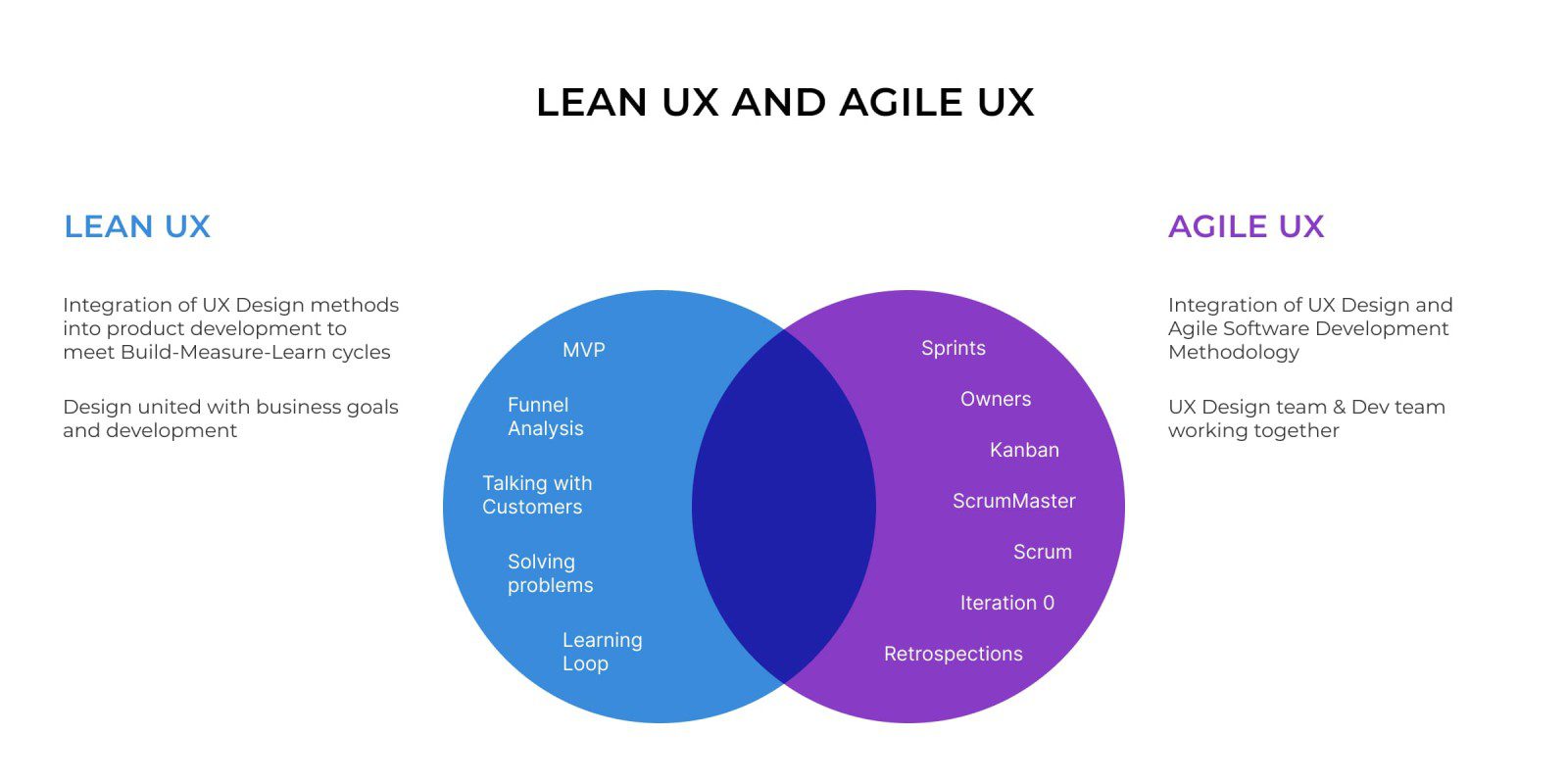
Are you interested in learning about the UX design process step by step? Understanding its significance is a good starting point. According to research, approximately 80% of customers are willing to pay a premium for a superior user experience. Therefore, in addition to generating profits and enhancing your product's quality, UX is critical for cultivating a devoted following and ensuring effective collaboration among your design team. This article provides insight into the most crucial stages of the UX design process, the significance and essential principles of UX design, key steps in the design process, best practices and much more. Keep on reading to dive into this topic! What is the UX Design Process? The UX design process involves crafting product designs that deliver a valuable experience to users. It encompasses all design efforts to create websites or mobile apps that are intuitive, easy to navigate, and user-centric. The UX design process prioritizes enhancing the following aspects of digital products: Usability Accessibility Functionality Branding User satisfaction with design While UX is a commonly used planning process in the design industry, it is tailored to the specific project and can be applied to simple platforms like a website homepage, as well as more complex interfaces, depending on the project's unique needs. Different projects require different UX approaches. However, some practices and deliverables are universal and should be implemented consistently across all projects. These include conducting product research before moving on to prototyping. The Significance of UX Design in Software Development In software development, UX design is crucial for websites and mobile apps. Without a solid UX design process, a product may fail to meet users' needs and consequently lose credibility with its consumer base. A decline in software loyalty can lead to a drop in user numbers, as well as a negative impact on profits and reputation. These statistics reinforce the importance of UX design: 88% of users will only return to a website with good UX (according to Hubspot). 90% of users will stop using a mobile app due to unsatisfactory performance. E-commerce businesses lose 35% of sales due to poor user experience (as per an Amazon Web Services study). By implementing a clear and concise UX process, a design team can more easily create product designs that provide exceptional user experiences. Industries That Place the Highest Importance on UX Design The UI/UX design process can greatly impact the success of products across various business industries. However, there are some sectors where a thoughtful user experience is particularly crucial. Let's delve into them in greater detail: Real Estate Software UX design plays an important role in the real estate industry, and here's why. Digital products in this niche typically aim to sell or rent real estate. These products should enable users to conveniently view housing offers, conduct transactions, and access all relevant information about the property. If your software has poor UX design, it can have a negative impact on your audience. From an ordinary user's perspective, they need a simple solution that allows them to buy or rent a home in just a few clicks. From the viewpoint of real estate agents or landlords, the software should be easy to use for posting housing offers and more. Healthcare Software When it comes to healthcare software, the importance of UX design becomes even more critical. How should your software look if everyone, regardless of age, needs to see a doctor occasionally? The main objective is to ensure that your product is accessible to any user, including medical professionals who require remote patient monitoring apps. eCommerce Software A well-thought-out UI/UX design process can guarantee higher earnings and more loyal customers for eCommerce businesses. According to Amazon Web Services, companies that invested significant budgets in their digital products' UX saw a sales increase of 75%. Even businesses that allocated less money to user experience could still witness a 60% increase. FinTech Software The finance industry can be challenging for the average customer to understand, so FinTech software should provide the smoothest possible user experience. For instance, financial apps should offer hints for financial terms and display complex information in simple graphs and charts. Essential Principles of UX Design A solid understanding of UX design concepts and terminology is essential for successfully implementing an effective design process that meets your business needs. Let's explore some key concepts: Design Thinking Design thinking is a central aspect of UX design that prioritizes human-centered designs. It is a methodology that takes a solution-based approach to address human-related problems. The design thinking process typically involves five stages: Empathy Definition Ideation Prototyping Testing Design Sprint The Design Sprint is a systematic process based on design thinking that helps teams leverage the design thinking mindset to make data-driven decisions. The process takes place over a five-day period, during which teams answer critical business questions and solve problems through design, prototyping, and testing ideas with customers. The concept of the Design Sprint was created by Jake Knapp while working at Google, and the methodology is described in his best-selling book, Sprint. Although design sprints can be stressful, the process can create a sense of cooperation and togetherness within the team. The creative activity requires relaxation and revitalization of teammates to ensure that only the best ideas come forth. The Lean UX vs. Agile UX In addition to design thinking, there are other approaches to establishing an effective design process, such as Lean UX and Agile UX. Let's explore the differences between them. Lean UX is a product design process that applies lean principles. Jeff Gothelf published this idea in 2013 and is still one of the most prominent authors on Lean UX. It unites product development and business through constant measurement, using "learning loops" of build-measure-learn synchronization. On the other hand, Agile UX is an update of Agile Software Methodology that incorporates UX design methods. Its primary goal is to unify developers and designers in the Agile product development process. While Lean UX specifically refers to methods and applications used in the dynamic environment of a Lean Startup. Lean UX teams often use agile UX to coordinate their software development efforts, as both methodologies can complement each other. Agile is a popular choice for startups looking to streamline their software development process. Aside from these methodologies, there are other commonly used UX design methods and techniques. However, before applying any of them, it is crucial to establish a consistent design process that includes all the stages of the UX system. Let's take a closer look at the most important stages of the UX design process. Key Steps in the UX Design Process: An Overview of the 8 Essential Stages The UX design development process consists of several stages that can be grouped into major phases. These phases are fundamental to all UX design approaches and include the following: 1. Stakeholder Interviews Stakeholder interviews are a crucial stage in the UX design process, as they help define your business goals, vision, values, and product strengths and weaknesses. The stakeholders' opinions are essential for further developing your project, making it the first step to establishing the UX app design process. To ensure productive stakeholder conversations, you should first decide whom to interview and whose opinion matters most for your project. It is also essential to record all the discussions and provide them to the UX designers for analysis. By the end of this phase, you and your team will clearly understand the product's goals.2. Understanding User Needs User research is a crucial aspect of the UX design process as it aims to create the best user experience. This phase lets designers empathize with the users and understand their problems and needs. The designer can use various methods, such as interviews, surveys, and observations, to conduct user research. It starts with studying the problem space, planning interviews with stakeholders and potential users, and researching product competitors.3. Creating User Personas and Sitemaps User personas are reliable and realistic representations of a key audience segment that designers can reference. However, it's important to note that personas represent a user story and flow, not the opinions of all possible users. They aim to form a consistent target group to understand their motivations and problems. Creating a user sitemap or flow is also crucial as it helps designers visualize the user journey through the product. This step aids in identifying pain points and areas for improvement.4. Creating Information Architecture Developing the information architecture is a critical stage in the UX design process. Sitemaps are used to display the website's structured navigation, demonstrating the relationship between different pages.5. Developing Wireframes Wireframes are a visual representation of the page structure in the design process. They serve as the backbone of the product and are often used as the framework for mockups. Various tools, including Sketch, Figma, Axure, Adobe XD, and Balsamiq, can be used to create wireframes with an aesthetically appealing and robust design.6. Developing Interactive Prototypes Once the wireframes are approved, the UX designer moves on to developing interactive prototypes. This stage involves designing the actual interface of the UX using software such as Sketch, Photoshop, or Illustrator. The interactive prototype serves as the point of intersection between UX and UI.7. Testing the Prototype This step in the UX design process is crucial to determine if the solution works as planned and efficiently provides the intended services. Paper and digital prototype testing are the forms of prototype testing that can be used in the UX project.8. Iteration The final stage of the UX design process involves developing the project design based on user feedback and opinions from other stakeholders. Iteration refers to the iterative process of refining the design, which is the final editing stage of the design outlook. Here how it looks like together: Top UX Design Best Practices By adopting these tips, you can improve the quality of your UX design process and deliver better user experiences: Engage with Your Audience during User Research Communicating with your audience is crucial during the initial phase of UX design, where you gather user feedback through surveys and other research methods. Engaging the right audience and using the right metrics to select feedback for designing the UX is essential. Try the UX Design Sprint Approach The UX design sprint is a five-day process for answering critical business questions, including designing, prototyping, and testing ideas with users. Many companies use this approach to define product direction, build team culture, and reveal their strategy. Explore New Tools To develop an excellent website or mobile application, designers must try new tools during the software design development stages. Being flexible and open to new tool-choice options allows creative and efficient UX designs. Gather Feedback from Users After testing the design with users, providing a platform for feedback is important. User feedback is the fuel that drives the UX process. Analyze and Optimize It's necessary to analyze and optimize the process properly in order to improve the existing gaps in the UX process. Six Essential Qualities Every UX Designer Should Possess After familiarizing yourself with the essential phases and best practices of the UX design process, it's crucial to recognize the crucial role that UX designers play in this activity. Below are the critical qualities that an experienced specialist should possess. 1. Effective Communication Skills Effective communication skills are vital to ensure that the designer comprehends and articulates your product's objectives and can clearly communicate their vision. This skill is essential during the user research phase and interviews. 2. Empathy Empathy, or compassion, is another fundamental quality every UX designer should possess. By putting themselves in the users' shoes and understanding their pain points and requirements, your designer can offer the best solution for your audience.3. Analytical Thinking Strong analytical skills are vital for a UX designer to evaluate user feedback and data, identify patterns and connections, and create effective design solutions. 4. Technical Competence While a UX designer does not have to be a coding expert, having a fundamental understanding of how developers work and coordinating with them is crucial to ensure seamless design implementation.5. Self-assurance In addition to the aforementioned qualities, successful UX designers should possess confidence in their design solutions, communicate their ideas effectively, and make informed design decisions. 6. Continuous Learning An excellent UX designer should be eager to learn and adapt to new tools and current user experience trends to stay relevant and innovative. Final Thought Creating a website or application demands UX designers to deliver an experience meeting users' expectations. Therefore, carefully considering various approaches to UX design development is crucial, as it directly impacts the website's turnover rate per click. Outsourcing your design development to an established IT company with a consistent UX design process is often more efficient than building your design team from scratch. Find yourself a team that has extensive experience in design services and is committed to delivering results that align with your product needs and ensure user satisfaction with your product design to benefit your business!