
-
Find Services

-
Find Agencies
-
GEO Services
- Expertise
- Technical AI SEO Audit
- AI Content Optimization
- AI-First Content Strategy
- Entity SEO Optimization
- GEO Strategy & Consulting
- AI-Powered Keyword
- Schema & Structured Data
- Perplexity Ranking Optimizatio
- Answer Engine Optimization
- Claude Search Optimization
- ChatGPT Search Optimization
- Gemini Search Optimization
- SEO Services
- Social Media Marketing
- SEM Services
- Mobile App Marketing
- PPC
- Advertising
- Branding
- Digital Marketing
- Media Planning & Buying
- Video Production
- Public Relations
- Browse All Agencies
-
GEO Services
- Submit Reviews
- Research & Surveys



SEO in the Age of LLMs: How to Rank in 2025 and Beyond
SEO has never been static. Every year, the rules shift, sometimes in small tweaks that only professionals notice, other times in seismic changes that make businesses rethink their entire marketing strategy. Right now, we’re in one of those big shifts. The rise of large language models (LLMs), think ChatGPT, Gemini, Claude, and Perplexity, has completely changed how people find and consume information. And in 2025, this trend is only going to accelerate. Google is experimenting with its Search Generative Experience (SGE), serving AI-written summaries right at the top of the results page. Bing and Perplexity are turning search into something closer to a conversation than a list of links. The internet no longer works on simple keyword matching; it’s becoming a system of understanding intent and context. So, the big question: how do you still rank when the way people “search” is shifting under your feet? Why SEO Still Matters It’s tempting to say SEO is dying, but that’s not true. What’s dying are shortcuts. Publishing thin 500-word blogs stuffed with keywords? Dead. Buying low-quality backlinks by the dozen? Not going to help. What’s surviving is the core principle that’s always been true: visibility belongs to businesses that produce useful, credible, trustworthy content. The difference is that in an LLM-driven world, the definition of “useful and trustworthy” is much stricter. LLMs thrive on depth. They’re trained to pull from comprehensive, nuanced sources, not surface-level posts. Trust is no longer optional. Google’s E-E-A-T (Experience, Expertise, Authoritativeness, Trustworthiness) is basically the minimum bar now. Multi-channel visibility is essential. People aren’t just searching on Google anymore they’re asking AI tools, using voice assistants, or discovering brands through online business directories. If you don’t adapt, your content may never show up in AI answers, or worse, your competitors’ insights will, leaving you invisible. How Ranking Is Changing in 2025 Here’s what’s different in the SEO landscape right now: Topical authority beats volume – It’s better to own one subject thoroughly than scatter across dozens. A cluster of detailed, interlinked content on SEO services, for example, will outperform 20 disconnected blogs. Search feels conversational – People type (or speak) queries in natural language, and AI tools answer in the same style. Your content needs to anticipate those conversational queries, not just stiff “keywords.” Structured data has a bigger role – Schema, FAQs, and well-marked metadata give LLMs the context they need. Skipping this is like showing up to a job interview with half a résumé. User experience is part of SEO – Site speed, design, readability, and accessibility all impact rankings. Thanks to no-code and low-code development platforms, even small businesses can now build fast, polished websites without a full engineering team. What Businesses Should Do Now If you’re planning for SEO in 2025, here are a few practical steps that will actually make a difference: Build authority in one area Instead of chasing every keyword under the sun, focus. A digital marketing firm could build an entire library around “SEO services for small businesses” case studies, tutorials, comparison guides, even video transcripts. When search engines (and AI assistants) look for credible answers, they’ll know exactly who to trust. Write for humans, not for bots Yes, machines will read your content, but if it doesn’t connect with people, it won’t perform. Avoid jargon-heavy fluff. Instead, write the way an industry expert would explain something to a colleague clear, useful, maybe even a little opinionated. Don’t ignore site performance Google’s Core Web Vitals update made one thing clear: a clunky, slow website hurts visibility. The good news? With modern no-code and low-code tools, you don’t need months of development work to fix this. You can spin up clean, fast, mobile-friendly pages quickly and at scale. Treat content as an asset Think of every blog, guide, or landing page as a long-term investment. Good content doesn’t expire overnight. When you produce something truly valuable, it keeps earning trust signals backlinks, shares, mentions that AI systems notice. The Overlooked Connection: SEO and No-Code/Low-Code Development One of the most interesting changes happening quietly is how no-code and low-code development tools are shaping SEO strategy. A decade ago, launching a new optimized landing page might require weeks of coordination between developers, designers, and marketers. Today, a marketer with minimal technical skills can build a sleek, schema-ready, SEO-friendly page in hours. That shift levels the playing field. Small businesses can now compete with larger companies because the infrastructure barrier is lower. Pairing professional SEO services with these modern development platforms is becoming a winning formula: you get fast deployment and professional-grade optimization in one go. What Modern SEO Services Look Like Agencies and consultants offering SEO in 2025 aren’t just “doing keyword research” or “building backlinks.” Their role is more strategic and more technical: Designing content strategies for AI-driven search, ensuring your insights surface in conversational queries. Implementing technical SEO at scale structured data, automated site health monitoring, API integrations. Building visibility beyond Google: online directories, niche marketplaces, AI search platforms. Integrating SEO with broader digital ecosystems CRM, analytics, automation so insights feed into actual growth. In short, SEO services now sit at the intersection of marketing, development, and brand building. Looking Ahead Nobody can predict exactly how search will look five years from now. But one thing is obvious: the old hacks are finished, and the businesses that thrive will be the ones that invest in substance. High-quality content. Fast, reliable websites (whether built traditionally or through no-code low-code development). A focus on trust and authority that AI systems can recognize. And smart partnerships with SEO services that don’t just chase rankings, but understand where search is heading. In the age of LLMs, ranking isn’t about tricking algorithms anymore. It’s about proving day after day that your business is the most credible answer in the room.
No-Code Development: Revolutionizing the Future of Software Building
Stare long enough at the enterprise software landscape, and you start noticing a quiet revolution a shakeup that doesn’t march in with armies of developers, but instead empowers non-tech visionaries and small business owners to piece together fully functional apps the way you might assemble furniture from a flat-pack. This isn’t tech fantasy. Thanks to no-code development platforms, the future of software building isn’t locked behind jargon-heavy documentation or expensive engineering retainers. It’s being pried open one drag-and-drop, logic block, simple integration at a time. The No-Code Movement: Why Now? The sprint to digitization forced by the last few years didn’t give businesses a chance to catch their breath everyone wanted apps, web platforms, and workflows, but skilled development resources simply could not scale to demand. And honestly, for small businesses, freelancers, nonprofits, and moonlighters just trying to get their big idea off the ground, the options were often bleak: bust the budget outsourcing development, or wrestle with technical tools far outside their comfort zone. No-code development is filling that gap by putting intuitive app-building powers into the hands of, well everyone else. Suddenly, making an internal CRM or launching a digital directory isn’t some thousand-hour, six-figure ordeal. It’s a weekend project, with refinements on Monday. What Is No-Code, Really? Let’s clear away some hype: no-code platforms don’t mean you’re skipping logic, design, or thoughtful architecture. They simply abstract away the raw code, replacing it with visual interfaces. Everything from databases, user authentication, forms, online business directories, and e-commerce can be combined using pre-built components you stitch together yourself, often with a simple click or a field entry. Think of it like this: remember trying to bake bread from scratch versus using a breadmaker? Same delicious result, a fraction of the mess. No-code platforms do for software what the breadmaker did for home baking democratize it. The Real-World Benefits: Beyond the Buzzwords It’s easy to get swept up in the promise of “faster, cheaper, better.” But no-code development earns its stripes in several specific, pragmatic ways. Let’s break down the benefits of business listing platforms and other no-code tools for small businesses, startups, and even enterprise units: 1. Speed: From Idea to MVP in Days No waiting in the IT queue. No weeks spent hammering out wireframes and documentation nobody reads. No-code platforms like those highlighted by Rightfirms let you iterate rapidly. Spotted a gap in your digital marketing for small businesses campaign? Build and test an online tool before your competitors have even had their Monday standup. 2. Accessibility Means Lower Costs The traditional software development process requires teams back-end devs, front-end editors, QA testers, project managers, designers. No-code? One determined marketer or business owner, maybe sitting at their kitchen table with a cup of burnt coffee, can do it all themselves. Subscription models are approachable, meaning you’re not locked into five-figure development cycles just to launch or pivot. 3. Agility: Pivot, Update, Improve - On Your Schedule Business listing platforms, online directories, or client management tools built with no-code are never static. If your process changes, your app changes, no rewrite necessary. In digital marketing or e-commerce, this means you can keep pace with trends, update landing pages, or integrate new services without panic meetings or budget overruns. 4. Empowerment Without a Tech Degree There’s something genuinely transformative about watching a non-tech professional create functional, scalable applications. Teams become more confident; ideas flow freely because they know tinkering is allowed, not punished by complexity. Firms that once felt locked out of digital innovation can compete with larger players, it’s a power shift that should not be underestimated. 5. Integrations and Automation Without Tears Modern no-code tools aren’t isolated toys they plug into CRMs, marketing automation, payment systems, and analytics dashboards. Automate reminders. Capture leads. Sync sales data with your online business directory. The grunt work vanishes, letting you focus on tasks that actually move the needle. Common Use Cases That Actually Work People sometimes roll their eyes at trends until they see them in action. Here’s where no-code platforms are quietly dominating: Digital Marketing Campaigns: Need a microsite or a landing page? No-code gets you from concept to conversion-ready in little more than an afternoon. Online Business Directories: From restaurant finders to local services, manage listings, reviews, and even transactions all without a custom dev team. Internal Tools: CRMs, workflow trackers, simple ERPs. If your spreadsheet is starting to look like a spaghetti monster, no-code may be calling your name. Client Portals: Allow customers to check status, upload files, and trigger actions All without the overhead of traditional development or maintenance nightmares. What About Limitations? No platform, no matter how slick, is a silver bullet. No-code isn’t going to rebuild the backbone of a real-time, global social media network certain very technical, niche, or high-traffic apps will always need custom engineering. There are sometimes design constraints, and you’re tied (much like with CMS platforms) to the vendor’s roadmap and pricing. But for 90% of business applications especially for fast validation and ongoing iteration these downsides are minor speed bumps, not brick walls. Getting Started: Let Curiosity Lead If you run a business and maintain an online presence or you’re looking for ways to list your company on a business directory platform like Rightfirms and want to go beyond the basics exploring the no-code universe is almost risk-free. Test out tools, clone templates, click around, and see where curiosity takes you. The worst that happens? You find a faster route from idea to application, and maybe, just maybe, you become the tech hero your team never saw coming. The Bottom Line: The Future Is Already Here No-code development has toppled old barriers, making scalable application-building not just possible, but practical for non-tech pros, hustlers, and even established brands leveling up their internal processes or digital marketing for small businesses. It’s not about replacing coders. it’s about letting more voices join the digital conversation. So, if the idea of building a platform, directory, or useful workflow application once felt out of reach, take a breath and dive in. Because, ready or not, the software revolution is already in your hands.
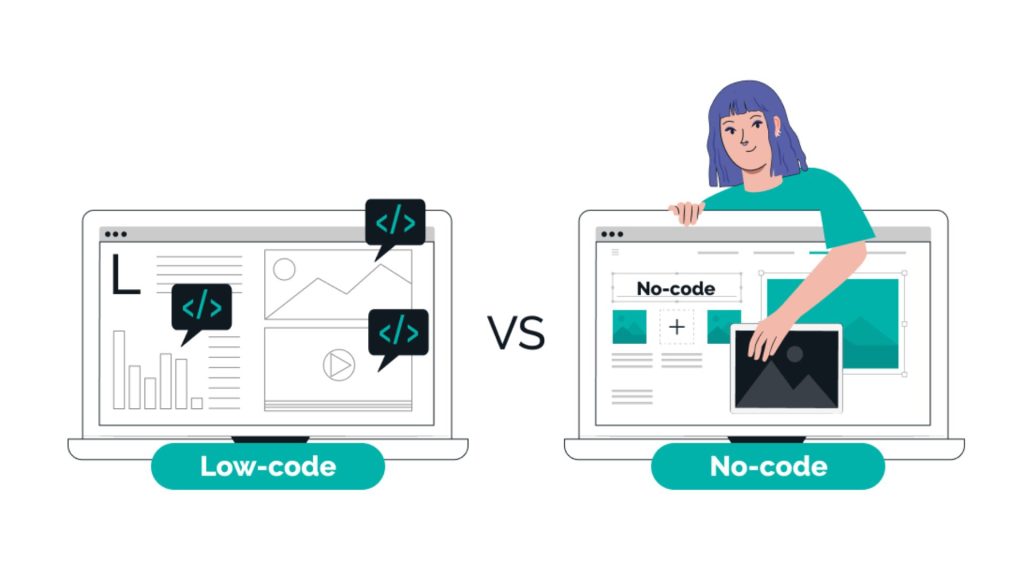
No-Code & Low-Code Development: The Future of App Building?
So, you’ve got this brilliant idea, right? Maybe it’s a killer new food delivery app for your hometown, something super niche, or perhaps you've been dreaming of a bespoke taxi booking app that actually fixes all the annoyances of the current ones. You see the gaps, you see the potential. And then it hits you: the coding. The sheer, daunting wall of code. Or the eye-watering budget for developers. But what if I told you that wall is crumbling? That there's a whole, thriving universe out there where building sophisticated, genuinely useful software doesn't actually demand you speak fluent Python or Java? We're talking about No-Code & Low-Code Development, and honestly, it’s not just "a thing" anymore. It's becoming the thing. This isn't some fleeting Silicon Valley fad, trust me. This is reshaping how quickly, how affordably, and really, who gets to build the digital tools of tomorrow. And if you've got an ounce of entrepreneurial spirit, or even just a problem at work that could use a custom digital fix, you need to understand this. Like, yesterday. What Are No-Code and Low-Code No-Code, at its heart, means exactly that: no code. Think about it like playing with those amazing, big Lego sets. You’ve got all these pre-made, perfectly designed pieces – a button here, a database connection there, a user login screen all ready to go. Your job, then, is just to drag, drop, connect, and configure. You’re building the car, but you’re not fabricating the engine parts or wiring the electrical system. It's incredibly powerful for entrepreneurs, small business owners, or even just regular folks who need a specific app for, say, managing team tasks or tracking inventory. It’s for folks who have zero interest in the technical jargon, but absolutely need a functioning piece of software. Then there's Low-Code. This one's like a slightly more advanced Lego kit. It gives you the same incredible head start with pre-built pieces and visual interfaces, but it also provides space for a bit of custom craftsmanship. If you do have a developer on your team, or maybe you’ve dabbled in coding yourself, low-code platforms let you inject your own specific lines of code for those really unique, bespoke functionalities. So, maybe you want to integrate with a super obscure API, or you need a very particular calculation that isn’t a standard drag-and-drop. Low-code gives you the best of both worlds: rapid model development plus the flexibility to get super specific when necessary. The whole goal with both, though, is speed, sheer, unadulterated velocity. And, obviously, cutting down on development costs, which, let’s be honest, can be absolutely crippling for new ventures. Beyond the Basics: Apps, Automation, and Smart Stuff Now, you might be thinking, "Okay, so I can build a simple form or maybe a basic website, but what about something truly complex? Like that food delivery app I was dreaming about earlier?" And this is where things get really exciting, because these platforms are no longer just for glorified spreadsheets. Modern no-code and low-code tools are surprisingly robust. Think about what a food delivery app needs: user profiles, restaurant listings, order placement, secure payments, maybe even delivery tracking. Believe it or not, many no-code/low-code platforms have pre-built modules for all of those things. You’re configuring, not coding. Same goes for a taxi booking app; real-time mapping, driver management, passenger interfaces, fare calculations – all becoming increasingly componentized and configurable. The IoT Connection: Powering Our Connected World And it gets even cooler. Remember all those connected devices we hear so much about? Smart homes, smart factories, industrial sensors sending data from everywhere? Well, a lot of the applications that manage and interpret that data, the ones that make sense of the Internet of Things (IoT), are being built with low-code. It's because integrating with different device APIs, displaying data dashboards, and setting up automated responses can be a tedious, repetitive coding task. Low-code accelerates that integration, letting businesses actually use all that data from their devices without having to build a custom software stack from the ground up for every single use case. A Dash of Intelligence: Machine Learning & Intelligent Systems This is where the future really starts to look different. No, you won't become a PhD in AI just by clicking buttons. But many of these platforms are now integrating pre-trained machine learning models and components that allow you to add a layer of intelligence to your apps. Think about it: Want to analyze customer sentiment from reviews? Plug in an ML component. Need to predict sales trends based on past data? There might be a low-code tool for that. Even simple image recognition or natural language processing features are becoming accessible. These aren't about building groundbreaking AI research, mind you. They're about making everyday applications genuinely "smarter," leveraging existing intelligent systems to enhance user experience or automate complex decisions. It’s about putting the power of advanced tech into the hands of someone who just wants their app to work better, without needing to understand the underlying algorithms. So, Is Code Dead? Nah, But It’s Got Competition. Look, at the end of the day, here's the real truth. For most of what a small business, or even a growing one, actually needs – automating little bits of work, bringing that genuinely brilliant app idea you've secretly been nursing to life, or just getting those connected devices to talk to some kind of intelligent systems without pulling your hair out – No-Code & Low-Code Development? Yeah, that's absolutely the path forward. It just is. It seriously speeds things up, gives more people the power to innovate, and frankly, makes building anything digital feel a whole lot less scary. So, if you've been sitting on a great idea because you thought "code" was this insurmountable mountain, well, consider that excuse officially expired. The tools are here. What are you waiting for? It's your turn.