
-
Find Services

-
Find Agencies
-
GEO Services
- Expertise
- Technical AI SEO Audit
- AI Content Optimization
- AI-First Content Strategy
- Entity SEO Optimization
- GEO Strategy & Consulting
- AI-Powered Keyword
- Schema & Structured Data
- Perplexity Ranking Optimizatio
- Answer Engine Optimization
- Claude Search Optimization
- ChatGPT Search Optimization
- Gemini Search Optimization
- SEO Services
- Social Media Marketing
- SEM Services
- Mobile App Marketing
- PPC
- Advertising
- Branding
- Digital Marketing
- Media Planning & Buying
- Video Production
- Public Relations
- Browse All Agencies
-
GEO Services
- Submit Reviews
- Research & Surveys


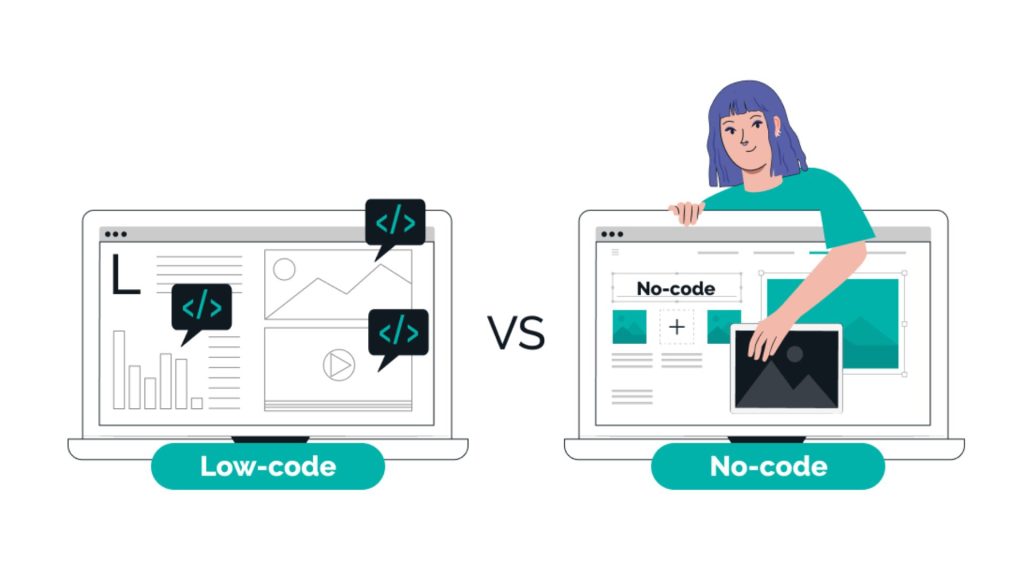
No-Code & Low-Code Development: The Future of App Building?
So, you’ve got this brilliant idea, right? Maybe it’s a killer new food delivery app for your hometown, something super niche, or perhaps you've been dreaming of a bespoke taxi booking app that actually fixes all the annoyances of the current ones. You see the gaps, you see the potential. And then it hits you: the coding. The sheer, daunting wall of code. Or the eye-watering budget for developers. But what if I told you that wall is crumbling? That there's a whole, thriving universe out there where building sophisticated, genuinely useful software doesn't actually demand you speak fluent Python or Java? We're talking about No-Code & Low-Code Development, and honestly, it’s not just "a thing" anymore. It's becoming the thing. This isn't some fleeting Silicon Valley fad, trust me. This is reshaping how quickly, how affordably, and really, who gets to build the digital tools of tomorrow. And if you've got an ounce of entrepreneurial spirit, or even just a problem at work that could use a custom digital fix, you need to understand this. Like, yesterday. What Are No-Code and Low-Code No-Code, at its heart, means exactly that: no code. Think about it like playing with those amazing, big Lego sets. You’ve got all these pre-made, perfectly designed pieces – a button here, a database connection there, a user login screen all ready to go. Your job, then, is just to drag, drop, connect, and configure. You’re building the car, but you’re not fabricating the engine parts or wiring the electrical system. It's incredibly powerful for entrepreneurs, small business owners, or even just regular folks who need a specific app for, say, managing team tasks or tracking inventory. It’s for folks who have zero interest in the technical jargon, but absolutely need a functioning piece of software. Then there's Low-Code. This one's like a slightly more advanced Lego kit. It gives you the same incredible head start with pre-built pieces and visual interfaces, but it also provides space for a bit of custom craftsmanship. If you do have a developer on your team, or maybe you’ve dabbled in coding yourself, low-code platforms let you inject your own specific lines of code for those really unique, bespoke functionalities. So, maybe you want to integrate with a super obscure API, or you need a very particular calculation that isn’t a standard drag-and-drop. Low-code gives you the best of both worlds: rapid model development plus the flexibility to get super specific when necessary. The whole goal with both, though, is speed, sheer, unadulterated velocity. And, obviously, cutting down on development costs, which, let’s be honest, can be absolutely crippling for new ventures. Beyond the Basics: Apps, Automation, and Smart Stuff Now, you might be thinking, "Okay, so I can build a simple form or maybe a basic website, but what about something truly complex? Like that food delivery app I was dreaming about earlier?" And this is where things get really exciting, because these platforms are no longer just for glorified spreadsheets. Modern no-code and low-code tools are surprisingly robust. Think about what a food delivery app needs: user profiles, restaurant listings, order placement, secure payments, maybe even delivery tracking. Believe it or not, many no-code/low-code platforms have pre-built modules for all of those things. You’re configuring, not coding. Same goes for a taxi booking app; real-time mapping, driver management, passenger interfaces, fare calculations – all becoming increasingly componentized and configurable. The IoT Connection: Powering Our Connected World And it gets even cooler. Remember all those connected devices we hear so much about? Smart homes, smart factories, industrial sensors sending data from everywhere? Well, a lot of the applications that manage and interpret that data, the ones that make sense of the Internet of Things (IoT), are being built with low-code. It's because integrating with different device APIs, displaying data dashboards, and setting up automated responses can be a tedious, repetitive coding task. Low-code accelerates that integration, letting businesses actually use all that data from their devices without having to build a custom software stack from the ground up for every single use case. A Dash of Intelligence: Machine Learning & Intelligent Systems This is where the future really starts to look different. No, you won't become a PhD in AI just by clicking buttons. But many of these platforms are now integrating pre-trained machine learning models and components that allow you to add a layer of intelligence to your apps. Think about it: Want to analyze customer sentiment from reviews? Plug in an ML component. Need to predict sales trends based on past data? There might be a low-code tool for that. Even simple image recognition or natural language processing features are becoming accessible. These aren't about building groundbreaking AI research, mind you. They're about making everyday applications genuinely "smarter," leveraging existing intelligent systems to enhance user experience or automate complex decisions. It’s about putting the power of advanced tech into the hands of someone who just wants their app to work better, without needing to understand the underlying algorithms. So, Is Code Dead? Nah, But It’s Got Competition. Look, at the end of the day, here's the real truth. For most of what a small business, or even a growing one, actually needs – automating little bits of work, bringing that genuinely brilliant app idea you've secretly been nursing to life, or just getting those connected devices to talk to some kind of intelligent systems without pulling your hair out – No-Code & Low-Code Development? Yeah, that's absolutely the path forward. It just is. It seriously speeds things up, gives more people the power to innovate, and frankly, makes building anything digital feel a whole lot less scary. So, if you've been sitting on a great idea because you thought "code" was this insurmountable mountain, well, consider that excuse officially expired. The tools are here. What are you waiting for? It's your turn.