


Software development is the backbone of modern technology, driving innovation and efficiency across industries. However, even experienced software developers can encounter challenges that lead to costly errors and project delays. In this blog, we’ll explore five common mistakes in software development and how to avoid them, ensuring smoother project management and higher-quality results.
1. Lack of Clear Requirements – Software Development
A well-defined set of requirements is the cornerstone of any successful software project. Yet, many developers dive into coding without fully understanding the client’s needs or end-user expectations. This oversight often leads to scope creep, where the project expands beyond its original goals, causing delays and budget overruns.
It happens because of the following reasons:-
- Poor communication between stakeholders and developers.
- Insufficient time spent on initial planning.
- Assuming requirements will evolve organically during the development process.
You can avoid it by following the tips:-
- Conduct comprehensive discovery sessions with stakeholders to identify key objectives.
- Document all requirements in detail, using tools like Microsoft Teams or Confluence for collaboration.
- Use agile methodologies like Scrum to break the project into manageable sprints.
Setting a solid foundation at the start will save time and avoid unnecessary software errors later.
2. Ignoring Code Quality
High-quality code is essential for a software application to run efficiently and be maintainable over time. Yet coding mistakes, such as improper indentation, a lack of comments, or redundant code, can lead to serious software errors. These issues hinder performance and make it difficult for teams to debug or scale the software.
It happens because of the following reasons:-
- Tight deadlines lead to rushed coding practices.
- Lack of adherence to coding standards and best practices.
- Over-reliance on individual contributors without peer review.
You can avoid it by following the below-given tips below:-
- Enforce Coding Standards: Adopt widely accepted standards like Google’s Java Style Guide or Python’s PEP 8.
- Code Reviews: Make code reviews a regular part of your workflow to identify errors early.
- Version Control: Use Git or similar tools to track changes and collaborate effectively.
Clean, efficient code improves the end product and enhances team collaboration and future scalability.
3. Skipping Testing Phases
Testing often gets overlooked in the rush to deliver software on time. However, neglecting this crucial phase can lead to software errors that affect functionality, security, and user experience. Bugs found after deployment are typically more expensive and time-consuming to fix.
It happens because of the following reasons:
- Mismanagement of timelines, leaving little room for testing.
- Overconfidence in the code, assuming it’s error-free.
- Limited knowledge or resources for thorough testing.
You can avoid it by following the below-given tips below:-
- Automated Testing: Use tools like Selenium or JUnit to perform repetitive tests efficiently.
- Test in Phases: Begin with unit tests, followed by integration and user acceptance testing (UAT).
- Dedicated Testing Teams: If possible, involve QA specialists to ensure thorough coverage.
Testing is not just a safety net; it’s an integral part of delivering a robust and user-friendly application.
4. Overlooking Project Management
Successful software development relies on effective project management to align team efforts, allocate resources, and meet deadlines. Poor project management can lead to missed deadlines, miscommunication, and subpar deliverables.
It happens because of the following reasons:
- Lack of skilled project managers or team leads.
- Insufficient tracking of tasks and progress.
- Overly ambitious timelines or undefined milestones.
You can avoid it by following the tips:
- Adopt Project Management Tools: Platforms like Jira, Trello, or Asana can streamline task assignments, progress tracking, and collaboration.
- Set Realistic Goals: Work with stakeholders to establish achievable milestones and deadlines.
- Foster Communication: Regular team meetings and updates ensure everyone is on the same page.
When project management is prioritised, the team can work cohesively, resulting in a more efficient and productive development process.
5. Failing to Update and Maintain Software
Software development doesn’t end with deployment. Regular updates are essential to fix bugs, improve functionality, and ensure security. Ignoring post-launch maintenance can lead to outdated systems that fail to meet user expectations or are vulnerable to cyberattacks.
It happens because of the following reasons:-
- Developers move on to new projects, leaving no one to maintain the software.
- Clients underestimate the importance of ongoing maintenance.
- Lack of a structured post-launch maintenance plan.
You can avoid it by following the tips:-
- Create a Maintenance Plan: Define roles, responsibilities, and schedules for regular updates.
- Use Feedback Loops: Actively gather user feedback to identify areas for improvement.
- Monitor Performance: Use tools like New Relic or AppDynamics to proactively track software performance and address issues.
Proactive maintenance ensures the software remains relevant, secure, and efficient over time.
Conclusion
Software development is a complex process that requires meticulous planning, coding, testing, and management. By avoiding these five common mistakes—unclear requirements, poor code quality, skipped testing, ineffective project management, and neglecting maintenance—you can enhance the quality of your projects and achieve better outcomes.
Investing time in addressing these potential pitfalls will save your team from costly software errors and improve overall project success. Remember, good development is not just about writing code; it’s about creating solutions that stand the test of time.
At Rightfirms, we understand the challenges of software development. Explore our platform to find the best development tips, expert developers, and tools to make your next project successful.

Right Firms
28 Jan 2025


Latest Posts



Submit Your Inquiry
Related Posts

Sep 2026
AI Is Creating New Software Categories: 15 Fastest-Growing Development Services Businesses Are Searching For
Two years ago, "AI development" mostly meant one thing: bolt a chatbot onto a website or plug a model into an existing product. That single category has since split into more than a dozen distinct, specialized service lines, each with its own tooling, talent requirements, and buyer expectations. Businesses searching for a "generative AI developer" in 2026 are increasingly searching for something far more specific: a RAG specialist, an agent orchestration partner, a voice AI integrator, or a vertical AI platform builder. This is not a rebranding exercise. Gartner forecasts AI agent software spending alone will climb from $206.5 billion in 2026 to $376.3 billion in 2027, roughly 82% growth in a single year, a curve steep enough to justify its own category rather than sitting inside a general "AI development" line item. Here are the 15 software service categories seeing the fastest growth in demand right now, and why businesses are actually investing in each one. 1. AI Agents and Agentic Workflows AI agents, systems that can plan, act across multiple tools, and complete multi-step tasks with limited human review, have moved from pilot projects into production. Nearly 40% of enterprise applications are expected to embed task-specific agents by the end of 2026. Businesses are investing here because agents solve a different problem than chatbots: instead of answering a question, they complete a workflow, freeing staff from repetitive multi-step processes like ticket resolution, data entry, and routine approvals. 2. RAG Development (Retrieval-Augmented Generation) RAG systems connect a language model to a business's own documents, databases, and knowledge bases, so responses are grounded in accurate, current, company-specific information instead of a model's general training data. RAG system integration is now considered one of the fastest-growing professional AI services, alongside fine-tuning and data curation. Businesses invest in RAG development specifically to solve the hallucination problem, an AI tool that answers confidently but incorrectly is a liability, while one grounded in verified internal data is a genuine productivity tool. 3. AI Voice Assistants and Conversational AI Voice AI has moved well past scripted IVR menus into real-time, low-latency conversational systems that handle outbound calls, customer support, and telephony integrations, some with response times under 100 milliseconds. Businesses in healthcare, financial services, and customer support are investing heavily here because voice remains the highest-volume, highest-cost communication channel in most organizations, and even partial automation of first-line call handling produces immediate, measurable cost savings. 4. AI Copilots for Business Workflows Copilots, AI assistants embedded directly inside existing tools for writing, research, summarization, and meeting notes, are one of the most widely adopted AI categories precisely because they require no workflow change. Employees keep using the software they already know; the copilot layer just makes it faster. This low-friction adoption path is why copilot demand has outpaced more ambitious agentic projects for many businesses still early in their AI adoption journey. 5. Multimodal AI Development Multimodal AI, models that process text, image, audio, video, and structured data together rather than one input type at a time, is quickly becoming the baseline expectation in competitive healthcare, retail, and security applications. Businesses invest in multimodal development because real-world problems rarely arrive in a single format: a support ticket might include a screenshot, an insurance claim might include a photo and a form, and a retail search might combine an image with typed text. 6. Enterprise AI Platforms and Orchestration Layers As businesses adopt multiple AI tools at once (a copilot here, an agent there, a RAG system somewhere else) demand has grown for orchestration platforms that manage which model handles which task, route requests appropriately, and give IT teams a single point of control. This category exists because most enterprises did not plan their AI adoption as one coherent system, they built it piecemeal, and orchestration platforms are how they are now stitching those pieces together. 7. AI Governance and Compliance Tooling Governance has become the fastest-growing line item inside enterprise AI budgets, now claiming 8 to 12% of total AI spend, up from just 3 to 5% in 2024. Businesses further along in AI adoption are shifting spend toward auditing, access control, and model monitoring, not because they want to slow down, but because weak governance is now cited as the leading reason agentic AI projects get cancelled after deployment. 8. LLMOps and AI-Augmented MLOps Running AI models in production reliably requires a different operational discipline than traditional software: monitoring for model drift, managing prompt versions, tracking token costs, and maintaining accuracy over time as underlying data changes. This has matured into its own engineering specialty, distinct from both traditional DevOps and data science. Businesses invest here because an AI feature that worked well at launch can quietly degrade months later without dedicated monitoring in place. 9. Vector Databases and AI Memory Systems Every RAG system and most AI agents depend on a vector database to store and retrieve information efficiently, and a growing category of tools now focuses specifically on giving AI agents persistent memory, so a system remembers what worked in previous sessions rather than starting from zero each time. Demand here is growing directly alongside RAG and agent adoption, since neither category functions well without a solid memory and retrieval layer underneath it. 10. AI-Powered Software Testing and QA AI-augmented quality assurance, tools that generate test cases, detect edge cases a human tester might miss, and validate AI system outputs against expected behavior, has become part of the operational backbone required to keep AI systems accurate and reliable at scale. This category is growing because testing traditional software and testing AI-driven software are genuinely different problems; a QA process built for deterministic code does not catch the kind of failures that show up in probabilistic AI outputs. 11. Vertical AI Platforms Rather than general-purpose AI tools, businesses are increasingly investing in AI platforms built specifically for one industry, healthcare diagnostics, legal document review, financial underwriting, with domain-specific training data and compliance built in from the start. Healthcare in particular has become the largest vertical AI market by enterprise spending. Businesses choose vertical platforms over general-purpose tools because industry-specific accuracy and compliance requirements are hard to retrofit onto a generic model after the fact. 12. AI Search Optimization and Answer Engine Visibility As more buyers research vendors and products through AI chat tools and AI-generated search summaries instead of traditional search results, a new service category has emerged around optimizing content specifically for AI visibility, structuring information so it gets surfaced accurately inside AI Overviews, chatbot answers, and LLM-generated summaries rather than only traditional blue links. Businesses are investing here because a growing share of buyer research now happens inside an AI conversation, and content that isn't structured for that context simply doesn't get cited. 13. Synthetic Data Generation Many AI projects stall not because the model is wrong but because the business lacks enough clean, labeled data to train or fine-tune it properly. Synthetic data generation, creating artificial but statistically realistic training data, has become its own service category for exactly this reason, particularly in healthcare and financial services, where real customer data is often too sensitive or too limited to use directly for training. 14. AI Security and Red-Teaming As AI systems handle more sensitive tasks and more autonomous decision-making, a specialized security discipline has emerged around stress-testing AI systems specifically, probing for prompt injection vulnerabilities, data leakage, and adversarial manipulation, rather than applying traditional application security testing to a fundamentally different kind of system. This sits inside the broader governance spending increase, and businesses in regulated industries in particular are treating it as a prerequisite for production deployment, not an optional add-on. 15. Edge AI and On-Device Processing Not every AI workload belongs in the cloud. Edge AI, running models directly on local devices, cameras, sensors, or on-premise hardware, is growing as businesses look for lower latency, reduced ongoing inference costs, and better data privacy for use cases like manufacturing quality control or in-store retail analytics. Businesses invest here specifically to avoid the recurring cost and latency of sending every inference request to a cloud API, which adds up quickly at scale. The Pattern Behind All 15 Categories What connects every category on this list is specialization. Two years ago, a business needed one generalist AI developer. Today, a serious AI initiative touches several of these categories at once, a customer support project alone might require RAG development, a voice AI layer, governance tooling, and AI-specific QA, each requiring genuinely different expertise. This is exactly why generic "AI development" searches are giving way to more specific ones. Businesses that know which of these 15 categories their project actually needs are able to find and vet the right specialist far faster than those still searching for a single do-everything AI vendor. Finding the Right Specialist for Your Category If you have identified which of these categories your project falls into, the next step is finding a partner with genuine, verifiable experience in that specific area rather than a broad AI development claim. RightFirms' AI development company directory lets you filter by technology focus and verified client reviews, and the AI-powered recommendation tool can match your specific requirements, whether that's RAG development, agent orchestration, or vertical AI expertise, against vetted profiles rather than a generic search. AI development is no longer one category. It is 15 and counting, and the businesses moving fastest in 2026 are the ones treating it that way.
Aug 2026
The New Software Buying Journey: How Businesses Actually Choose Development Companies in 2026
A year ago, the software buying process still roughly followed a search engine, a shortlist of homepages, and a handful of demo calls. That path has largely collapsed. In 2026, the majority of B2B software research now starts somewhere else entirely, moves through channels most vendors cannot see or measure, and often arrives at a shortlist before a single sales conversation happens. This matters directly for any business currently comparing software development companies, because understanding how the buying journey actually works now changes where you should be spending your own research time, and it explains why the vendor with the loudest marketing is no longer automatically the one that wins the deal. Stage 1: Research Now Starts in an AI Chatbot, Not a Search Bar The single biggest shift in the software buying process is where it begins. G2's 2026 research found that 51% of B2B software buyers now start their purchasing process in an AI chatbot rather than a traditional search engine, up sharply from the year before, and 71% rely on chatbots for research at some point in the journey. A separate industry survey found 82% of B2B software buyers sourced vendor recommendations from a chatbot like ChatGPT or Gemini within the past two years. This is not a small behavioral tweak. Sixty-nine percent of buyers in G2's study said they chose a different vendor than they originally planned based on AI chatbot guidance, and roughly a third purchased from a vendor they had never previously heard of. For businesses evaluating AI development companies or software partners, this means your visibility inside AI search results now matters as much as your visibility on page one of Google, something most vendors have not yet adjusted their content strategy to reflect. Importantly, AI has compressed research, not eliminated due diligence. The same reporting found evaluation, not research, is now the longest stage of the buying journey for the first time, because a faster path to a shortlist has shifted the friction downstream to trust, cost, and internal approval. Stage 2: Peer Communities and Reddit Now Outrank Vendor Content Even with AI chatbots reshaping the starting point, peer trust has not been displaced, it has become more important relative to vendor-controlled content. A 2026 joint study from SurveyMonkey and Reddit surveying 1,200 U.S. business decision-makers found peer recommendations are the single most trusted information source at 73%, ranked well above vendor websites (55%), search engines (54%), review sites (46%), and AI chatbots (39%). Reddit specifically has become a meaningful part of that validation layer. The same study found 32% of software buyers specifically have used Reddit for vendor research, most often to read reviews and testimonials (77%), check pricing (45%), evaluate capabilities (42%), or confirm compatibility and integrations (36%). The pattern is consistent: buyers use AI and search to build an initial list, then go looking for unfiltered, first-hand opinions before trusting that list. LinkedIn plays a related but different role in this stage. Rather than functioning as a review source, it works more as a network validation layer, where buyers check who else in their professional network has worked with a vendor, look for posts or comments about a company's delivery quality, and message connections directly to ask "has anyone actually used this agency." This kind of informal LinkedIn outreach rarely shows up in any vendor's analytics, but it consistently influences which companies make a final shortlist. Stage 3: Review Platforms Remain the Trust Anchor Review platforms have not lost relevance, they have consolidated and become more tightly integrated with AI search itself. G2 has become one of the most-cited B2B software sources across AI-first discovery channels, and in early 2026 it acquired Capterra, Software Advice, and GetApp, consolidating a large share of the review platform market under one company. For services and implementation-heavy categories specifically, platforms like Clutch play the equivalent role that G2 plays for software products, giving buyers a structured way to compare verified client reviews, project sizes, and delivery track records across development companies. What has changed is buyer behavior once they reach a review site. Reviewer testimony alone is no longer treated as sufficient. The majority of software buyers now report seeking out a direct conversation with someone who has actually used a vendor, beyond whatever curated references the vendor itself provides, a trend TrustRadius found to be even stronger among younger buyers and among buyers making larger, more complex purchases. Stage 4: Referrals Still Decide More Deals Than Any Channel Realizes Despite all the new discovery channels, referrals and prior experience remain disproportionately powerful. Research from 6sense's Buyer Experience Report found that 95% of the time, the vendor that ultimately wins a deal was already on the buyer's "Day-One shortlist," the initial set of vendors a buyer has in mind before formal research even begins, most often shaped by referrals, prior work history, or reputation the buyer already carried into the process. This is a useful check on how much weight to put on any single discovery channel. AI chatbots and Reddit threads are increasingly where that Day-One shortlist gets validated or challenged, not necessarily where it originates. A business with strong word-of-mouth and an existing reputation among its target industry starts every buying journey with a structural advantage that no amount of AI search optimization fully replaces. Stage 5: Technical Validation Happens Before a Proposal Is Ever Requested Perhaps the most significant shift for software development companies specifically is how much technical vetting now happens before a formal RFP or proposal request. Buyers increasingly use AI tools to research a vendor's technical case studies, check GitHub activity or public portfolio work, compare technology stacks against project requirements, and cross-reference certifications, all before reaching out. G2's 2026 research found that among buyers using AI agents in the buying process, the top use cases are evaluating total cost of ownership (51%), building shortlists (51%), researching solutions (49%), and evaluating shortlisted vendors directly (46%). In practice, this means a vendor's public-facing technical credibility (detailed case studies, clear technology specialization, verifiable certifications, transparent team structure) now gets evaluated well before a sales conversation happens, not during it. Businesses researching top software development companies should expect to do a meaningful amount of this technical validation work themselves, using the same directory and review data vendors are increasingly optimizing for. What This Means for Your Own Vendor Research If you are currently in the market for a development partner, the 2026 buying journey suggests a more deliberate research sequence than most businesses actually follow: Use AI search, but verify independently. Chatbot recommendations are a strong starting point for building a shortlist, but treat them the way you would treat a single analyst's opinion, useful for discovery, not sufficient on their own given the accuracy concerns buyers themselves report with AI-generated research. Go looking for unfiltered opinions, not just curated references. A vendor's own reference list is, by definition, their best clients. Peer communities and direct outreach through your professional network surface a more honest picture. Cross-check review platforms against verified profile data. Look for structured data (team size, certifications, industries served, technology focus) alongside written reviews, not reviews in isolation. Do the technical validation early, not after a proposal arrives. Reading case studies, checking certifications, and confirming relevant industry experience before your first vendor call saves both sides time and produces sharper, more comparable proposals when you do request them. Where RightFirms Fits in This Journey The shift described in this report is exactly why structured, verified vendor data has become more valuable, not less, in an AI-saturated research process. RightFirms' software development directory gives buyers the structured technical validation data (team size, pricing bands, certifications, industries served, and verified client reviews) that increasingly gets checked before a proposal is ever requested, in one place rather than scattered across a dozen browser tabs. If you already know your requirements, the AI-powered recommendation tool can shortcut the discovery stage entirely by matching your project against verified profiles rather than a generic AI chatbot guess. The software buying journey in 2026 is faster to start and slower to close than it used to be. AI chatbots compress discovery into minutes, but evaluation, the stage where cost, trust, and technical fit actually get decided, has become the longest part of the process. Businesses that understand this and build their own vendor research around verified data, peer validation, and early technical vetting are the ones reaching a confident decision faster than the ones still relying on a single Google search and a stack of unread proposals.
Jul 2026
Before You Hire a Development Company: Ask for These 12 Deliverables
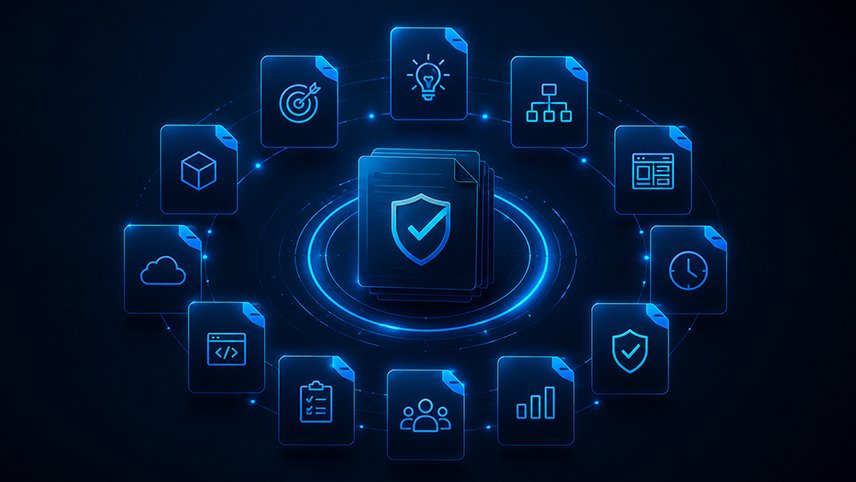
Most vendor conversations end the same way: a proposal document, a quoted price range, and a start date. What rarely gets asked for is proof that the vendor has actually thought through how the project will be built, tested, secured, and supported after launch. That gap is where a large share of failed software engagements begin, not because the developers could not code, but because nobody defined what they were building against before the contract was signed. The fix is simple. Before signing with any of the many software development companies competing for your project, ask for these 12 deliverables. A serious vendor will have most of them ready, or will be able to produce them quickly. A vendor that cannot, or pushes back on the request, is telling you something important before you have spent a dollar. 1. A Written Project Roadmap A roadmap should break the project into phases with rough timelines attached to each, not a single end date three months out. Look for named milestones (discovery complete, first working prototype, QA sign-off, launch) rather than a single bar on a Gantt chart. If a vendor cannot produce this before the contract is signed, they have not actually scoped the work yet, they are estimating it. 2. A Software Requirements Document This is the single most important piece of software project planning, and the one businesses most often skip. A requirements document should translate your business goals into specific functional requirements: what the system must do, who uses it, what data it handles, and what "done" looks like for each feature. Without this, scope disagreements later in the project become a matter of opinion instead of a matter of checking a document both sides signed off on. 3. An Architecture Plan Ask for a description of the technical architecture before development starts, not after. This does not need to be a 40-page technical spec, but it should cover the core technology stack, how the frontend and backend will communicate, where data will be stored, and how the system is expected to scale. An architecture plan produced after the fact is really just documentation of decisions nobody reviewed in advance. 4. A Sprint Schedule or Delivery Cadence If the vendor works in sprints, ask for the sprint length, what gets reviewed at the end of each sprint, and how you will see progress along the way. Vendors who cannot commit to a cadence, or who describe delivery only in terms of a single final handoff, make it harder to catch problems early, when they are still cheap to fix. 5. A QA and Testing Strategy Ask specifically how the vendor plans to test the software, not just that they will "test it." A real QA strategy names the types of testing involved (unit, integration, user acceptance), who is responsible for each, and at what point in the schedule testing happens relative to development. Agencies that treat QA as a final step squeezed in before launch tend to ship more bugs, because testing was never built into the schedule. 6. A Security Approach Security should be a documented part of the plan, not an assumption. Ask how the vendor handles authentication, data encryption, and access control, and whether the project will need any compliance considerations relevant to your industry (healthcare data, financial data, and so on). A vendor with a clear, specific answer to this question is a different category of partner than one who says "we take security seriously" without naming a single practice. 7. A Deployment Process Find out exactly how the software will go live: whether there is a staging environment, how rollbacks are handled if something breaks after launch, and who is responsible for the deployment itself. A vendor without a clear deployment process is more likely to treat launch day as a stressful, high-risk event rather than a routine, tested procedure. 8. A Maintenance and Support Plan What happens the day after launch matters as much as the launch itself. Ask what is included in post-launch support, how bug fixes are prioritized and billed, and what the process looks like for adding new features later. Many vendor relationships sour specifically because "maintenance" was never defined in the original proposal, and both sides discover different assumptions about it after the invoice arrives. 9. A Communication Framework This should specify who your point of contact is, how often you will receive updates, and what tools will be used (a shared project board, weekly calls, async updates, or some mix). Vague answers here ("we'll keep you posted") tend to predict vague updates once the project is underway. A defined communication framework is one of the simplest indicators of how a vendor actually manages client relationships day to day. 10. A Realistic Cost Breakdown Ask for a breakdown by phase or deliverable, not just a single total number. This makes it much easier to spot where budget is concentrated and to have an informed conversation if scope changes later. A single lump-sum quote with no breakdown makes it hard to know whether you are paying for design, development, QA, or project management, and makes any future negotiation much harder. 11. A Risk and Assumptions Log Every project proposal is built on assumptions (about data availability, third-party integrations, existing systems, and so on). Ask the vendor to list theirs explicitly. This single document often reveals more about a vendor's experience level than anything else on this list: experienced teams tend to name specific, project-relevant risks, while newer or less careful vendors tend to leave this section generic or skip it entirely. 12. A Documented Handoff and Ownership Plan Before the project starts, clarify what you will own at the end of it: source code, credentials, documentation, and design files. This should be stated plainly in the proposal, not left as an assumption. Some vendors retain more control over code repositories or infrastructure access than clients realize until they try to switch providers later. How to Use This List in a Vendor Conversation You do not need all 12 deliverables finalized before your first call. What you need is a vendor willing to walk through each of these areas concretely, with specifics rather than reassurances. A useful approach: Send this list to each vendor you are evaluating and ask which of these they include as standard practice. Compare not just whether they say yes, but how specific and project-relevant their answers are. Treat vague or dismissive answers on security, QA, or ownership as disqualifying, since these are the three areas most likely to cause expensive problems later. Making Vendor Comparison Easier Gathering and comparing this much detail across several proposals is exactly the kind of research that slows most businesses down during vendor onboarding. If you want a head start, defining your project scope before your first vendor conversation makes it much easier to get specific, comparable answers to the 12 items above, since vendors respond with more precision when the requirements are already written down. You can also browse verified software development companies directly, where team size, certifications, and client reviews are visible upfront, or use the AI-powered shortlist tool to match your requirements against vetted profiles instead of starting from a blank search. A strong proposal is not the one with the lowest price or the most impressive homepage. It is the one where all 12 of these deliverables are already answered, clearly and specifically, before you have signed anything.