







Sep 2025
Why Verified Client Reviews Are the New Currency in B2B
In the B2B world, trust has always been the deciding factor. A polished website, a smart pitch deck, or even an award can help, but none of these outweigh the words of an actual client who has experienced a company’s services. This is why verified client reviews have become the most powerful signal of credibility for modern businesses. Today, companies searching for partners no longer rely solely on sales presentations or brand messaging. They want evidence. They want to know how others, businesses just like theirs, have experienced working with a particular agency, consultancy, or vendor. And that is exactly where reviews, particularly those published on a B2B business listing site, play a decisive role. The Shift from Marketing Claims to Proof of Performance For years, B2B marketing revolved around controlled messaging. Companies highlighted strengths, downplayed weaknesses, and relied on persuasive sales teams to close deals. While this still happens, the digital age has created a far more transparent environment. Prospects now turn to third-party sources before making decisions, and unfiltered client reviews have become more valuable than carefully curated brand narratives. What makes verified reviews stand out is their authenticity. A five-star rating means little if it comes without context. A detailed account from a verified client, explaining project outcomes, communication quality, and measurable results, gives prospects the confidence they need to move forward. It is social proof, but on a professional scale. Why Reviews on B2B Business Listing Sites Matter It is not enough for companies to simply collect testimonials on their own websites. Buyers know that these can be selective or overly positive. What carries real weight is being listed on an independent B2B business listing site, where reviews go through verification before being published. These platforms act as neutral ground. They give businesses a structured profile to showcase services, while also allowing clients to share candid feedback. The verification process, whether through email confirmation, project validation, or platform moderation, ensures that the review reflects a genuine client experience. The result is a level of trust that direct marketing can rarely achieve. Prospective buyers browsing these platforms do not just see services offered, they see proof that companies can deliver on their promises. Verified Reviews as a Competitive Differentiator In crowded industries, where dozens of firms may claim the same expertise, verified reviews are often the deciding factor. Imagine two IT service providers, both with similar portfolios and price points. The one with ten verified reviews highlighting timely delivery, clear communication, and tangible business impact will almost always win the deal over the one with no reviews at all. This dynamic is reshaping competition. Companies are realising that their reputation is not only built on branding but also on the voices of their clients. Actively encouraging clients to leave reviews on trusted platforms has become part of long-term business development strategy. Building Trust Beyond the First Impression One overlooked benefit of verified reviews is their ability to reassure prospects throughout the decision-making journey. In B2B, purchasing cycles are long and complex. Multiple stakeholders, financial considerations, and technical requirements slow down decision-making. During this process, verified reviews act as reinforcement. Decision-makers return to a company profile not just once, but multiple times. Each time, those reviews serve as a reminder: this company has delivered for others, it can deliver for you too. That repeated reinforcement builds trust in a way that even the most polished marketing material cannot replicate. How Businesses Can Leverage Verified Reviews Strategically For companies serious about growth, verified reviews are no longer optional. They need to be part of the broader reputation management strategy. Some practical steps include: Encouraging feedback at project milestones: Do not wait until the end of a contract. Request reviews after key deliverables are completed. Directing clients to trusted platforms: Reviews carry more weight on a B2B business listing site than on internal channels alone. Responding to feedback professionally: A thoughtful reply to a review, whether positive or constructive, shows accountability. Showcasing verified reviews in proposals: Embedding links or references to verified profiles builds confidence during negotiations. The Future of Reviews in B2B Decision-Making As AI-driven search and recommendation engines become more common, verified reviews will play an even bigger role in shaping visibility. Platforms and algorithms increasingly favour companies with a strong trail of positive, authentic client experiences. In other words, reviews do not just influence prospects directly. They influence how companies are discovered in the first place. Businesses with verified credibility are more likely to appear in curated listings, AI-driven summaries, and search recommendations. In today’s B2B marketplace, verified client reviews have become the new currency of trust. They carry more weight than self-promotion, they accelerate decision-making, and they serve as a lasting differentiator in competitive industries. Companies that embrace this shift, by actively building verified client feedback on trusted platforms, will not only earn new clients but also strengthen their reputation for the long term.

Sep 2025
Offshoring for AI App Development: Why It’s Booming Among U.S. Companies
AI has become less of a question of ‘if’ and more of ‘how fast,’ as U.S. enterprises embed it into their core functions. Healthcare systems are deploying predictive analytics for earlier and more accurate diagnoses, financial institutions are strengthening fraud detection through machine learning, and retailers are reshaping customer engagement with AI-driven personalization. McKinsey reports that more than half of U.S. companies now use AI in at least one business function, and adoption continues to accelerate across sectors. Yet this momentum comes with a constraint: the supply of skilled professionals is not keeping pace. The World Economic Forum projects a shortfall of more than one million AI specialists by 2030, while senior engineers in the U.S. already command salaries above $300,000 annually. This imbalance between ambition and capability has created structural bottlenecks, forcing executives to reconsider conventional hiring strategies and turn toward global talent partnerships as a pathway to scale. Source: World Economic Forum, Future of Jobs Report (Talent Gap Projection, 2023–2030) Why Global AI Teams Are Becoming Strategic Offshore development has matured from a cost-saving exercise into a strategic enabler of innovation. Companies like Microsoft and Tesla exemplify this shift. Microsoft continues to expand its AI programs through global partnerships while maintaining strategic oversight domestically. Tesla leverages distributed teams for autonomous vehicle development, combining in-house innovation with international expertise to drive innovation. The rationale is clear: offshore partnerships provide access to scarce talent, accelerate time-to-market, and deliver specialized capabilities. Round-the-clock development cycles shorten delivery timelines, while niche skills in generative AI, natural language processing, and predictive analytics are often more accessible offshore than in U.S. markets. The Core Benefits Executives highlight three advantages that make offshore AI partnerships increasingly attractive: access to global talent, accelerated development, and operational flexibility. 1. Access to Global TalentCountries such as India and Poland are producing highly skilled engineers at scale. India graduates more than 200,000 engineers annually with specialization in AI and data science, while Poland hosts over 250 AI firms with strong expertise in computer vision and NLP. Offshore partnerships give companies immediate access to talent pools that would take years to cultivate domestically. 2. Accelerated Development VelocitySpeed defines competitive advantage in AI. Offshore teams enable continuous progress across time zones, compressing development cycles significantly. A Fortune 500 financial services company, for example, brought a fraud detection solution to market two months ahead of schedule by leveraging offshore AI specialists, a window that proved decisive in a competitive segment. 3. Operational Flexibility AI projects rarely require fixed resources. Early prototyping demands small, specialized teams, while large-scale deployments call for broader engineering groups. Offshore models allow companies to scale resources up or down seamlessly, aligning investment with project needs rather than permanent headcount. Managing Risks Through Structure Concerns about data security, compliance, and collaboration are common but increasingly manageable with the right frameworks. Leading offshore providers operate within GDPR, HIPAA, and SOC 2 standards as a baseline. Secure environments, end-to-end encryption, and robust IP agreements ensure sensitive datasets remain protected. Effective communication frameworks are equally important. Hybrid sprint models, structured overlap hours, and transparent documentation help teams maintain alignment despite geographic distribution. Cultural integration strategies, from orientation programs to shared communication protocols, transform potential friction into operational rhythm. In one healthcare case, offshore collaboration enabled a predictive analytics platform to be developed within strict HIPAA guidelines. Strong governance, secure architectures, and clear accountability allowed innovation without regulatory compromise. Market Dynamics and Future Outlook The offshore AI development market is forecast to grow at a 25% compound annual rate between 2025 and 2030. This trajectory reflects a broader recognition: AI is not a generalist function but a highly specialized discipline requiring distributed expertise. Enterprises are moving toward long-term alliances with offshore providers who understand not only technical requirements but also industry regulations and business goals. Edge AI, multimodal systems, and quantum machine learning demand skills rarely concentrated in one market. Accessing global talent is becoming essential for staying competitive. Strategic Considerations for Executives For business leaders evaluating offshore AI development, four factors are critical. Partner selection should prioritize proven expertise, compliance credentials, and operational maturity. Governance structures must define clear decision rights, communication channels, and escalation protocols. Integration planning is essential — investing in onboarding, knowledge transfer, and relationship building avoids misalignment. Risk management should cover IP protection, security audits, and contingency planning to ensure resilience. The Competitive Imperative The AI talent gap shows no sign of easing before 2027, meaning competition for scarce domestic resources will remain intense. Meanwhile, the global AI market is projected to grow from $251.7 billion this year to $338.9 billion next year — a 34.7% surge. Companies unable to move at speed risk falling behind as markets consolidate around faster, more agile competitors. Forward-looking executives increasingly recognize offshore AI partnerships not as tactical stopgaps but as strategic accelerators. These partnerships deliver the talent, velocity, and flexibility required to lead in a field where innovation cycles are measured in months, not years. Conclusion In my experience working with global enterprises, the organizations that succeed with AI are those that treat offshore partnerships as a strategic capability rather than a cost lever. The ability to access specialized expertise, scale teams with precision, and maintain development momentum across time zones often determines whether initiatives move from pilot to impact. What I see across industries is clear: companies that invest early in building trusted global alliances are better positioned to turn ambition into execution. AI innovation depends not only on technology but also on the strength of the ecosystems we build around it. The leaders who recognize this and act decisively will shape the next decade of AI-driven growth.

Sep 2025
The Rise of AI-Powered Search Engines: What It Means for SEO & Businesses
For years, search has been fairly predictable. You typed in a few keywords, Google spit out a list of links, and businesses did whatever they could to climb those rankings. That world is fading fast. With the rise of AI-powered search engines, discovery no longer looks the same. Results are conversational, summaries are being generated on the fly, and entire business categories are being reshaped in real time. If you’re running a company, managing digital campaigns, or working inside one of the many search engine optimisation companies around the world, this shift isn’t something you can ignore. It changes how people find information, how they evaluate trust, and ultimately how they choose who to do business with. The Decline of Keyword-First Search The old playbook was simple: pick a keyword, optimise a page, build a few backlinks, and you’d stand a chance at ranking. That worked when search was mostly mechanical a giant matching game between queries and indexed pages. AI has torn that model apart. Now, search engines aren’t just matching words, they’re interpreting intent. Ask about “affordable app developers,” and instead of a raw list of agencies, you might get a tailored summary who’s popular, what industries they serve, what pricing models exist. That’s powered by generative AI development, and it’s pulling from thousands of data points, not just your headline tags. For businesses, that means the battle isn’t just about ranking. It’s about being credible enough to get included in those summaries in the first place. SEO as a Measure of Authority If you’ve noticed, smart search engine optimisation companies have already started advising clients differently. It’s less about chasing single phrases and more about building a library of content that proves authority. Take an accounting firm. Before, one landing page optimised for “tax consultants” might have been enough. Now, firms are encouraged to create content around tax compliance, audit preparation, small business bookkeeping, even practical stories from client experiences. This broader depth signals to AI-powered systems that the firm isn’t just a keyword holder, it’s a reliable source. It’s SEO blended with brand reputation, and that makes the game harder but also fairer. Generative Search: Opportunity and Risk The convenience of AI-driven summaries is obvious for users. Fewer clicks, faster answers. But from a business perspective, it’s complicated. On one hand, being cited in an AI summary can be huge, it’s like having your company casually recommended by a trusted advisor. On the other, fewer people might land on your actual website because the engine already gave them what they needed. This is where broad visibility matters. If your brand only exists on your own domain, you risk being invisible. But if you’re listed across online business directories, review platforms, trusted publications, and partner sites, your footprint expands. AI models are far more likely to pick up your brand and weave it into the answers users see. Trust as the Core Ranking Factor Another change that’s hard to ignore: AI systems rely heavily on trust signals. They’re trained to reward credibility and filter out low-value content. That means the shortcuts keyword stuffing, link farming, cookie-cutter content don’t just fail now, they can actively harm visibility. What actually works? Proof. Client testimonials, consistent reviews, detailed case studies, public recognition, and high-quality mentions across respected sources. When an AI scans the web and sees your name popping up in reliable places, it treats you as legitimate. For businesses, this is both a challenge and an opportunity. It’s no longer enough to polish your own website; you need to build an ecosystem of trust around it. Practical Steps for Businesses to Adapt So, what should you actually do if you want to keep visibility in an AI-first world? A few things are clear: Diversify where you show up - be active on directories, marketplaces, and industry sites. Publish depth, not fluff - long-form, insightful, well-researched content that answers real questions. Fix the basics - websites must be fast, mobile-friendly, and easy to navigate. Experiment, but don’t outsource your voice to AI - tools can help with drafts and research, but original, human-driven content is what earns trust. Looking Ahead: The Future of Search Look a few years ahead and search engines may act more like decision-making partners than information providers. They’ll compare, recommend, and even advise users on which businesses to choose. That doesn’t erase SEO. It redefines it. Businesses will still need guidance - but the focus will shift from climbing rank positions to being credible enough to be recommended. And that will require tighter collaboration between SEO specialists, content teams, and experts in generative AI development who understand how these systems filter information.

Sep 2025
Generative AI for Businesses: Beyond Content Creation in 2025
1. Generative AI Isn’t Just for Content Anymore Generative AI yeah, it used to be all about pumping out blog posts, snappy ads, and social media captions. But today? It’s vastly more. Companies are harnessing it to automate supply-chain simulations, run real-time pricing strategies, and even redesign dashboards based on live user data. It’s about building systems that think dynamically, and yes, that’s now very real. So if you’re browsing ai development companies or hunting ai consulting firms, you’re not just looking for content mills you want partners that embed learning logic into your business fabric. 2. Why 2025 is the Year Generative AI Became Smarter Than Your Copywriter Let’s break it down like a playbook: Research & Discovery: Data-First, Not Just Text-First Generative tools now digest tens of thousands of support tickets, user reviews, or even product logs to surface patterns pain points, feature ideas, landing-page hooks. It’s pattern-spotting at scale, not just rewriting. Predictive Modeling & Simulations Before launching a feature or discount, AI can simulate how customers across segments might react. This isn’t hypothetical, it's real business decision modeling, usually associated with pricey consulting reports. Automated Design & Personalization UX teams ever dream of A/B testing entire interface flows overnight? Some ai development companies deliver exactly that, optimizing designs based on hours of real-time behavioral feedback. Strategy & Workflow Reconfiguration Yes, this is where ai consulting firms get strategic. These aren’t just coders, they’re partners rethinking how your ops, sales, and logistics should adapt in a world where AI doesn’t sleep. 3. The RightFirms Edge: Where Discovery Meets Real Results Finding the right firm isn’t about sifting through generic AI-dev companies. It’s about pinpointing teams with domain expertise, proof of transformation, and authentic feedback. That’s where RightFirms shines: Verified Reviews: Actually human-written experiences, not AI-generated fluff. Curated Discovery: Filter not just by service, but by their generative-AI specialization sales, operations, logistics, you name it. Transparent Filtering: See which firms lean AI-development, which strategize workflows, and which do both. If you want an ai consulting firm that reshapes your process, RightFirms helps you find it, fast, clear, trusted. 4. Your Generative AI Strategy: A 5-Step Playbook Here’s how to approach integrating generative AI like a seasoned pro: Start with your biggest business friction points Sales fluctuations? Inventory bottlenecks? Let AI help anticipate, adapt, and execute across them. Define measurable outcomes Faster iteration cycles? Reduced error costs? Better conversion rates? Pick metrics you can optimize and track. Use the right match of development deep-dive vs strategic shift Customize generative pipelines or rewire workflows know what your business needs most. Layer in feedback loops AI thrives on continuous data. Set up systems to feed performance back into the model daily or weekly. Benchmarks before rollout Start sandboxing with internal KPIs before you ‘go live’. Measure, refine, then scale. 5. How to Spot an AI Development Company vs Consulting Firm (2025 Edition) What to Look ForAI Development CompaniesAI Consulting FirmsFocusBuilding solutions automation, UX convergence, integrationStrategy reshaping workflows, operations, scaling plansIdeal forWhen you know what you want builtWhen your process is the puzzle needing AI insightRightFirms TipFilter by specific expertise: “generative UI,” “AI for ops”Look for case studies with process overhaul stories Final Thoughts Generative AI in 2025 isn’t just busy writing blog content. It’s designing systems, simulating decisions, optimizing flows, and most critically transforming how businesses operate. If you’re searching for ai development companies or ai consulting firms, be sure you’re looking past the surface. And if RightFirms is your platform of choice, use its filters, reviews, and curated matches to find partners that deliver real change not just AI talk.

Aug 2025
SEO in the Age of LLMs: How to Rank in 2025 and Beyond
SEO has never been static. Every year, the rules shift, sometimes in small tweaks that only professionals notice, other times in seismic changes that make businesses rethink their entire marketing strategy. Right now, we’re in one of those big shifts. The rise of large language models (LLMs), think ChatGPT, Gemini, Claude, and Perplexity, has completely changed how people find and consume information. And in 2025, this trend is only going to accelerate. Google is experimenting with its Search Generative Experience (SGE), serving AI-written summaries right at the top of the results page. Bing and Perplexity are turning search into something closer to a conversation than a list of links. The internet no longer works on simple keyword matching; it’s becoming a system of understanding intent and context. So, the big question: how do you still rank when the way people “search” is shifting under your feet? Why SEO Still Matters It’s tempting to say SEO is dying, but that’s not true. What’s dying are shortcuts. Publishing thin 500-word blogs stuffed with keywords? Dead. Buying low-quality backlinks by the dozen? Not going to help. What’s surviving is the core principle that’s always been true: visibility belongs to businesses that produce useful, credible, trustworthy content. The difference is that in an LLM-driven world, the definition of “useful and trustworthy” is much stricter. LLMs thrive on depth. They’re trained to pull from comprehensive, nuanced sources, not surface-level posts. Trust is no longer optional. Google’s E-E-A-T (Experience, Expertise, Authoritativeness, Trustworthiness) is basically the minimum bar now. Multi-channel visibility is essential. People aren’t just searching on Google anymore they’re asking AI tools, using voice assistants, or discovering brands through online business directories. If you don’t adapt, your content may never show up in AI answers, or worse, your competitors’ insights will, leaving you invisible. How Ranking Is Changing in 2025 Here’s what’s different in the SEO landscape right now: Topical authority beats volume – It’s better to own one subject thoroughly than scatter across dozens. A cluster of detailed, interlinked content on SEO services, for example, will outperform 20 disconnected blogs. Search feels conversational – People type (or speak) queries in natural language, and AI tools answer in the same style. Your content needs to anticipate those conversational queries, not just stiff “keywords.” Structured data has a bigger role – Schema, FAQs, and well-marked metadata give LLMs the context they need. Skipping this is like showing up to a job interview with half a résumé. User experience is part of SEO – Site speed, design, readability, and accessibility all impact rankings. Thanks to no-code and low-code development platforms, even small businesses can now build fast, polished websites without a full engineering team. What Businesses Should Do Now If you’re planning for SEO in 2025, here are a few practical steps that will actually make a difference: Build authority in one area Instead of chasing every keyword under the sun, focus. A digital marketing firm could build an entire library around “SEO services for small businesses” case studies, tutorials, comparison guides, even video transcripts. When search engines (and AI assistants) look for credible answers, they’ll know exactly who to trust. Write for humans, not for bots Yes, machines will read your content, but if it doesn’t connect with people, it won’t perform. Avoid jargon-heavy fluff. Instead, write the way an industry expert would explain something to a colleague clear, useful, maybe even a little opinionated. Don’t ignore site performance Google’s Core Web Vitals update made one thing clear: a clunky, slow website hurts visibility. The good news? With modern no-code and low-code tools, you don’t need months of development work to fix this. You can spin up clean, fast, mobile-friendly pages quickly and at scale. Treat content as an asset Think of every blog, guide, or landing page as a long-term investment. Good content doesn’t expire overnight. When you produce something truly valuable, it keeps earning trust signals backlinks, shares, mentions that AI systems notice. The Overlooked Connection: SEO and No-Code/Low-Code Development One of the most interesting changes happening quietly is how no-code and low-code development tools are shaping SEO strategy. A decade ago, launching a new optimized landing page might require weeks of coordination between developers, designers, and marketers. Today, a marketer with minimal technical skills can build a sleek, schema-ready, SEO-friendly page in hours. That shift levels the playing field. Small businesses can now compete with larger companies because the infrastructure barrier is lower. Pairing professional SEO services with these modern development platforms is becoming a winning formula: you get fast deployment and professional-grade optimization in one go. What Modern SEO Services Look Like Agencies and consultants offering SEO in 2025 aren’t just “doing keyword research” or “building backlinks.” Their role is more strategic and more technical: Designing content strategies for AI-driven search, ensuring your insights surface in conversational queries. Implementing technical SEO at scale structured data, automated site health monitoring, API integrations. Building visibility beyond Google: online directories, niche marketplaces, AI search platforms. Integrating SEO with broader digital ecosystems CRM, analytics, automation so insights feed into actual growth. In short, SEO services now sit at the intersection of marketing, development, and brand building. Looking Ahead Nobody can predict exactly how search will look five years from now. But one thing is obvious: the old hacks are finished, and the businesses that thrive will be the ones that invest in substance. High-quality content. Fast, reliable websites (whether built traditionally or through no-code low-code development). A focus on trust and authority that AI systems can recognize. And smart partnerships with SEO services that don’t just chase rankings, but understand where search is heading. In the age of LLMs, ranking isn’t about tricking algorithms anymore. It’s about proving day after day that your business is the most credible answer in the room.

Aug 2025
What to Expect from Generative AI Development Companies in 2025
The generative AI landscape has transformed dramatically over the past year, and 2025 promises to be the year when theoretical possibilities become practical business solutions. Companies that were once experimental startups are now established players with proven track records, while traditional software development firms are rapidly expanding their AI capabilities to stay competitive. The shift isn't just about who's building AI anymore it's about how they're building it and what they're promising to deliver. Generative AI companies are moving beyond the "wow factor" of chatbots and image generators to focus on solving real business problems with measurable outcomes. This evolution is reshaping client expectations and forcing developers to prove their value through concrete results rather than flashy demonstrations. The New Breed of AI Developers Taking Center Stage Today's leading AI developers look nothing like the stereotypical tech teams from five years ago. The most successful generative AI companies are building diverse teams that blend traditional software engineering with specialized machine learning expertise, domain knowledge in specific industries, and surprisingly, strong backgrounds in user experience design. These teams understand that building effective AI solutions requires more than just technical prowess. They're investing heavily in understanding business workflows, regulatory requirements, and the human factors that determine whether an AI implementation succeeds or fails. The companies thriving in 2025 are those that treat AI development as a multidisciplinary challenge rather than a purely technical one. What's particularly interesting is how these developers are approaching client relationships. Instead of the traditional vendor-client dynamic, leading generative AI companies are positioning themselves as strategic partners who share responsibility for project outcomes. This shift reflects the reality that successful AI implementations often require significant changes to existing business processes and workflows. Low Code and No Code Platforms Democratize AI Development The democratization of AI development through low code and no code platforms represents one of the most significant trends shaping the industry in 2025. These platforms are enabling businesses to experiment with and deploy generative AI solutions without requiring extensive technical expertise or massive development budgets. Low code platforms have evolved beyond simple drag-and-drop interfaces to offer sophisticated AI model training capabilities, pre-built integrations with popular business software, and robust deployment options. Companies like Microsoft, Google, and emerging players are competing to offer the most intuitive yet powerful platforms that can handle everything from customer service chatbots to complex document processing workflows. The no code movement has been particularly transformative for small and medium-sized businesses that previously couldn't afford custom AI development. These platforms allow business users to create functional AI applications using visual interfaces and pre-trained models, though they still require some understanding of AI concepts and limitations to be used effectively. However, the rise of these platforms hasn't eliminated the need for traditional AI developers. Instead, it's created a new tier of development services focused on customizing and extending low code solutions, integrating them with existing enterprise systems, and providing ongoing optimization and maintenance. Enterprise-Grade Security and Compliance Take Priority Security and compliance have moved from afterthoughts to primary considerations in generative AI development. Companies in 2025 are demanding enterprise-grade security measures, comprehensive audit trails, and compliance frameworks that meet industry-specific regulations before they'll even consider an AI solution. Generative AI companies are responding by building security and compliance features directly into their development processes rather than adding them as an afterthought. This includes implementing advanced encryption for data in transit and at rest, developing sophisticated access control systems, and creating detailed documentation that satisfies regulatory requirements across different industries. The healthcare, financial services, and government sectors have been particularly influential in driving these security standards. AI developers working in these markets have had to develop expertise in regulations like HIPAA, SOX, and various government security frameworks, which has raised the bar for the entire industry. Privacy-preserving AI techniques like federated learning and differential privacy are becoming standard offerings rather than experimental features. Companies are also investing in explainable AI capabilities that can provide clear reasoning for AI decisions, which is becoming essential for regulatory compliance and building user trust. Specialized Industry Solutions Replace One-Size-Fits-All Approaches The days of generic AI solutions are ending as generative AI companies recognize that different industries have vastly different needs, constraints, and success metrics. The most successful companies in 2025 are those that have developed deep expertise in specific verticals and can demonstrate proven results in those markets. Healthcare AI developers are focusing on solutions that integrate seamlessly with electronic health records, understand medical terminology and workflows, and meet strict regulatory requirements. Legal tech companies are building AI systems that can handle the complexity of legal documents while maintaining the precision and auditability that legal professionals require. Manufacturing companies are developing AI solutions that can operate in industrial environments, integrate with existing production systems, and provide the real-time performance that manufacturing operations demand. Retail-focused AI companies are creating solutions that understand seasonal patterns, inventory constraints, and the complex multichannel nature of modern retail operations. This specialization extends beyond just understanding industry requirements. Leading generative AI companies are building partnerships with established players in their target industries, developing industry-specific training datasets, and creating deployment processes that account for the unique operational constraints of different sectors. Performance Metrics and ROI Measurement Become Standard The era of "trust us, AI will help your business" is over. Generative AI companies in 2025 are being held accountable for delivering measurable business value, and they're responding by developing sophisticated methods for tracking and demonstrating return on investment. Leading AI developers are working closely with clients to establish baseline metrics before implementation, set realistic performance targets, and create ongoing monitoring systems that can track progress over time. This approach requires a deep understanding of client business processes and the ability to identify which metrics actually matter for long-term success. The focus on measurable outcomes is also driving innovation in AI development methodologies. Companies are adopting iterative development approaches that allow for rapid testing and refinement based on real-world performance data. This shift from theoretical to practical evaluation is helping to identify which AI applications deliver genuine value versus those that simply demonstrate impressive technical capabilities. As the generative AI industry continues to mature, companies that can consistently deliver measurable business value will differentiate themselves from those still relying on technological novelty. The winners in 2025 will be those that have mastered the art of translating AI capabilities into concrete business outcomes that justify their investment and drive long-term client relationships.

Aug 2025
Key Trends in E-Commerce Development for 2025
Sometimes, keeping up with e-commerce trends feels a bit like trying to grab a fistful of water always moving, always slipping through your fingers. But pause for a minute, take a real look, and you’ll spot some unmistakable currents driving how people shop, and everyone from nimble startups to the big e-commerce titans, are steering toward new realities. Here’s a deep (and honest) dive into what’s actually going to matter in 2025. AI Is Not Just a Buzzword, It’s the Backbone Now AI-driven personalization isn’t a "nice-to-have" anymore; it’s the expectation. Consumers scroll and swipe through so much noise, only stopping for sites that seem to understand them personally, like curated product collections, timely nudges, and offers that actually make sense based on how each shopper behaves. Brands are now leveraging machine learning far beyond recommendations: anticipating needs, detecting fraud, and tweaking marketing in real-time, all while making each visitor feel individually seen. And it’s not just the shopping journey. AI assistants are powering smarter, faster customer support, and enhancing product data accuracy faster than entire teams ever could. Augmented Reality and Virtual Try-Ons: No More Imagination Required 2025 is prime time for "try-before-you-buy," but you won’t need a fitting room, just your phone. AR and VR aren’t science fiction anymore; they’re a purchase-driver. Imagine plopping a new sofa into your living room virtually or seeing how those neon sneakers actually look on your digital feet. Brands adopting AR fuel more meaningful engagement, fewer returns, and fewer shoppers abandoning carts due to uncertainty. IKEA, Sephora, and dozens more are proving that interactive product demos and virtual try-ons are the new standard for online experiences that convert. E-Commerce on Social Media: Shopping Where the Scroll Never Stops Instagram, TikTok, and Pinterest have become digital malls. Social shopping is booming, people want discovery, recommendations, and impulse buys without ever leaving the app. Social proof is king: influencer reviews and user-generated content convert at rates most banner ads never dreamed of. In 2025, live shopping events, shoppable posts, and authentic micro-influencer campaigns are must-haves, not fads. Businesses not tapping into these buzzing ecosystems risk missing the next wave of customers and massive growth potential for business listing platforms and online directories living at the intersection of commerce and discovery. Seamless Mobile-First Experiences Let’s be blunt: If your e-commerce site isn’t flawless on mobile in 2025, you’re invisible to half (or more) of your potential market. Mobile makes up the majority of e-commerce traffic and sales. Progressive web apps, frictionless mobile checkouts, digital wallets, and even regional payment options are now non-negotiable. If you’re still asking users to pinch-and-zoom or manually type shipping details, expect bounce rates to climb and conversions to tank. Voice Search and Zero-Click Commerce: Typing Optional "Hey, find me a midnight blue blazer under $100." That’s a new reality for shoppers who want streamlined paths from inspiration to purchase. With voice assistants and conversational commerce pushing into mainstream e-commerce, expect product discovery and purchasing to be less about typing and more about talking and commands that require zero clicks at all. Brands optimizing their catalogs and search for voice stand to win the next round of lightning-fast sales. Omnichannel or Bust: Blending Digital and Physical Today’s consumers bounce between channels, online, offline, social, mobile, click, brick. They expect a "phygital" experience that’s seamless. Buy online, pick up in store. Return via locker. Use an app for personalized offers while browsing the aisles. Unified commerce is table stakes in 2025, integrating inventory, analytics, and customer data to actually deliver on "meet customers wherever they are." For small businesses, leveraging modern online directories and business listing platforms bridges local and global markets, blending visibility and convenience like never before. The Green Shift Eco-conscious buyers are choosing brands that walk the talk. Whether it’s carbon-neutral delivery, honest supply chain transparency, eco-friendly packaging, or resale marketplaces, sustainable e-commerce isn’t a marketing gimmick; it’s fast becoming the default expectation. Demand for circular business models, transparent sourcing, and traceable products is a powerful force driving platform decisions and brand roadmaps, even regulatory rules are catching up. For businesses, that means "going green" doesn’t just sound nice, it directly impacts loyalty, sales, and long-term viability. Marketplaces and Directories: The All-in-One Shopping Experience Online marketplaces continue to gobble up market share, simply because they make buying and selling frictionless. Consumers love the big selection, verified reviews, and all-in-one checkout, while sellers get access to new audiences without the headache of standalone infrastructure. Platforms like Rightfirms, which curate and connect vetted businesses for specific needs, ride this trend by making it easier for buyers and sellers to find, compare, and transact confidently. Smarter Payments and Security Drive Trust No one wants to think twice about payment security. Fast one-click checkouts, a buffet of digital wallet options, buy-now-pay-later plans, and top-tier encryption are now baseline expectations for modern e-commerce shops. As regions develop their own payment preferences, businesses need to adapt quickly or risk losing impatient customers to faster-moving competitors. Wrapping Up: Underneath all the tech, the algorithms, and the shiny new features, it’s about trust and relevance. Consumers want to buy from brands and platforms that "get" them, showing up at the right time, with the right experience, and delivering genuine value every single interaction. That means for any e-commerce business, from emerging startups to established platforms like Rightfirms, staying ahead in 2025 isn’t about copying last year’s playbook. It’s about weaving together humanity and high-tech, because in the end, the brands and business directories that win are the ones people remember, trust, and return to even as the trends keep shifting.
Aug 2025
No-Code Development: Revolutionizing the Future of Software Building
Stare long enough at the enterprise software landscape, and you start noticing a quiet revolution a shakeup that doesn’t march in with armies of developers, but instead empowers non-tech visionaries and small business owners to piece together fully functional apps the way you might assemble furniture from a flat-pack. This isn’t tech fantasy. Thanks to no-code development platforms, the future of software building isn’t locked behind jargon-heavy documentation or expensive engineering retainers. It’s being pried open one drag-and-drop, logic block, simple integration at a time. The No-Code Movement: Why Now? The sprint to digitization forced by the last few years didn’t give businesses a chance to catch their breath everyone wanted apps, web platforms, and workflows, but skilled development resources simply could not scale to demand. And honestly, for small businesses, freelancers, nonprofits, and moonlighters just trying to get their big idea off the ground, the options were often bleak: bust the budget outsourcing development, or wrestle with technical tools far outside their comfort zone. No-code development is filling that gap by putting intuitive app-building powers into the hands of, well everyone else. Suddenly, making an internal CRM or launching a digital directory isn’t some thousand-hour, six-figure ordeal. It’s a weekend project, with refinements on Monday. What Is No-Code, Really? Let’s clear away some hype: no-code platforms don’t mean you’re skipping logic, design, or thoughtful architecture. They simply abstract away the raw code, replacing it with visual interfaces. Everything from databases, user authentication, forms, online business directories, and e-commerce can be combined using pre-built components you stitch together yourself, often with a simple click or a field entry. Think of it like this: remember trying to bake bread from scratch versus using a breadmaker? Same delicious result, a fraction of the mess. No-code platforms do for software what the breadmaker did for home baking democratize it. The Real-World Benefits: Beyond the Buzzwords It’s easy to get swept up in the promise of “faster, cheaper, better.” But no-code development earns its stripes in several specific, pragmatic ways. Let’s break down the benefits of business listing platforms and other no-code tools for small businesses, startups, and even enterprise units: 1. Speed: From Idea to MVP in Days No waiting in the IT queue. No weeks spent hammering out wireframes and documentation nobody reads. No-code platforms like those highlighted by Rightfirms let you iterate rapidly. Spotted a gap in your digital marketing for small businesses campaign? Build and test an online tool before your competitors have even had their Monday standup. 2. Accessibility Means Lower Costs The traditional software development process requires teams back-end devs, front-end editors, QA testers, project managers, designers. No-code? One determined marketer or business owner, maybe sitting at their kitchen table with a cup of burnt coffee, can do it all themselves. Subscription models are approachable, meaning you’re not locked into five-figure development cycles just to launch or pivot. 3. Agility: Pivot, Update, Improve - On Your Schedule Business listing platforms, online directories, or client management tools built with no-code are never static. If your process changes, your app changes, no rewrite necessary. In digital marketing or e-commerce, this means you can keep pace with trends, update landing pages, or integrate new services without panic meetings or budget overruns. 4. Empowerment Without a Tech Degree There’s something genuinely transformative about watching a non-tech professional create functional, scalable applications. Teams become more confident; ideas flow freely because they know tinkering is allowed, not punished by complexity. Firms that once felt locked out of digital innovation can compete with larger players, it’s a power shift that should not be underestimated. 5. Integrations and Automation Without Tears Modern no-code tools aren’t isolated toys they plug into CRMs, marketing automation, payment systems, and analytics dashboards. Automate reminders. Capture leads. Sync sales data with your online business directory. The grunt work vanishes, letting you focus on tasks that actually move the needle. Common Use Cases That Actually Work People sometimes roll their eyes at trends until they see them in action. Here’s where no-code platforms are quietly dominating: Digital Marketing Campaigns: Need a microsite or a landing page? No-code gets you from concept to conversion-ready in little more than an afternoon. Online Business Directories: From restaurant finders to local services, manage listings, reviews, and even transactions all without a custom dev team. Internal Tools: CRMs, workflow trackers, simple ERPs. If your spreadsheet is starting to look like a spaghetti monster, no-code may be calling your name. Client Portals: Allow customers to check status, upload files, and trigger actions All without the overhead of traditional development or maintenance nightmares. What About Limitations? No platform, no matter how slick, is a silver bullet. No-code isn’t going to rebuild the backbone of a real-time, global social media network certain very technical, niche, or high-traffic apps will always need custom engineering. There are sometimes design constraints, and you’re tied (much like with CMS platforms) to the vendor’s roadmap and pricing. But for 90% of business applications especially for fast validation and ongoing iteration these downsides are minor speed bumps, not brick walls. Getting Started: Let Curiosity Lead If you run a business and maintain an online presence or you’re looking for ways to list your company on a business directory platform like Rightfirms and want to go beyond the basics exploring the no-code universe is almost risk-free. Test out tools, clone templates, click around, and see where curiosity takes you. The worst that happens? You find a faster route from idea to application, and maybe, just maybe, you become the tech hero your team never saw coming. The Bottom Line: The Future Is Already Here No-code development has toppled old barriers, making scalable application-building not just possible, but practical for non-tech pros, hustlers, and even established brands leveling up their internal processes or digital marketing for small businesses. It’s not about replacing coders. it’s about letting more voices join the digital conversation. So, if the idea of building a platform, directory, or useful workflow application once felt out of reach, take a breath and dive in. Because, ready or not, the software revolution is already in your hands.
Jul 2025
No-Code & Low-Code Development: The Future of App Building?
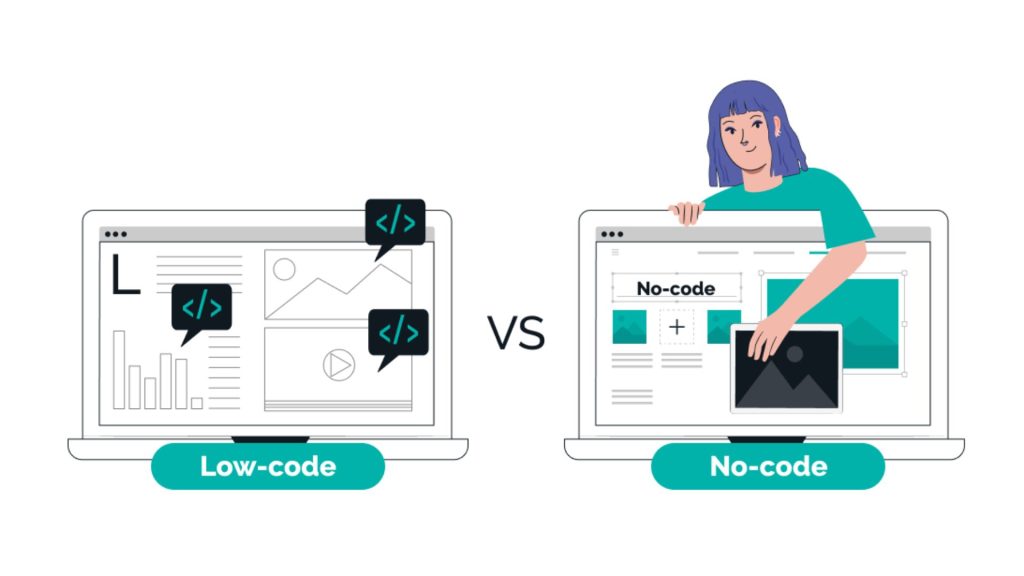
So, you’ve got this brilliant idea, right? Maybe it’s a killer new food delivery app for your hometown, something super niche, or perhaps you've been dreaming of a bespoke taxi booking app that actually fixes all the annoyances of the current ones. You see the gaps, you see the potential. And then it hits you: the coding. The sheer, daunting wall of code. Or the eye-watering budget for developers. But what if I told you that wall is crumbling? That there's a whole, thriving universe out there where building sophisticated, genuinely useful software doesn't actually demand you speak fluent Python or Java? We're talking about No-Code & Low-Code Development, and honestly, it’s not just "a thing" anymore. It's becoming the thing. This isn't some fleeting Silicon Valley fad, trust me. This is reshaping how quickly, how affordably, and really, who gets to build the digital tools of tomorrow. And if you've got an ounce of entrepreneurial spirit, or even just a problem at work that could use a custom digital fix, you need to understand this. Like, yesterday. What Are No-Code and Low-Code No-Code, at its heart, means exactly that: no code. Think about it like playing with those amazing, big Lego sets. You’ve got all these pre-made, perfectly designed pieces – a button here, a database connection there, a user login screen all ready to go. Your job, then, is just to drag, drop, connect, and configure. You’re building the car, but you’re not fabricating the engine parts or wiring the electrical system. It's incredibly powerful for entrepreneurs, small business owners, or even just regular folks who need a specific app for, say, managing team tasks or tracking inventory. It’s for folks who have zero interest in the technical jargon, but absolutely need a functioning piece of software. Then there's Low-Code. This one's like a slightly more advanced Lego kit. It gives you the same incredible head start with pre-built pieces and visual interfaces, but it also provides space for a bit of custom craftsmanship. If you do have a developer on your team, or maybe you’ve dabbled in coding yourself, low-code platforms let you inject your own specific lines of code for those really unique, bespoke functionalities. So, maybe you want to integrate with a super obscure API, or you need a very particular calculation that isn’t a standard drag-and-drop. Low-code gives you the best of both worlds: rapid model development plus the flexibility to get super specific when necessary. The whole goal with both, though, is speed, sheer, unadulterated velocity. And, obviously, cutting down on development costs, which, let’s be honest, can be absolutely crippling for new ventures. Beyond the Basics: Apps, Automation, and Smart Stuff Now, you might be thinking, "Okay, so I can build a simple form or maybe a basic website, but what about something truly complex? Like that food delivery app I was dreaming about earlier?" And this is where things get really exciting, because these platforms are no longer just for glorified spreadsheets. Modern no-code and low-code tools are surprisingly robust. Think about what a food delivery app needs: user profiles, restaurant listings, order placement, secure payments, maybe even delivery tracking. Believe it or not, many no-code/low-code platforms have pre-built modules for all of those things. You’re configuring, not coding. Same goes for a taxi booking app; real-time mapping, driver management, passenger interfaces, fare calculations – all becoming increasingly componentized and configurable. The IoT Connection: Powering Our Connected World And it gets even cooler. Remember all those connected devices we hear so much about? Smart homes, smart factories, industrial sensors sending data from everywhere? Well, a lot of the applications that manage and interpret that data, the ones that make sense of the Internet of Things (IoT), are being built with low-code. It's because integrating with different device APIs, displaying data dashboards, and setting up automated responses can be a tedious, repetitive coding task. Low-code accelerates that integration, letting businesses actually use all that data from their devices without having to build a custom software stack from the ground up for every single use case. A Dash of Intelligence: Machine Learning & Intelligent Systems This is where the future really starts to look different. No, you won't become a PhD in AI just by clicking buttons. But many of these platforms are now integrating pre-trained machine learning models and components that allow you to add a layer of intelligence to your apps. Think about it: Want to analyze customer sentiment from reviews? Plug in an ML component. Need to predict sales trends based on past data? There might be a low-code tool for that. Even simple image recognition or natural language processing features are becoming accessible. These aren't about building groundbreaking AI research, mind you. They're about making everyday applications genuinely "smarter," leveraging existing intelligent systems to enhance user experience or automate complex decisions. It’s about putting the power of advanced tech into the hands of someone who just wants their app to work better, without needing to understand the underlying algorithms. So, Is Code Dead? Nah, But It’s Got Competition. Look, at the end of the day, here's the real truth. For most of what a small business, or even a growing one, actually needs – automating little bits of work, bringing that genuinely brilliant app idea you've secretly been nursing to life, or just getting those connected devices to talk to some kind of intelligent systems without pulling your hair out – No-Code & Low-Code Development? Yeah, that's absolutely the path forward. It just is. It seriously speeds things up, gives more people the power to innovate, and frankly, makes building anything digital feel a whole lot less scary. So, if you've been sitting on a great idea because you thought "code" was this insurmountable mountain, well, consider that excuse officially expired. The tools are here. What are you waiting for? It's your turn.

Jul 2025
How Listing Your Business Online Actually Gets You More Customers
You started a small business, you built a great product or service, and now you’re ready to get the word out. Maybe you've run some Facebook ads or maybe you just rely on word of mouth. Those are fine, sure, but if you’re not actively getting listed in online business directories. The digital equivalent of the phone book, but way more effective, you’re basically operating with one hand tied behind your back. It’s easy to overlook these listing platforms. You might think, "Who actually uses Yelp anymore?" or "Is Google Business Profile really that important?" Well, spoiler alert: they are absolutely crucial. These aren't just places to drop your name; they’re powerful, free tools for digital marketing for small businesses. They're how people find you when they're ready to buy, right now. Forget the fancy SEO talk for a minute. The real question is: How do business listing platforms help you actually get more work, more leads, and more money?Let's dive into the nuts and bolts of why this matters so much. Why You Need to Be Everywhere The thing about modern consumers is they search. A lot. And they rarely stick to just one place. When someone searches for "plumber near me" or "best coffee shop downtown," they are hitting a variety of sources: Google, Yelp, Bing Places, maybe specific industry sites. The magic of benefits of business listing platforms is that they increase your footprint across the internet. When your business is listed consistently on multiple platforms, you're boosting your chances of being seen exactly when a potential customer is looking for what you offer. This is what we call increased visibility, and frankly, it’s the bare minimum for staying competitive today. Think of it like setting up multiple welcome mats in front of your shop. The more places you’re visible, the more likely someone is to step inside. Simple as that. It's Not Just About Being Found; It’s About Looking Legitimate Let’s talk about trust. If I search for a service and your business profile is missing a phone number, or the hours are wrong, or maybe it’s just not there at all, I’m probably going to move on. Quickly. Having a complete, verified profile on platforms like Google Business Profile or industry-specific sites immediately tells a potential customer, "Hey, this is a real business. We're open. We're professional." That little stamp of legitimacy is huge for customer acquisition. When you’re listed properly, you look reliable. You look like you're actually open for business, which is, you know, kind of the whole point. The Local SEO Connection: Why Consistent Listings Matter You hear the term local SEO tossed around a lot, and it sounds complicated. It’s not, really. It’s just about making sure you show up when someone near you is looking for your services. And a massive part of this hinges on your online listings. Google, and other search engines, want to give the most relevant results. To do this, they check your NAP (Name, Address, Phone number) across the web. If your address on Yelp matches the one on your website, which matches the one on your Google profile, search engines feel confident in your business's location and identity. But if your hours are wrong on one site, or the phone number is different on another, it confuses Google. It says, "Hmm, is this business even active?" And when Google is confused, you lose. Maintaining consistency across all these online business directories is non-negotiable if you want to rank well in local searches. A Quick Word on Reviews Listings are also where people leave reviews. And let’s be honest, we all read them. Good reviews are like a digital handshake; they build instant rapport and trust. Even negative reviews, if handled correctly (by responding professionally and promptly), show potential customers that you are an engaged, responsible business owner. People trust peer recommendations far more than they trust advertising copy. Your listings provide that essential social proof. It’s basically free advertising from happy customers. So, How Do These Listings Actually Translate to Dollars? Okay, let's get back to the bottom line. How do these listings generate revenue? They Drive Direct Traffic: People click on Call or Get Direction or Website. These actions lead directly to sales. They Fill the Funnel: Listings catch people who are ready to buy now. They are high-intent customers. They Boost Your Visibility Everywhere: A strong profile on listing platforms often helps your website rank better too. It’s a rising tide that lifts all boats in your digital marketing strategy. If you’re running a small business, every minute counts. Managing these listings properly might feel like a chore, but it’s one of the highest-ROI activities you can do. It’s not just about setting up a profile; it’s about engaging with the digital world where your customers already live. Stop hiding your business and start showing up exactly where you need to be.

Jul 2025
The Rise of Low-Code Platforms in 2025
You know, it’s funny how fast things change, isn’t it? Just a few years back, if you mentioned "low-code" to most folks, especially outside of the hardcore tech circles, you’d probably get a blank stare. Now, though, here we are in 2025, and it's a completely different ballgame. These low-code development platforms they're everywhere. And I mean everywhere. They've moved from being a curious niche to, frankly, a non-negotiable tool for pretty much any business wanting to stay competitive. It’s not just tech companies, either. We’re talking about your local bank, that manufacturing plant down the road, even government agencies. Suddenly, they’re all leveraging low-code to build critical software solutions. Well, it’s not just one thing, you know. Making low-code not just a good idea, but essential. Driving Rapid Development Honestly, the biggest driver, still, has to be pure, unadulterated speed. Back in, say, 2018 or 2019, getting a custom app built was a project. Like, a capital-P Project. We’re talking months, often over a year, from concept to something actually functional. The market doesn't wait around for that kind of timeline anymore. Customer expectations and new competitors are popping up daily. This is where rapid application development really shines, and it’s the core promise of these low-code development platforms. Businesses, by 2025, just cannot afford to wait. If you’ve got an idea for, let's say, a new internal tool to streamline your customer service, or a client portal that needs to go live yesterday, low-code lets you actually do it. It means instead of writing thousands of lines of bespoke code for every single function, you're primarily dragging, dropping, configuring. You’re using pre-built components, connecting them, and adding just enough custom logic to make it uniquely yours. It's a game-changer for getting solutions out the door at warp speed, believe me. No-Code Tools Are Still Very Much In the Picture You can’t really talk about low-code without, at least, giving a nod to no-code tools. They’re definitely part of the same revolution, just on a slightly different spectrum. No-code is, well, no code. It’s for the business user who has a brilliant idea but literally no coding experience, period. Think of a marketing person building a dynamic landing page, or an HR rep automating onboarding emails without bothering IT. The beautiful synergy in 2025 is that these no-code tools are often feeding into the larger low-code ecosystem. They empower "citizen developers," people outside of IT but deep inside the business problems to build their own solutions. This, in turn, frees up the actual professional developers, who are using the low-code platforms, to tackle the really complex stuff. It means fewer bottlenecks, more innovation, and fewer frustrated sighs from both sides. It’s a win-win, truly. Beyond Just Building Apps: What Else Low-Code is Solving in 2025 So it’s not just about speed, obviously, though that’s a massive one. There are a few other, perhaps less obvious, but equally crucial factors driving this low-code boom right now: The Talent Gap, Still a Problem: Finding skilled developers remains a monumental challenge. It's an ongoing, honest-to-goodness problem. Low-code, therefore, becomes a practical solution. It means your existing team can crank out more software solutions, or, as I mentioned, those non-technical folks can help take some of the pressure off. You get more done with the talent you do have. Security & Governance are Mature: Years ago, there was this worry: "If everyone's building apps, how do we keep things secure? How do we manage it all?" Fair questions! But by 2025, low-code development platforms have integrated robust security features, compliance frameworks, and central governance capabilities. IT departments can set the rules, provide pre-approved components, and still maintain oversight. No more "shadow IT" nightmares, at least not as easily. AI Integration is a Game Changer: This is where it gets really interesting, to be perfectly honest. The very best low-code platforms today? They're infused with AI. We’re talking about AI-assisted coding, intelligent automation of repetitive tasks, even AI guiding you through the app design process. It means you’re not just dragging and dropping; sometimes, the platform is suggesting the next component or even auto-generating a bit of code based on your intent. This drastically accelerates the process even further, making highly capable software solutions more accessible. Bridging Old and New: Most businesses aren't starting from scratch, right? They've got existing, sometimes ancient, systems – what we call "legacy systems." Low-code platforms have become incredibly good at integrating with these older databases and applications, breathing new life into old infrastructure without needing a complete rip-and-replace. This ability to connect disparate systems seamlessly is a quiet superpower of low-code in 2025. The Bottom Line As we move deeper into 2025, it’s clear: low-code development platforms aren't just a trend anymore; they're a fundamental shift in how we approach technology. It’s about democratizing app creation, not just for developers, but for everyone who has a problem to solve or an idea to launch. It's about getting vital software solutions to market incredibly fast, adapting to change without breaking the bank, and frankly, just being able to compete in a world that moves at light speed. If your organization hasn't fully embraced low-code yet, or is still just dipping its toes in the water, well, you’re missing out on some serious advantages. It's not about replacing developers entirely, never was. It’s about empowering everyone to build, to innovate, and to really drive that digital agenda forward. So, what's holding you back? The tools are ready. The year is 2025. Time to build.

Jul 2025
Personalization Techniques in E-Commerce Platforms
Introduction: Why Personalization is the Future of E-Commerce Let’s be real online shopping isn’t just about buying stuff anymore. It’s about vibes. Shoppers want more than a generic site and cookie-cutter product pages. They want brands to get them like really understand their preferences, habits, and even what they might want before they do. That’s where e-commerce personalization services comes in. From tailored product suggestions to custom landing pages and dynamic prices, personalization levels up the whole experience. It’s not just a nice-to-have it’s the secret sauce to better engagement, more conversions, and stronger customer loyalty. Let's dive into how brands are using it to win big. What is E-Commerce Personalization? At its core, e-commerce personalization is about customizing the online shopping experience for each user based on their data, like their location, past purchases, browsing behavior, and how they interact with your site. It’s what makes someone feel like your store was made for them. When done right, personalization turns random scrolls into meaningful sessions and casual visitors into repeat buyers. The Business Impact of Personalization This isn’t just marketing fluff personalization works. Here’s the proof: 80% of consumers say they’re more likely to shop with brands that offer personalized experiences (Epsilon). Recommending products tailored to the user can boost average order value (AOV) by up to 50%. According to McKinsey, brands that get personalization right can see a 5–15% jump in revenue and 10–30% improvement in marketing efficiency. So yeah, if you’re not personalizing yet, you’re basically leaving money on the table. Key Techniques for E-Commerce Personalization 1. Personalized Product Recommendations You know that “You might also like” section? That’s personalization 101. Smart algorithms suggest products based on things like: What users browsed or bought before What similar customers liked What’s trending in their category Using tools like collaborative or content-based filtering, you can serve up recs that actually make sense not just random bestsellers. 2. Dynamic Content & Homepage Personalization Why show the same homepage to every visitor? Personalization lets you: Switch up banners based on user interests or location Highlight products they were checking out earlier Tailor content based on their actions The result? A homepage that feels like their homepage not a one-size-fits-all shop window. 3. Behavioral Targeting and Segmentation This one’s about responding in the moment. By tracking real-time behavior, you can create timely nudges, like: A special offer for someone stuck on a product page A pop-up discount if they’re about to bounce Re-engagement emails for users who’ve gone cold These subtle pushes can be game-changers for conversion rates. 4. Email Personalization & Triggered Campaigns This goes way beyond “Hey [First Name]”. Think: Abandoned cart nudges Alerts when a favorite product is back in stock Refill reminders for consumables Thank-you emails or post-purchase how-tos These emails are triggered by behavior and tend to get 3x more engagement than generic blasts. 5. Personalized Search Results Your search bar can be smart, too. Make it: Auto-suggest based on user history Prioritize products that match past interests Show local availability or region-based pricing The faster users find what they want, the quicker they convert. Period. 6. Location-Based Personalization Geo-personalization makes shopping feel way more relevant. Use it to: Show local currency and payment options Promote region-specific deals or seasonal items Hide items that can’t be shipped to their area It’s all about making things feel local and trustworthy. 7. AI Chatbots for Tailored Assistance Modern chatbots aren’t just automated FAQ machines they can: Guide shoppers to the right product Suggest items based on preferences or past behavior Assist with order tracking, sizing, or support Think of them as the friendly store assistant, just in AI form. The Role of Data in E-Commerce Personalization Behind every good personalization strategy is a whole lot of data. But not all data is created equal: First-party data: Collected from user interactions on your own site Zero-party data: Info users willingly give (like quiz results or preferences) Third-party data: From external platforms or ad networks Combine all this with machine learning, and your personalization game becomes next level. Recommendation Systems: The Engine Behind Personalization These are the brains behind suggestions and content curation. A few types to know: Collaborative Filtering: “People like you bought…” Content-Based Filtering: “You liked X, so here’s Y” Hybrid Systems: The best of both for better accuracy Personalization is powerful, but it’s not all sunshine and conversions. A few common struggles: Privacy Rules: Regulations like GDPR and CCPA mean you have to be transparent and ethical with data. Data Silos: Scattered customer data makes it hard to get a full picture. Integrations are key. Tech Hurdles: Real-time personalization and AI systems can be complex and require good tech support. Overkill: Going too personalized can feel intrusive. Subtlety matters know when to stop. Tools and Platforms for E-Commerce Personalization If you’re ready to implement, here are some top tools: Dynamic Yield: AI-driven personalization for web and mobile Nosto: For real-time product recs Segment: For building unified customer profiles Klaviyo: Powerful email automation based on behavior Optimizely: Great for personalization testing and experiments Just make sure whatever tool you pick plays nicely with your current setup (Shopify, WooCommerce, etc.). The Future of E-Commerce Personalization What’s next in the world of tailored shopping? Expect to see: Hyper-personalization with predictive AI models Voice and AR integration for immersive experiences More B2B personalization custom catalogs, dynamic pricing Privacy-first solutions using anonymous or zero-party data In the future, the brands that win will be the ones that personalize at scale without making it weird. Final Thoughts In 2025 and beyond, personalization isn’t just a strategy, it’s an expectation. Shoppers want relevance, speed, and a sense of connection. With the right data, tech, and mindset, you can give it to them and turn one-time buyers into lifelong fans. The key? Start small, scale smart, and always keep your customer at the center.