







Jan 2024
Future Trends in Telecom Software for Cloud Contact Centers
For many years, contact center operations have been centered around telecommunications software. These contact centers have changed significantly since the introduction of cloud computing. Still, the landscape is changing quickly. This article explores the future trends that are anticipated to influence telecom software development in cloud contact centers, with an eye on how these developments will transform operational efficiency and customer service. Evolution of Telecom Software in Cloud Contact Centers Revolutionary technological developments have shaped the growth of telecom software in contact centers, changing the face of communication and customer care. In the past, contact centers relied on technology and software that were located on-site, had limited scalability, and were tied to certain locations. However, contact centers experienced a fundamental shift as cloud computing emerged. These centers' operations were completely transformed by cloud-based technologies, which brought accessibility, scalability, and flexibility. Since telecom software served as the glue holding together different aspects of data management and communication, it was essential to this transition. Current Landscape and Challenges Even with these developments, there are still several obstacles facing telecom software in cloud contact centers today: Integration Difficulties: Contact centers continue to have difficulties when integrating various technologies and apps. Modern cloud-based solutions frequently have trouble synchronizing with ancient systems, which results in operational inefficiencies. Security worries: As contact centers handle a growing amount of data, security becomes critical. It's a constant struggle to make sure telecom software has strong security features to safeguard sensitive consumer data from online attacks. Personalized Customer Experiences: It might be difficult to meet the growing demands of customers for tailored interactions. Telecom software must enable consistent and personalized consumer experiences across several channels in a seamless manner. Future Trends in Telecom Software for Cloud Contact Centers 1. Integration of 5G and Its Effects Contact center operations will change once 5G technology is included. 5G will benefit from enhanced video calling and augmented reality compatibility, enabling more immersive customer experiences and real-time interactions with lower latency and quicker speeds. 2. Automation and AI Automation and artificial intelligence (AI) have the potential to completely change how customers engage. Artificial intelligence (AI)-powered chatbots and virtual assistants will respond to queries instantly and uniquely, freeing up human agents to address more complicated inquiries. Routine work will be streamlined by automation, increasing productivity overall. 3. Communication Through Multiple Channels Seamless omnichannel communication is the way of the future. Regardless of the platform selected, telecom software will provide seamless communication over several channels such as chat, email, social media, and voice, guaranteeing a cohesive and uniform customer experience. 4. Analytics and Insights from Data Contact centers will be empowered by using predictive analytics and big data. By analyzing consumer behaviour patterns, telecom software will be able to provide preemptive support and tailored interactions, which will increase customer happiness. 5. Safety and Observance It will be essential for telecom software to have improved security features. Contact centers will concentrate on putting strong authentication, encryption, and compliance procedures in place to protect consumer data by changing legal requirements. 6. Adaptability and Expandability Customization and scalability will be prioritized in telecom software of the future. It will be essential to enable easy scalability and customize solutions to meet individual business needs to support expansion and adjust to shifting demands. Implications and Benefits of Future Trends Future trends in telecom software for cloud contact centers are expected to have a variety of effects and advantages, influencing customer service and operational effectiveness: 1. Improved encounters with customers Upcoming developments in telecom software should lead to previously unheard-of levels of consumer satisfaction. By combining omnichannel communication, AI-driven interactions, 5G technology, and personalized data, contact centers will be able to provide smooth, customized experiences across a range of touchpoints. Stronger client loyalty and satisfaction will result from this improved standard of service. 2. Improved Operational Efficiency Contact center operations will be more efficiently run with the use of cutting-edge telecom software trends. Routine queries will be handled by AI-powered automation, which will lighten the strain on agents and free them up to deal with more complicated problems. By enabling proactive problem-solving and resource allocation, predictive analytics will maximize productivity and resource use. 3. Resource Allocation and Cost Optimization Upcoming developments in telecom software should result in lower costs and more effective resource management. The automation of repetitive processes will result lower operating expenses, and more efficient resource allocation will be made possible by analytics' predictive power. Contact centers will experience increased cost efficiency as a result of this optimization. 4. Industry Competitive Advantage Contact centers can get a competitive edge by adopting the newest telecom software developments. Companies that take advantage of these developments as soon as possible will be in a better position to match changing consumer needs, beat rivals, and stand out from the competition. 5. Information-Based Decision-Making Decision-making procedures based on data would be made possible by advancing telecom software. Contact centers will have access to a multitude of customer insights that will allow them to build and implement well-informed customer relationship management, product development, and service enhancement initiatives. This data-centric strategy will promote ongoing improvements in the calibre of services. 6. Adaptation to Changing Demands Contact centers can be made more resilient to changing market conditions by utilizing cutting-edge telecom software. Over time, scalable solutions will maintain the contact center's agility and relevance by adapting to changes in technology, regulations, and customer needs. 7. Elevated Employee Experience Contact center agents can concentrate on more intricate and meaningful interactions as basic chores are automated by telecom software. A more motivated and engaged workforce will result from this change in job satisfaction, skill development, and professional progress. Challenges and Implementation Considerations Despite how promising these trends may be, obstacles must be overcome for them to be implemented successfully: Mitigating Integration Complexity: To address integration complications and make integrations go more smoothly, it may be necessary to implement phased transitions or specialized middleware. Training and Skill Development: To properly utilize the new telecom software features, contact center employees will need to receive training. Developing skills will be essential if we are to fully utilize the promise of cutting-edge technologies. Infrastructure Compatibility: It will be essential to make sure that the current infrastructure is compatible with the telecom software that is developing. It can be necessary for contact centers to update or change their systems to comply with these improvements. Cloud contact centers seem to have a bright future as long as telecom software keeps improving. Operations will become more customer-focused and efficient if these trends are adopted. The coming together of 5G, AI, omnichannel communication, analytics, security, and scalability will completely change the game and establish new standards for the quality of contact centers.
Apr 2023
8 Steps of UX Design Process: All You Need to Know
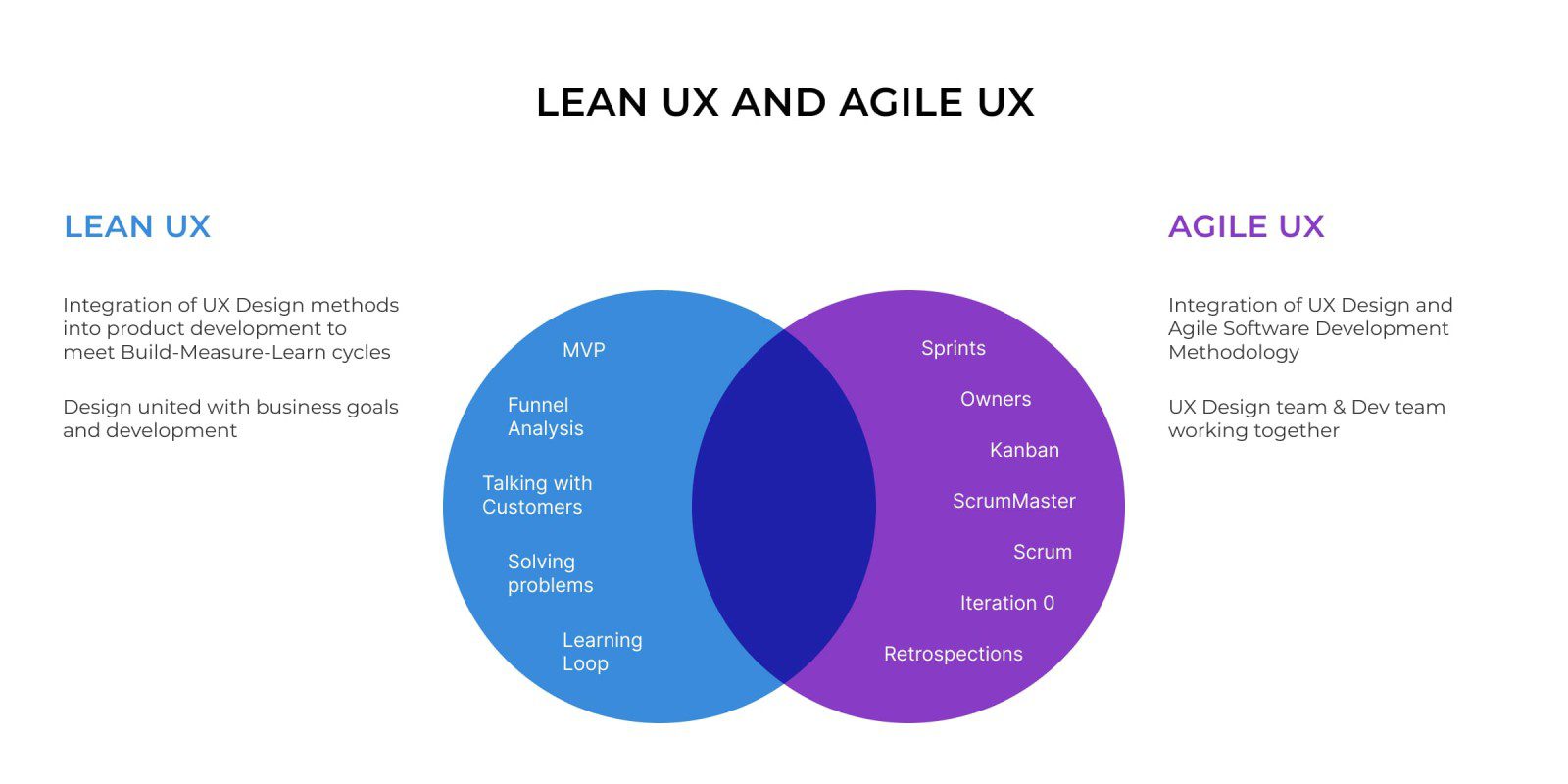
Are you interested in learning about the UX design process step by step? Understanding its significance is a good starting point. According to research, approximately 80% of customers are willing to pay a premium for a superior user experience. Therefore, in addition to generating profits and enhancing your product's quality, UX is critical for cultivating a devoted following and ensuring effective collaboration among your design team. This article provides insight into the most crucial stages of the UX design process, the significance and essential principles of UX design, key steps in the design process, best practices and much more. Keep on reading to dive into this topic! What is the UX Design Process? The UX design process involves crafting product designs that deliver a valuable experience to users. It encompasses all design efforts to create websites or mobile apps that are intuitive, easy to navigate, and user-centric. The UX design process prioritizes enhancing the following aspects of digital products: Usability Accessibility Functionality Branding User satisfaction with design While UX is a commonly used planning process in the design industry, it is tailored to the specific project and can be applied to simple platforms like a website homepage, as well as more complex interfaces, depending on the project's unique needs. Different projects require different UX approaches. However, some practices and deliverables are universal and should be implemented consistently across all projects. These include conducting product research before moving on to prototyping. The Significance of UX Design in Software Development In software development, UX design is crucial for websites and mobile apps. Without a solid UX design process, a product may fail to meet users' needs and consequently lose credibility with its consumer base. A decline in software loyalty can lead to a drop in user numbers, as well as a negative impact on profits and reputation. These statistics reinforce the importance of UX design: 88% of users will only return to a website with good UX (according to Hubspot). 90% of users will stop using a mobile app due to unsatisfactory performance. E-commerce businesses lose 35% of sales due to poor user experience (as per an Amazon Web Services study). By implementing a clear and concise UX process, a design team can more easily create product designs that provide exceptional user experiences. Industries That Place the Highest Importance on UX Design The UI/UX design process can greatly impact the success of products across various business industries. However, there are some sectors where a thoughtful user experience is particularly crucial. Let's delve into them in greater detail: Real Estate Software UX design plays an important role in the real estate industry, and here's why. Digital products in this niche typically aim to sell or rent real estate. These products should enable users to conveniently view housing offers, conduct transactions, and access all relevant information about the property. If your software has poor UX design, it can have a negative impact on your audience. From an ordinary user's perspective, they need a simple solution that allows them to buy or rent a home in just a few clicks. From the viewpoint of real estate agents or landlords, the software should be easy to use for posting housing offers and more. Healthcare Software When it comes to healthcare software, the importance of UX design becomes even more critical. How should your software look if everyone, regardless of age, needs to see a doctor occasionally? The main objective is to ensure that your product is accessible to any user, including medical professionals who require remote patient monitoring apps. eCommerce Software A well-thought-out UI/UX design process can guarantee higher earnings and more loyal customers for eCommerce businesses. According to Amazon Web Services, companies that invested significant budgets in their digital products' UX saw a sales increase of 75%. Even businesses that allocated less money to user experience could still witness a 60% increase. FinTech Software The finance industry can be challenging for the average customer to understand, so FinTech software should provide the smoothest possible user experience. For instance, financial apps should offer hints for financial terms and display complex information in simple graphs and charts. Essential Principles of UX Design A solid understanding of UX design concepts and terminology is essential for successfully implementing an effective design process that meets your business needs. Let's explore some key concepts: Design Thinking Design thinking is a central aspect of UX design that prioritizes human-centered designs. It is a methodology that takes a solution-based approach to address human-related problems. The design thinking process typically involves five stages: Empathy Definition Ideation Prototyping Testing Design Sprint The Design Sprint is a systematic process based on design thinking that helps teams leverage the design thinking mindset to make data-driven decisions. The process takes place over a five-day period, during which teams answer critical business questions and solve problems through design, prototyping, and testing ideas with customers. The concept of the Design Sprint was created by Jake Knapp while working at Google, and the methodology is described in his best-selling book, Sprint. Although design sprints can be stressful, the process can create a sense of cooperation and togetherness within the team. The creative activity requires relaxation and revitalization of teammates to ensure that only the best ideas come forth. The Lean UX vs. Agile UX In addition to design thinking, there are other approaches to establishing an effective design process, such as Lean UX and Agile UX. Let's explore the differences between them. Lean UX is a product design process that applies lean principles. Jeff Gothelf published this idea in 2013 and is still one of the most prominent authors on Lean UX. It unites product development and business through constant measurement, using "learning loops" of build-measure-learn synchronization. On the other hand, Agile UX is an update of Agile Software Methodology that incorporates UX design methods. Its primary goal is to unify developers and designers in the Agile product development process. While Lean UX specifically refers to methods and applications used in the dynamic environment of a Lean Startup. Lean UX teams often use agile UX to coordinate their software development efforts, as both methodologies can complement each other. Agile is a popular choice for startups looking to streamline their software development process. Aside from these methodologies, there are other commonly used UX design methods and techniques. However, before applying any of them, it is crucial to establish a consistent design process that includes all the stages of the UX system. Let's take a closer look at the most important stages of the UX design process. Key Steps in the UX Design Process: An Overview of the 8 Essential Stages The UX design development process consists of several stages that can be grouped into major phases. These phases are fundamental to all UX design approaches and include the following: 1. Stakeholder Interviews Stakeholder interviews are a crucial stage in the UX design process, as they help define your business goals, vision, values, and product strengths and weaknesses. The stakeholders' opinions are essential for further developing your project, making it the first step to establishing the UX app design process. To ensure productive stakeholder conversations, you should first decide whom to interview and whose opinion matters most for your project. It is also essential to record all the discussions and provide them to the UX designers for analysis. By the end of this phase, you and your team will clearly understand the product's goals.2. Understanding User Needs User research is a crucial aspect of the UX design process as it aims to create the best user experience. This phase lets designers empathize with the users and understand their problems and needs. The designer can use various methods, such as interviews, surveys, and observations, to conduct user research. It starts with studying the problem space, planning interviews with stakeholders and potential users, and researching product competitors.3. Creating User Personas and Sitemaps User personas are reliable and realistic representations of a key audience segment that designers can reference. However, it's important to note that personas represent a user story and flow, not the opinions of all possible users. They aim to form a consistent target group to understand their motivations and problems. Creating a user sitemap or flow is also crucial as it helps designers visualize the user journey through the product. This step aids in identifying pain points and areas for improvement.4. Creating Information Architecture Developing the information architecture is a critical stage in the UX design process. Sitemaps are used to display the website's structured navigation, demonstrating the relationship between different pages.5. Developing Wireframes Wireframes are a visual representation of the page structure in the design process. They serve as the backbone of the product and are often used as the framework for mockups. Various tools, including Sketch, Figma, Axure, Adobe XD, and Balsamiq, can be used to create wireframes with an aesthetically appealing and robust design.6. Developing Interactive Prototypes Once the wireframes are approved, the UX designer moves on to developing interactive prototypes. This stage involves designing the actual interface of the UX using software such as Sketch, Photoshop, or Illustrator. The interactive prototype serves as the point of intersection between UX and UI.7. Testing the Prototype This step in the UX design process is crucial to determine if the solution works as planned and efficiently provides the intended services. Paper and digital prototype testing are the forms of prototype testing that can be used in the UX project.8. Iteration The final stage of the UX design process involves developing the project design based on user feedback and opinions from other stakeholders. Iteration refers to the iterative process of refining the design, which is the final editing stage of the design outlook. Here how it looks like together: Top UX Design Best Practices By adopting these tips, you can improve the quality of your UX design process and deliver better user experiences: Engage with Your Audience during User Research Communicating with your audience is crucial during the initial phase of UX design, where you gather user feedback through surveys and other research methods. Engaging the right audience and using the right metrics to select feedback for designing the UX is essential. Try the UX Design Sprint Approach The UX design sprint is a five-day process for answering critical business questions, including designing, prototyping, and testing ideas with users. Many companies use this approach to define product direction, build team culture, and reveal their strategy. Explore New Tools To develop an excellent website or mobile application, designers must try new tools during the software design development stages. Being flexible and open to new tool-choice options allows creative and efficient UX designs. Gather Feedback from Users After testing the design with users, providing a platform for feedback is important. User feedback is the fuel that drives the UX process. Analyze and Optimize It's necessary to analyze and optimize the process properly in order to improve the existing gaps in the UX process. Six Essential Qualities Every UX Designer Should Possess After familiarizing yourself with the essential phases and best practices of the UX design process, it's crucial to recognize the crucial role that UX designers play in this activity. Below are the critical qualities that an experienced specialist should possess. 1. Effective Communication Skills Effective communication skills are vital to ensure that the designer comprehends and articulates your product's objectives and can clearly communicate their vision. This skill is essential during the user research phase and interviews. 2. Empathy Empathy, or compassion, is another fundamental quality every UX designer should possess. By putting themselves in the users' shoes and understanding their pain points and requirements, your designer can offer the best solution for your audience.3. Analytical Thinking Strong analytical skills are vital for a UX designer to evaluate user feedback and data, identify patterns and connections, and create effective design solutions. 4. Technical Competence While a UX designer does not have to be a coding expert, having a fundamental understanding of how developers work and coordinating with them is crucial to ensure seamless design implementation.5. Self-assurance In addition to the aforementioned qualities, successful UX designers should possess confidence in their design solutions, communicate their ideas effectively, and make informed design decisions. 6. Continuous Learning An excellent UX designer should be eager to learn and adapt to new tools and current user experience trends to stay relevant and innovative. Final Thought Creating a website or application demands UX designers to deliver an experience meeting users' expectations. Therefore, carefully considering various approaches to UX design development is crucial, as it directly impacts the website's turnover rate per click. Outsourcing your design development to an established IT company with a consistent UX design process is often more efficient than building your design team from scratch. Find yourself a team that has extensive experience in design services and is committed to delivering results that align with your product needs and ensure user satisfaction with your product design to benefit your business!
Jan 2023
Ready for the future? App ideas to create using ChatGPT in 2023
What is ChatGPT? ChatGPT is a variant of the GPT-3 language model developed by OpenAI specifically for conversational text generation. It has the ability to generate human-like responses to prompts in a conversation, making it a useful tool for chatbots, customer service agents, and other applications that involve natural language interaction. One of the key features of ChatGPT is its ability to understand and generate a wide range of natural language inputs and outputs. It can understand and respond to prompts in a variety of formats, including open-ended questions, statements, and commands. It can also generate responses in a variety of styles, including informative, persuasive, and humorous. In addition to its language processing capabilities, ChatGPT also has several other features that make it well-suited for use in conversational applications. For example, it has a large vocabulary and is able to generate responses in multiple languages. It also has the ability to learn from additional text data and improve its performance over time. Mobile app ideas using ChatGPT As a highly advanced language model, ChatGPT has the ability to generate human-like responses to prompts in a conversation. This makes it a useful tool for building chatbots and other applications that involve natural language interaction. Here are a few mobile app ideas that could be created using ChatGPT: Personal assistant app: ChatGPT could be used to build a personal assistant app that helps users manage their daily tasks and schedules. Users could ask ChatGPT to set reminders, make recommendations, or answer questions about various topics. Language learning app: ChatGPT could be used to build a language learning app that helps users practice their conversational skills. Users could have conversations with ChatGPT in their target language, and ChatGPT could provide feedback and corrections to help them improve. Mental health support app: ChatGPT could be used to build a mental health support app that provides users with a safe and anonymous space to talk about their feelings and concerns. ChatGPT could listen and respond to users in a caring and supportive manner, providing a sense of companionship and comfort. Social networking app: ChatGPT could be used to build a social networking app that helps users connect with others who share similar interests. Users could have conversations with ChatGPT to discover new topics and find like-minded individuals to connect with. Travel planning app: ChatGPT could be used to build a travel planning app that helps users plan their trips. Users could ask ChatGPT for recommendations on destinations, hotels, restaurants, and activities, and ChatGPT could provide personalized suggestions based on the user's preferences and budget. Customer service chatbot: ChatGPT could be used to build a chatbot that provides customer service for a company's products or services. Users could ask ChatGPT questions about how to use the product, request support, or get help with any issues they are experiencing. Virtual therapy app: ChatGPT could be used to build a virtual therapy that provides users with the opportunity to have therapy sessions with a virtual therapist. Users could have conversations with ChatGPT and receive support and guidance on a variety of mental health issues. Recipe recommendation app: ChatGPT could be used to build a recipe recommendation app that helps users find new recipes to try based on their preferences and dietary restrictions. Users could ask ChatGPT for recommendations, and ChatGPT could provide a list of recipes that meet the user's criteria. Fitness tracking app: ChatGPT could be used to build a fitness tracking app that helps users set and achieve their fitness goals. Users could ask ChatGPT for workout recommendations and track their progress with ChatGPT's guidance. Virtual shopping assistant: ChatGPT could be used to build a virtual shopping assistant app that helps users find the products they are looking for and make informed purchasing decisions. Users could ask ChatGPT for product recommendations, comparisons, and reviews, and ChatGPT could provide personalized responses based on the user's needs and preferences. These are just a few examples of the many creative and innovative mobile app ideas that can be created using ChatGPT. By leveraging the power of natural language processing, these apps can provide users with personalized and engaging experiences that help them accomplish their goals and improve their lives. Mobile app development companies listed on RightFirms can help you build your app using ChatGPT by leveraging the advanced natural language processing capabilities of this powerful language model. These companies can work with you to understand your app idea, assess your needs, and develop a custom solution that uses ChatGPT to provide users with personalized and engaging experiences. Advantages of using ChatGPT for mobile apps There are several advantages to using ChatGPT for natural language processing in mobile apps: Human-like responses: ChatGPT has the ability to generate human-like responses to prompts in a conversation. This makes it a useful tool for building chatbots and other applications that involve natural language interaction. By using ChatGPT, developers can create apps that provide users with personalized and engaging experiences that feel more natural and human-like. Flexibility: ChatGPT is a highly flexible language model that can be used to create a wide range of natural language processing applications. It can understand and respond to prompts in a variety of formats, including open-ended questions, statements, and commands. This makes it well-suited for use in a variety of mobile app scenarios, including customer service, language learning, and mental health support. Large vocabulary: ChatGPT has a large vocabulary and is able to generate responses in multiple languages. This makes it a useful tool for building apps that need to support a wide range of languages and topics. Ability to learn from additional data: ChatGPT has the ability to learn from additional text data and improve its performance over time. This makes it a useful tool for building apps that need to adapt and improve their performance based on user feedback or changing circumstances. In conclusion, ChatGPT and other language models have the potential to revolutionize the world of mobile app development. Their ability to understand and generate human-like responses to prompts in a conversation makes them useful tools for building chatbots and other applications that involve natural language interaction. By leveraging the power of natural language processing, developers can create a wide range of mobile apps that provide users with personalized and engaging experiences. Whether it's a personal assistant app, a language learning app, a mental health support app, or any other type of application, ChatGPT and other language models can help developers build apps that are more intuitive and user-friendly. Looking to the future, it's likely that language models like ChatGPT will continue to evolve and improve, enabling developers to create even more sophisticated and advanced mobile apps. As these models become more powerful and flexible, the possibilities for mobile app development are endless, and it's an exciting time to be a part of this growing field.

Dec 2022
How to start a business in 2023 – A Complete Guide
Starting a startup can be a challenging but rewarding journey. It requires a combination of passion, hard work, and strategic planning to turn an idea into a successful business. If you're thinking about starting a startup, here's a detailed guide on how to get started: Identify your strengths and passions. The first step in starting a startup is figuring out what type of business you want to create. To do this, it's important to identify your strengths and passions. Think about what you are good at and what you enjoy doing. This will help ensure that you are motivated and energized by the work you are doing. Look for a problem to solve. A great startup idea often starts with identifying a problem that needs solving. Think about the problems you see in your own life or in the world around you. Is there a product or service that you wish existed? Could you create it? By solving a real problem, you'll be more likely to create a business that has real value to customers. Research your market. Once you have a business idea in mind, it's important to research your market to see if there is demand for your product or service. Look for data on the size of your target market, the competition, and potential customers. This will help you gauge the feasibility of your business idea. Develop a business plan. A business plan is a detailed document that outlines your business goals, strategies, and financial projections. It's an important tool for securing funding and getting your business off the ground. Your business plan should include a market analysis, a competitive analysis, a marketing plan, and a financial plan. Secure funding. Depending on the scale of your startup, you may need to secure funding to get it off the ground. There are a variety of funding options available, including venture capital, angel investors, loans, and crowdfunding. It's important to do your research and choose the option that best fits your needs. Build a team. Starting a business can be a solo endeavor, but it's often more effective to build a team of people who can bring different skills and perspectives to the table. As you build your team, look for people who are passionate about your business and are committed to its success. Launch your business. Once you have a solid business plan, funding, and a team in place, it's time to launch your business. This can involve creating a website, building a customer base, and establishing partnerships. It's important to stay focused and be flexible as you work to get your business off the ground. Adapt and grow. Building a successful startup requires a willingness to adapt and grow as you learn from your experiences. Be open to feedback, test new ideas, and be prepared to pivot if necessary. With a focus on continuous improvement and growth, you'll be well on your way to building a successful startup. Starting a startup is not for the faint of heart. It requires hard work, dedication, and a willingness to take risks. But with the right idea, a solid plan, and a strong team, you can turn your startup dream into a reality. Startup ideas to consider in year 2023 It's difficult to predict with certainty what the best startup ideas will be in 2023, as it will depend on a variety of factors including market trends, customer needs, and technological advancements. In 2023, there may be particular opportunities in areas such as remote work and virtual services, sustainable products and services, health and wellness, education technology, and social media and online marketing. Technology will also continue to play a key role in startup success, with areas such as artificial intelligence, virtual and augmented reality, and cybersecurity all offering potential for growth. However, here are a few potential areas to consider as you brainstorm startup ideas: Remote work and virtual services. The COVID-19 pandemic has accelerated the trend towards remote work, and it's likely that this trend will continue even after the pandemic ends. Consider starting a business that offers virtual services or products that cater to remote workers. Sustainable products and services. As consumers become more environmentally conscious, there may be an increased demand for products and services that prioritize sustainability. Consider starting a business that offers eco-friendly products or services. Health and wellness. The pandemic has highlighted the importance of health and wellness, and it's likely that this trend will continue. Consider starting a business that offers products or services related to health and wellness, such as health food, fitness products, or telemedicine services. Education technology. With the shift to remote learning, there may be an increased demand for education technology and online learning platforms. Consider starting a business that offers digital educational resources or tools. Social media and online marketing. As more businesses shift their marketing efforts online, there may be an increased demand for social media and online marketing services. Consider starting a business that helps other businesses with their online marketing efforts. Remember, these are just a few potential ideas and are not meant to be exhaustive. The key to finding the right startup idea is to stay attuned to market trends and customer needs, and to be open to new opportunities as they arise.

Jun 2022
How Can Blockchain Technology Help You in the App Development Sphere?
Introduction Blockchain technology was first outlined in 1991 by two researchers, Stuart Haber and W. Scott Stornetta, who wanted to create a system where document timestamps couldn't be faked. However, over the years, technology's possibilities considerably expanded – nowadays, its apps, along with multiple tools, provide people with new heights of profit for businesses and startups. Blockchain development services lie in finance, manufacturing, health, entertainment media, real estate, and many other sectors. But how does technology actually work? And what are the advantages of the blockchain in the app development sphere? If you'd like to get the answers to all of those questions, you've come to the right place – today, we're going to tell you about blockchain app development services, as well as why it's better to choose such technology while developing an app. So let's not waste time and get to the point! What is blockchain technology? Blockchain is a special type of database. Probably, you've also heard of the term distributed ledger technology (DLT) – actually, it's almost the same thing. Blockchain has several unique features. There are rules about how data can be added, and as soon as data has been saved, it's almost impossible to change or delete it. Over the course of time, data is added in structures, called blocks. Each block is built over the last and includes information about the previous one. So, if we have a look at the most up-to-date block, we're able to check that it has been created after the last one. Thus, if we continue all the way down the "chain", we'll reach the very first block, known as the genesis block. To get a full understanding, let's imagine we have a spreadsheet with two columns. We add any data we want to store in the first cell of the first row. This data is turned into a two-letter identifier, which will be used as part of the next input in the future. Do you remember we've told you that it's impossible to go back and change or delete data? That's because it would be easy for everyone to say that it's been done, and they'd simply ignore your attempted change. Suppose you change the data in the first cell – in this case, you'll get another identifier, which means your second block would have different data, leading to another identifier in row 2, and so on. So, actually, the last identifier is a product of all the information coming before it. What benefits does blockchain technology have in the app development sphere? Now, let's move on and take a closer look at the main question – how can blockchain help you while developing an app? As we've already mentioned above, this well-known exciting technology – blockchain – is concerned with highly-secured features, which makes it being adopted by several industries. The technology is increasingly becoming a significant tool in the mobile app developers' arsenal this year. With such widespread functionality and potential, blockchain is being used for mobile app development more and more with each passing day. But why and how exactly? Below you'll see several undeniable advantages of the technology: Blockchain provides extra security to mobile apps. Blockchain technology makes your mobile app development secure and free from all threats. As we've noted above, since it has been designed with a high level of data encryption, it's kind of impossible for anyone to interfere in such a system. Blockchain is extremely reliable. Blockchain is designed in such a way that there are nil chances of collapsing. Thanks to that, it makes the technology highly reliable and stable. Blockchain is simple to use. Blockchain technology is user-friendly, so it's quite easy for users to design, apply and thus incorporate into their mobile applications. Blockchain is developing continuously. The growth rate of blockchain in comparison to other technologies is very high. In the future, blockchain is definitely going to have a maximum number of software updates, as well as enhanced services. Blockchain promotes simplicity. As blockchain is famous for simplicity, it allows developers to build mobile applications easily. Blockchain keeps the apps updated. Today, blockchain is the fastest growing technology, so it brings a maximum number of updates within a shorter period of time. Mobile apps built with blockchain will always be ready to get regular updates. Conclusion Blockchain isn't just about the crypto and NFT world. Thanks to today's article, you can see that with the help of technology's possibilities, we're able to ease the process of app development and provide customers with truly secure use. In addition, blockchain can manage your warehouses and inventory to run as fast as possible. As you might acknowledge, almost everything is actually decentralized these days, starting from the set of identification data and confirmation and finishing with saving in multiple solid junctions with blockchain. We've told you everything you need to know about the technology's impact on app development: what the blockchain is in general, the way it works, and how you can benefit from choosing blockchain instead of other technologies. We sincerely hope our small guide will help you even while coming up with your own blockchain app development idea. Just bear in mind one key thing – connecting your business with blockchain technology, you'll definitely multiply your business reach. So thank you for reading, and develop wisely!

May 2022
Native Apps vs PWA: Which is right for your business?
Technology has revolutionized the eCommerce industry. The way people perceive online retail has changed drastically with new trends that reshape the industry every day. With the rise of mobile marketing, setting up your online store is now easier than ever. Businesses all around the globe have understood the significance of smartphones in the industry and have begun to develop native applications to participate in the mobile eCommerce business. In addition to native apps, progressive web apps are another form of retail technology gaining favor among organizations. Progressive web apps have been openly recognized as excellent sales tools by many large organizations around the world. Both PWAs and Natives Apps have a huge number of benefits for your eCommerce business. Depending on your business requirements, PWAs and Native Apps provide unique and unified solutions for all businesses alike. Here are the top differences between Native Mobile Apps and Progressive Web Apps to help you make an informed decision based on your business needs. Read on! Native Mobile Applications Native Applications are software applications created for industry-specific platforms using a coding language (JAVA, Kotlin, Swift, etc.). Prime examples of excellent Native Applications are Spotify, Instagram, Facebook, and Pinterest. Benefits of Native Mobile Applications Functionality Native Applications allow for much more complexity in design compared to PWAs. Push notifications: Having push notifications increases the likelihood of users engaging with your brand and returning to it. You can create the function from scratch or leverage third-party integration with a native app. Geofencing: In real life, geofencing allows developers to create virtual geographical boundaries using GPS. When a user enters these boundaries, the app can initiate phone activities. When combined with push notifications, geofencing is an effective way to contact and engage your users. Currently, this feature is only available in native apps. Other Smart features: Some functions, such as proximity sensor, ambient light sensing, and smart lock, cannot be accessed by PWA. Interaction with Other Apps: Native apps can interact with other apps to make calls, register, add events to the schedule, check out, etc. Performance Integrated with the host operating system, Native Mobile Applications outperform web applications almost every time. Because PWAs run in the browser, they have more latency and use more battery than native apps. The underlying operating system can be integrated into a native program. It can access device hardware to perform more calculations and provide a better user experience. When it comes to performance, Native Applications take the win as a native app is more powerful and native code is faster. Security Other than hosting security measures such as HTML encryptions and the use of digital certificates for authorization, Native Applications provides you the option to add in-built security measures. If your software requires a login, features such as Multi-Factor Authentication can be used. Certificate pinning is another feature that is useful in adding layers to the security. Certificate Pinning restricts the number of certificates considered valid for a website to reduce the risk of misissued or fraudulent certificates. Furthermore, because an app must pass the App store's security requirements before being launched, people are more inclined to trust it than a URL. Progressive Web Applications (PWA) A Progressive Web Application is an application that uses web technologies like HTML, CSS, and JavaScript yet appears and functions like a native app. Progressive web apps are also simple, dependable, and enjoyable to use. A few famous examples of PWAs are Flipkart, Pinterest, MakeMyTrip, Wego, AliExpress, and more. Benefits of PWAs Cost-Effective A progressive web app is less expensive to develop when compared to a native application. You will need to learn the language and create a version for each platform if you are making a native application. It implies you will need at least two iOS and Android versions and the resources to maintain and upgrade them. Depending on the app's purpose and complexity, this can take a long time and cost lots of money. It's easier to create and upgrade a progressive web app. You can have a single codebase that runs on different platforms, not just the two most popular ones. You only need one version of the app with a responsive design, and it will look the same across all devices. Easy Installation In a given month, the average smartphone user downloads zero apps. A progressive Web Application, on the other hand, doesn't need to be downloaded or installed. Visitors can bookmark and add the app to their home screen with only a few clicks from the browser. The PWA will appear on the user's home screen and in the app directory, provide notifications, and integrate with the system settings. Furthermore, compared to an app, a progressive web app takes up less space. Visitors can access the app and share it with their friends by typing in the URL. There's also no need to update the software because it automatically launches with the most recent version. Discoverability Pages from native apps cannot be indexed or listed in a search engine. Customers can find your application in the app store or on the app store's website. Unlike native apps, PWAs function similarly to websites, allowing them to be indexed by search engines. PWA has improved performance and engagement compared to responsive web pages, allowing your website to rank higher in search results. Here are a few more steps to ensure that your PWA is SEO-friendly: Implement an SEO structure and target keywords relevant to your business. To avoid duplicate content, use rel=canonical for various URLs. Keep an eye out for URLs that begin with a "#," as Googlebot will not index anything after the hashtag. PWA or Native Mobile App: Which is Right for Your Business? Here are some of the key elements that differ between a PWA and a native application and often are the make-or-break factors when making a decision. Convenience The web app does not need to be downloaded. Instead, it can be accessed directly from the web browser on a smartphone or computer. A user can also add a Progressive Web Application shortcut to their home screen, which they can access at any time. The installation of a native app, on the other side, takes a long time. Before clicking on install, a user must first look for a particular app in the relevant store. Before using the native app, the user must grant the necessary permissions. Therefore, PWA takes the cake when it comes to convenience and ease of use. Distribution Strategy Native applications need careful planning and development to be taken live on your respective app stores. On the other hand, All you have to do with PWA is make sure your site is up and functioning on the internet. In addition, web applications can be accessed solely through a browser. Chrome, Firefox, Edge, and Safari are a few browsers that support PWAs. As a result, a PWA can assist you in reaching a wider audience with your app. Progressive Web Apps are now supported in the Google Play Store, allowing you to take them online with ease. Development Cost When the development costs of a PWA and a native app are compared, PWA emerges as the winner. It is because when designing a PWA, you require a single codebase that works on a variety of devices. You can also tweak it with tools like Google Lighthouse. Developing a native app, on the other hand, takes a significant amount of effort and money. You will also have to spend resources on maintenance. Aside from that, there are a multitude of other factors that influence the cost of developing native apps. Go for PWAs: If you're just getting started: If you want an easy-to-use app for your users, PWA is the way to go. No download is required, and you may engage with the user via push notifications. If you're working on a tight schedule and a limited budget: The development and publication of PWA involve less time and money. If you want to raise brand awareness and boost your SEO: PWA is similar to any other website in a way that it reaches a large number of people. Go for Native Applications: If you want to increase your brand's trust: Apps published on app stores are more reliable, while native apps have additional security features. If you want to make the most of your smartphone's advanced features: In cases when geofencing and sensor/detection are critical to the user experience, or if your product demands a lot of processing power. Wrapping Up Digitization has forever changed the way we buy and sell goods and services. New trends are coming up every day, and the world has embraced technology as a part of commerce. Native Applications and Progressive Web Applications (PWAs) are two solutions for providing a consistent experience to users with a variety of benefits. While developing a PWA is less expensive and faster than developing a native application, both have their shortcomings as well. Native applications are great for the long run when you have an established business but expensive to set up and harder to distribute. Native Applications and Progressive Web Applications are both here to stay, and the decision should be made based on your project's goals and resources.